
Can a Dentist Really Plan Your Treatment From Photos? What a Clinic in Turkey Can and Cannot See
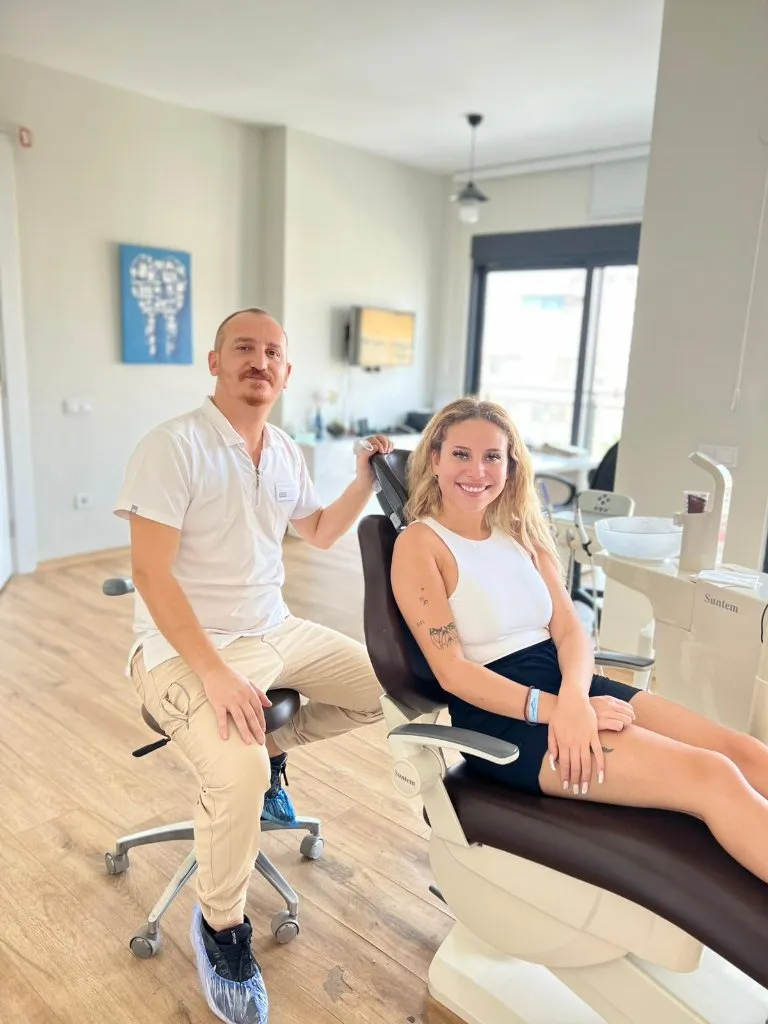
Yes, within limits. Good photographs show a dentist the shape, colour, wear and position of your teeth, your gum line and how many teeth appear when you smile, which is enough to plan crowns, veneers or a smile makeover in outline. They cannot show bone, roots, the nerve or decay under a filling, so for implants a panoramic X-ray is needed and every plan is confirmed in the chair.
The short answer: photographs, X-ray, examination
A remote plan is built in three layers: photographs carry the aesthetic information, a panoramic X-ray carries what is under the gum, and the examination and digital X-ray at the clinic carry the rest, which is where a plan becomes final. Our page on dental treatment in Turkey covers the whole process; this article is about the first step, the photographs you take on your own phone.
| In photographs | On a panoramic X-ray | At the examination | |
|---|---|---|---|
| Tooth shape, length, colour | Yes | No | Confirmed, with shade matching |
| Gaps, crowding, chips, wear | Yes | Partly | Yes |
| How many teeth show when you smile | Yes | No | Yes |
| Gum line, recession, inflammation | Visible | No | Measured |
| Fillings and crowns you can see | Yes | Yes, and what is under them | Yes |
| Decay between teeth or under old work | Usually not | Often | Yes |
| Bone height and width for an implant | No | In outline | Yes |
| Roots, old root canals, the nerve | No | Yes | Yes |
| How the teeth meet and slide | No | No | Yes |
| Loose teeth, gum pockets, sensitivity | No | Partly | Yes |
What can a dentist actually see in your photos?
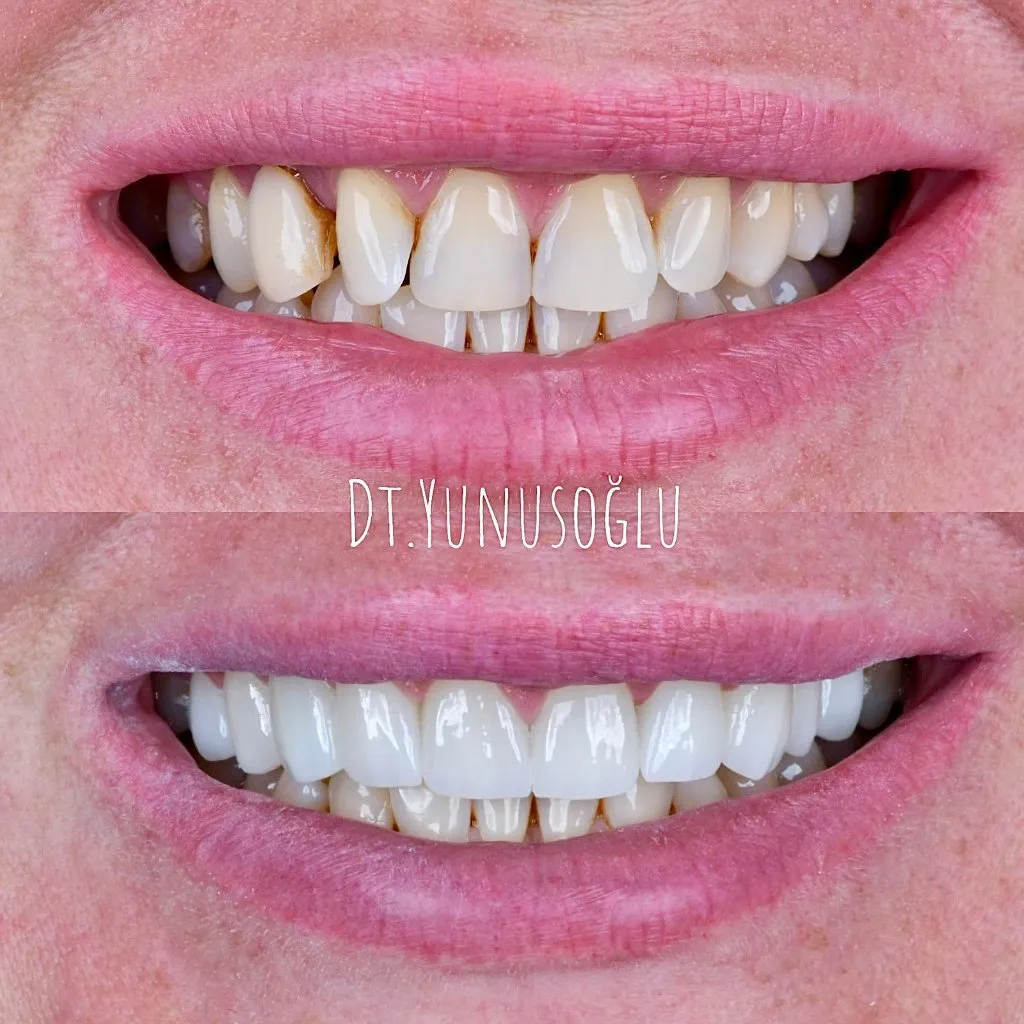
More than most people expect, if they are sharp and taken in daylight. From five phone photographs a dentist can usually read:
- Shape and proportion. Where the edges of the front teeth sit, and whether the midline is off centre.
- Colour. Whether the darkness sits on the surface, where whitening may be enough, or comes from inside the tooth, where it usually will not.
- Wear and chips. Flattened edges often point to grinding, which changes what is sensible to put on the tooth.
- Gaps and crowding. How wide and where: this decides between bonding, veneers and straightening first.
- The gum line. Whether it runs evenly, where it has receded, and how much gum shows when you smile.
- How many teeth appear in the smile. The number that decides how many veneers or crowns a plan needs.
- Existing work. Old fillings darkened at the edges, a crown that no longer matches, a bridge, a missing tooth.
That is most of what a smile makeover plan is built from, and why the smile gallery is worth ten minutes first: a finished case that resembles your own teeth says more than any adjective. Our guide to digital smile design covers the proportions.
A 2025 systematic review pooled 18 studies and 1,300 participants. From photographs alone, decay in dentine was picked up with a pooled sensitivity of 0.81 and a specificity of 0.98, early decay in enamel with 0.74 and 0.95. A photograph rarely calls a sound surface decayed; what it misses is the early, hidden kind.
What can photographs not show?
Everything under the surface, which is most of what decides an implant plan.
- Bone. The height, width and quality of the bone that would hold an implant. A photograph of a gap shows the gap, not what is behind it.
- Roots. Their length and angle, and whether an old root canal treatment has failed quietly.
- The nerve. The canal through the lower jaw and the floor of the sinus above the upper back teeth. Both limit where an implant can go.
- Decay under a filling, or between two teeth. Where two teeth touch, a cavity is hidden from any camera.
- The bite in motion. A photograph is one frozen moment with the jaw at rest, not how the teeth slide when you chew.
This is why a panoramic X-ray changes a remote plan more than any extra photograph could. One image shows every tooth and root, old root canal treatments, the bone level and the outline of the sinus. Many people already have one from a dentist at home, and a clear photograph of it is usually enough to work from. With it, a plan for dental implants can say how many implants are involved and roughly where. Without it, nobody can say that honestly.
So here is the limit. For crowns, veneers, bonding and whitening, photographs and a short description usually produce a plan that the examination confirms with minor changes. For implants, and for pain whose cause is not obvious from outside, photographs alone are not enough: a swelling or a tooth that wakes you at night needs an X-ray and an examination first. A clinic that answers a photograph of a gap with a firm implant plan is guessing.
Which five photos should you send?
Two or three photographs are enough to start. Five make the plan specific, and they take two minutes with a phone and a mirror.
- A relaxed smile from the front. Face a window, smile as you normally do, phone level with your mouth. This is what other people see.
- Lips retracted, teeth together. Pull the corners of your mouth back with clean fingers and bite. This shows the gum line, the full length of the front teeth and how the jaws meet.
- The upper arch from below. Head tipped back, mouth wide, camera looking up at the biting surfaces. Old fillings and crowns get counted here.
- The lower arch from above. The same for the lower teeth: chin down, tongue out of the way.
- Each side with the teeth together. Left and right, cheek pulled back. This is the view of the back teeth, and the one people forget.
The phone matters less than these five things:
- Daylight, near a window. Ceiling bulbs turn teeth yellow and the screen will not warn you.
- No flash if you can avoid it: it flattens colour and hides the texture of the enamel.
- No beauty filter, no smoothing, no automatic retouching: they change tooth colour and erase the detail that matters.
- Clean the lens, then tap the screen on the teeth to focus and take two of each view.
A written guide measurably improves what a dentist can read from photographs taken at home, so it is worth following the list above exactly.
Not sure which of these applies to you? Send a photograph and we will tell you honestly, including when the answer is that you need an X-ray first. Our WhatsApp number is +90 530 575 47 18, answered at any hour in English, German, Russian or Turkish.
What does the written plan contain?
A treatment plan is not a package name with a figure underneath it. It sets out:
- The treatment tooth by tooth. Which tooth, which treatment, and why that one rather than the alternative. Where a tooth needs nothing, it says so.
- The visits and the days. Crowns, veneers and a smile makeover are one visit of 5‑7 days, with temporaries between the appointments. Implants are two visits: 3‑5 days for placement, 2‑4 months of healing at home, up to 6 months in the upper jaw, then 4‑7 days for the final teeth. Our guide to how many days dental treatment takes has the timetable.
- The materials, by name. Which implant system, which ceramic, and for porcelain veneers the preparation depth, 0.3‑0.5 mm at our clinic.
- The written guarantee. 10 years on implants, 5 years on crowns and veneers. You can ask to read its wording before you travel.
- The exact amount. Turkish regulation does not allow a dental clinic to advertise prices, which is why no figure appears on this site. The amount for your plan is stated in full inside the plan, privately, item by item.
What can change after the examination and X-ray at the clinic?
Something usually does, and small changes are normal rather than a warning sign. A tooth that looked sound turns out to have decay under an old filling. A tooth listed for a crown needs root canal treatment first, or turns out to be fine with a veneer.
The plan is confirmed in writing after that examination, before anything is started, and you approve that version first. The amount you approve is the amount you pay. If it is not what you expected you are free to say no. Nothing is prepared or sent to the laboratory until you have agreed. Teeth, gums and healing differ from person to person, so a plan describes what is intended, not a guaranteed result.
Who sees the photos you send?
You are writing to the clinic itself. The WhatsApp number on this site is our own, not an agency between you and a dentist, and whoever reads your photographs is the person who would treat you. Photographs of your teeth are health information, and it is sensible to treat them that way.
- Send only what you are comfortable sending. Teeth alone are enough to plan with; a photograph including your face helps with proportions, but that is your choice.
- Nothing you send for a plan appears on this website. Before and after photographs are published only with the patient's own agreement.
- You are entitled to ask any clinic who receives your messages, where the photographs are kept and whether they can be deleted. Our list of questions to ask a Turkish dental clinic includes it.
Already holding a plan from your own dentist? Send it with the X-ray and read how a second opinion on an existing treatment plan works, including when your home plan is the better one.
How fast does the answer come, and who writes it?
Within 24 hours. Chair hours are Monday to Saturday, 09:00 to 19:00, and WhatsApp is answered at any hour, every day. Every case and every written plan is reviewed personally by Dt. Mustafa Yunusoğlu, who qualified at Ege University Faculty of Dentistry in 2015 and has practised in Side since; implant surgery is carried out by a dental surgeon specialising in implantology.
The plan puts you under no obligation, and is yours to take to another dentist for a second opinion. To find out what your own teeth would need, the contact page has every way to reach the clinic in Side.
Frequently Asked Questions
Can a dentist really make a treatment plan from photos?
In outline, yes. Photographs show tooth shape, colour, wear, gaps, the gum line and how many teeth appear in your smile, which covers most of what a crown, veneer or smile makeover plan is built from. They cannot show bone, roots or hidden decay, so the plan is an informed proposal that the examination and digital X-ray at the clinic then confirm in writing.
Which photos should I send to a dental clinic?
Five: a relaxed smile from the front, lips retracted with the teeth together, the upper arch from below, the lower arch from above, and one of each side with the teeth together. Take them in daylight, with no flash and no beauty filter, and clean the lens first. Two or three are enough to start if five feels like too much.
Do I need a panoramic X-ray before getting a treatment plan?
Not for a first answer about crowns, veneers or whitening. For implants it changes everything, because bone height and the position of the nerve canal cannot be seen in any photograph. If you had a panoramic X-ray at home in the last year or two, send it. A clear photograph of the film held up against a window is usually good enough to read.
Can a dentist see cavities in a photo of my teeth?
Sometimes. A 2025 systematic review found a pooled sensitivity of 0.81 for decay in dentine and 0.74 for early decay in enamel, with specificity of 0.98 and 0.95. In practice that means a photograph rarely calls a healthy surface decayed, but it can miss decay between teeth or under an existing filling. Those are found on the X-ray or at the examination.
Will the plan change when I arrive at the clinic?
It can, usually in small ways: a tooth that needs root canal treatment first, or one that turns out to need less than expected. The examination and digital X-ray come first, then the plan is confirmed in writing, and nothing starts until you approve that version. The amount you approve is the amount you pay.
Is it safe to send photos of my teeth on WhatsApp?
You are writing to the clinic itself, not to an agency, and the dentist who reads the photographs is the one who would treat you. Photographs of your teeth are health information, so send only what you are comfortable sending; teeth alone are enough to plan with. You can ask any clinic how your photographs are kept and whether they can be deleted.
How long does it take to get a written treatment plan?
Within 24 hours of your photographs arriving. WhatsApp is answered at any hour, every day, in English, German, Russian and Turkish, and chair hours in Side are Monday to Saturday, 09:00 to 19:00. The plan lists the treatment tooth by tooth with the number of days, and puts you under no obligation.
Sources
- Ku et al. (2025), Journal of Dentistry: Accuracy of clinical photography for the detection of dental caries, systematic review and meta-analysis
- Price et al. (2025), Journal of the American Dental Association: Diagnostic accuracy of detecting caries and other intraoral findings using parent-obtained smartphone photographs in teledentistry
- Wolff et al. (2016), Journal of Cranio-Maxillofacial Surgery: Comparison of preoperative surgical diagnosis using panoramic versus cone-beam CT images
- Oral Health Foundation: X-rays
- ADA MouthHealthy: X-Rays