
How White Should Your Veneers Be? Choosing a Tooth Shade That Still Looks Like Teeth
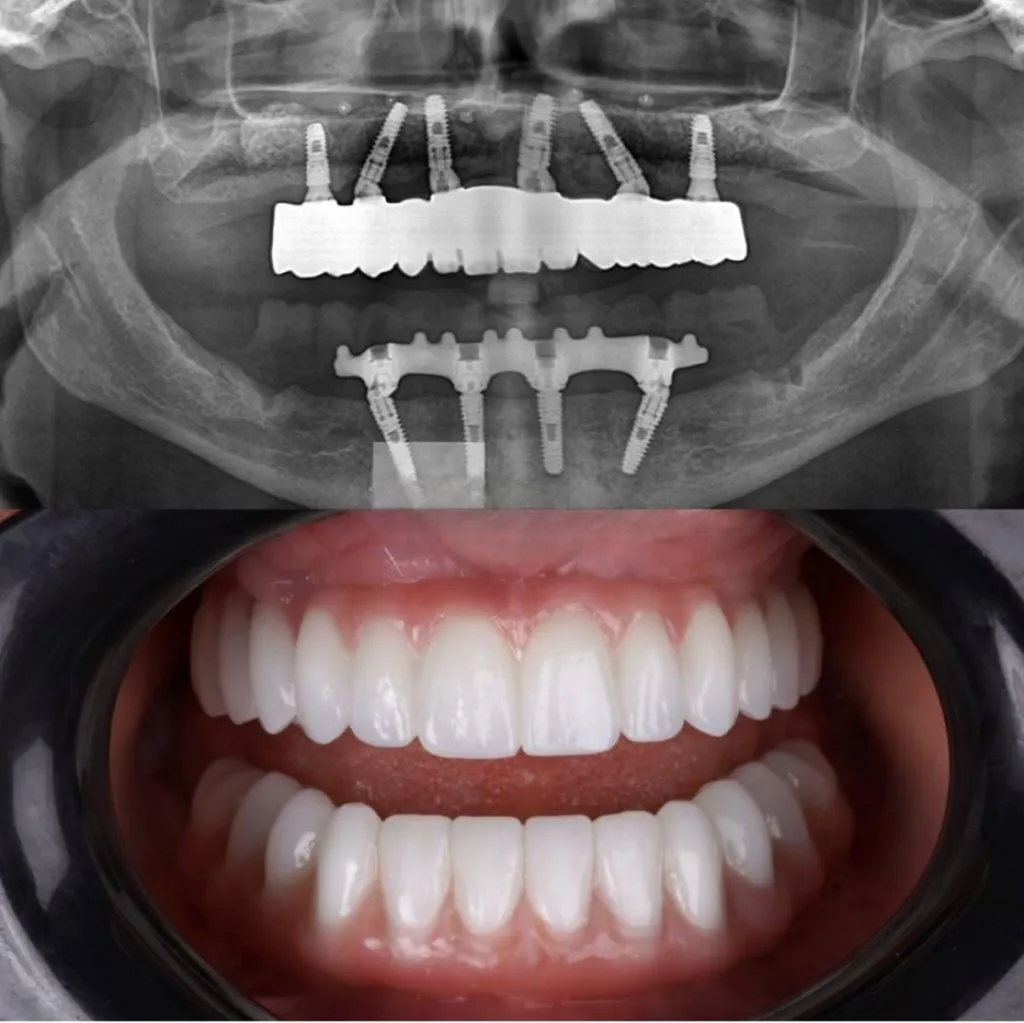
The right shade is the brightest one that still looks like teeth on your face. That usually means matching the whites of your eyes and your skin tone rather than the whitest tab on the guide, choosing translucent edges rather than flat opaque white, and whitening your natural teeth first if only some teeth get veneers or crowns. You see and approve the shade before the final work is made.
How is a tooth shade actually chosen?
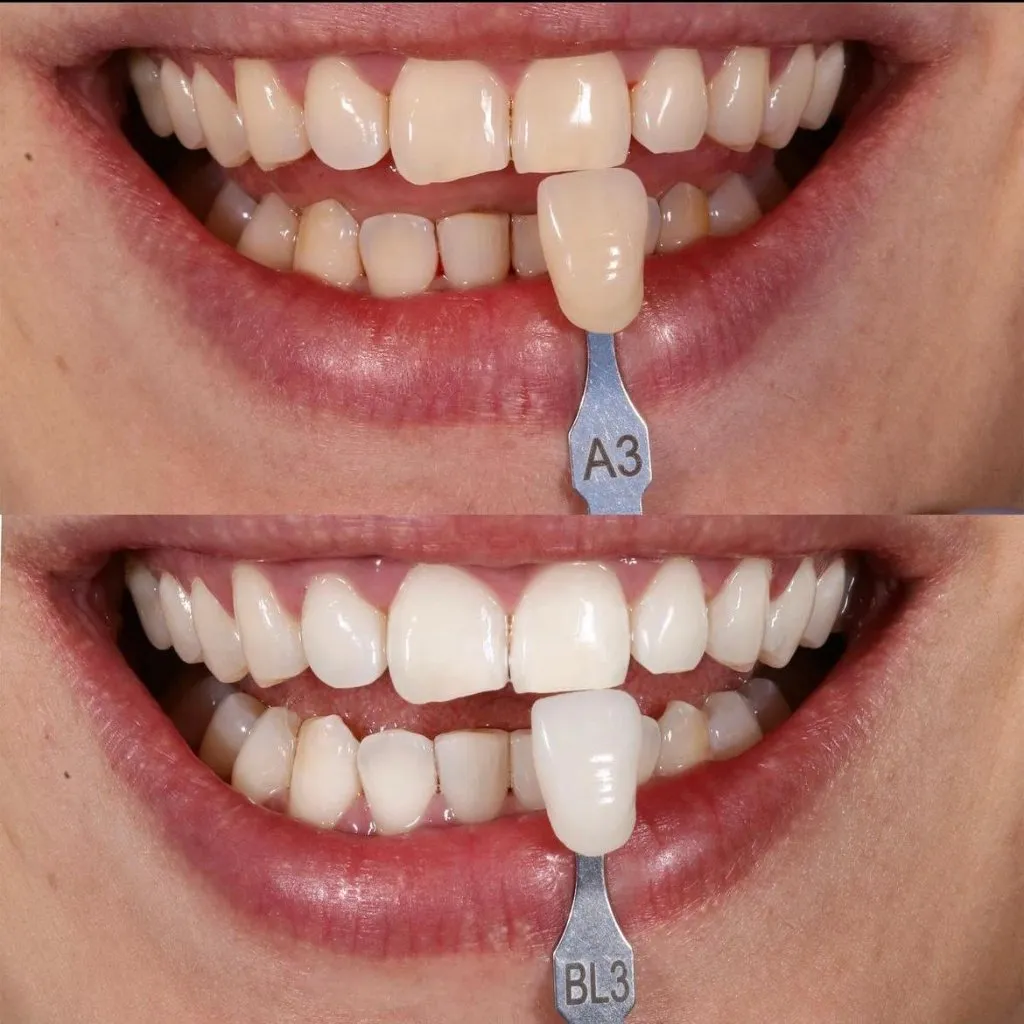
With a shade guide: a row of small porcelain tabs from yellowish to very white, held next to your teeth in daylight. Natural teeth fall in the middle of the scale. Below them sit the extra-bright bleach shades, which do not occur naturally and are only reached by whitening or by ceramic. The choice is made at the first appointment, in natural light, with your lips and face in view, not from a phone photo.
| Your situation | What usually guides the shade |
|---|---|
| A few veneers or crowns among natural teeth | The neighbouring teeth, after whitening them if you want brighter |
| A full smile of veneers or crowns | Skin tone, the whites of the eyes, age and your own preference |
| Replacing old crowns | The current natural teeth, not the old crowns |
| Wanting a clearly brighter smile | A bleach shade, with translucent edges so it still reads as teeth |
| Darker gums or exposed roots | A shade that does not make the gum line look grey by contrast |
Why do the brightest shades sometimes look fake?
Because natural teeth are not one colour. They are slightly darker near the gum, more translucent at the biting edge, and they reflect light differently from one tooth to the next. Very white, very opaque ceramic with no variation looks like a single flat surface, the look behind the "Turkey teeth" label. Brightness on its own is rarely the problem; flatness is.
Taste genuinely differs. In a 2022 study, 212 people rated smile photos with three tooth shades: lay people judged the brightest bleach shade most attractive, while dentists were not influenced by the difference between the three. Wanting bright teeth is a reasonable preference, and it is your smile. The dentist's job is to make bright look natural: translucent edges, a slight gradient towards the gum and shapes that suit your face. Our post on Turkey teeth shows what goes wrong when that is skipped.
Why should you whiten before veneers or crowns?
Because ceramic does not change colour afterwards, but natural teeth do. If you have four front veneers made to match yellowish neighbours and then whiten the rest, the veneers stay behind. The usual order is to whiten first, wait for the colour to settle, then match the new work to the brighter shade. Dentists commonly advise waiting about two weeks after whitening before final shade matching or bonding, because the colour can shift slightly in the first days.
A whitening session at the clinic takes 60‑90 minutes and the result lasts about 1‑2 years before a top-up. A 2016 meta-analysis found that at-home and in-office whitening produce similar results and similar sensitivity, so the choice depends mostly on your time in Side. The teeth whitening page explains the session, and the Oral Health Foundation describes what whitening can and cannot change.
How do you see the shade before it is final?
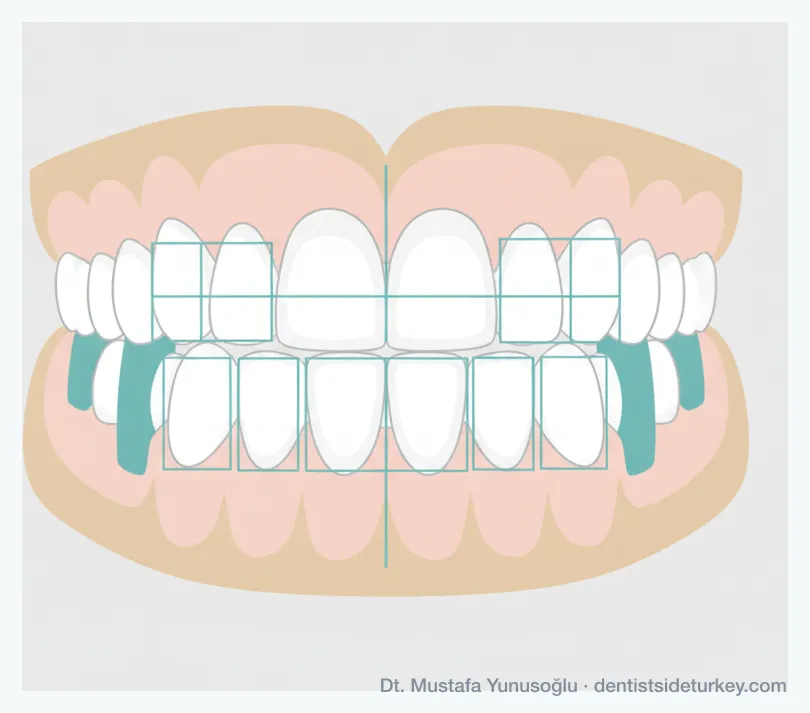
At the first appointment the shade is chosen with the guide in daylight, and the temporaries you wear for the days in between give a first impression of length and shape. At the second appointment the final veneers or crowns are tried in before they are fixed. If the shade or shape is not right, that is the moment to say so, not after they are bonded. Digital smile design helps with shape and proportion, as described in our guide to digital smile design.
Bring photos of smiles you like if that helps, but expect the dentist to adapt them to your face rather than copy them. A shade that suits a model under studio lights may look different in Mediterranean daylight on your skin.
When is the brightest shade the wrong choice?
When only some teeth are treated and you will not whiten the rest. Four very white veneers next to natural teeth draw attention to the join. It is also the wrong choice when the gums are dark or have receded, because extreme white makes the gum line look greyer by contrast. And it is worth thinking twice if you are older: very bright teeth on a mature face can look younger than everything around them, which is not always the effect people want.
None of this means you cannot have bright teeth. It means the brightness has to be planned with the rest of the smile, which is why the number of veneers matters as much as the shade. Our post on how many veneers you need deals with that question.
How do you start?
Send 2‑3 photos on WhatsApp taken in daylight, without filters, and say how bright you would like to go. Dt. Mustafa Yunusoğlu reviews every case personally, and the written plan within 24 hours says whether whitening should come first and how many teeth need to be included for an even result.
Veneers and crowns take 5‑7 days with two appointments, as described on the porcelain veneers and Hollywood smile pages, and they carry a written guarantee of 5 years. Real results are in the smile gallery, and the contact page lists every way to reach us. Results depend on each case and the examination.
Frequently Asked Questions
How white should my veneers be?
As bright as still looks like teeth on your face. The shade is usually guided by the whites of your eyes, your skin tone and, if only some teeth are treated, by the neighbouring teeth. Bright bleach shades are possible; what makes them look natural is translucency at the edges and a slight gradient towards the gum.
What is the whitest veneer shade?
Shade guides include extra-bright bleach shades beyond the natural range. They can be made in ceramic, but on a full smile they work best with translucent edges, and next to untreated natural teeth they tend to show the join. The dentist shows you the options in daylight at the first appointment.
Should I whiten my teeth before veneers?
If only some teeth will get veneers or crowns, usually yes. Ceramic does not change colour, natural teeth do. Whitening first and matching the new work to the brighter shade gives an even smile. Dentists commonly advise waiting about two weeks after whitening before final shade matching.
Can I change the shade after veneers are fitted?
Not without replacing them, because ceramic does not whiten. That is why the shade is checked at the try-in before the veneers are fixed. Say so at that moment if the shade or shape is not right.
Will my veneers match my other teeth?
They are matched to your other teeth when only some are treated. If those teeth later darken or are whitened, the match can change, because the ceramic stays the same. A whitening top-up every 1‑2 years keeps natural teeth closer to the veneers.
Do very white veneers look fake?
Brightness alone rarely makes them look fake. Flat, opaque white with no variation and over-large shapes do. Natural-looking bright veneers have translucent edges, slight colour variation and proportions that suit the face.
How do I choose the shade before travelling?
Send 2‑3 daylight photos without filters on WhatsApp to +90 530 575 47 18 and say how bright you would like to go. The written plan within 24 hours suggests whether to whiten first. The final shade is chosen with you in daylight at the first appointment.