
Yellow Teeth: Whitening, Bonding or Veneers? How to Choose the Least Invasive Fix
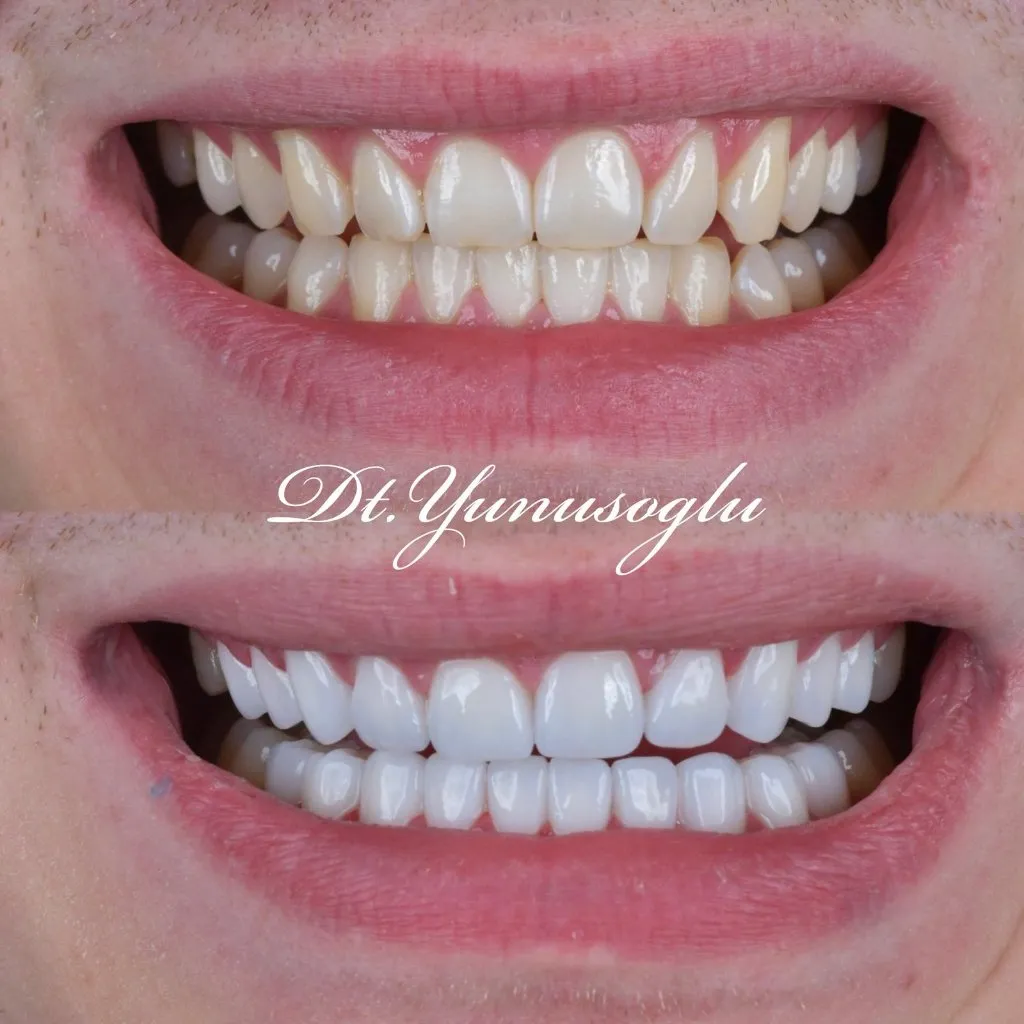
If your teeth are simply yellow, start with whitening. It removes no tooth at all and works on most natural yellow. Bonding makes sense for a few teeth with spots, chips or uneven edges. Veneers are worth it when colour and shape both need to change, or when the discolouration is too deep or too grey for whitening to reach. Choosing the least invasive option that actually solves the problem is the rule.
Which fix suits which kind of yellow?
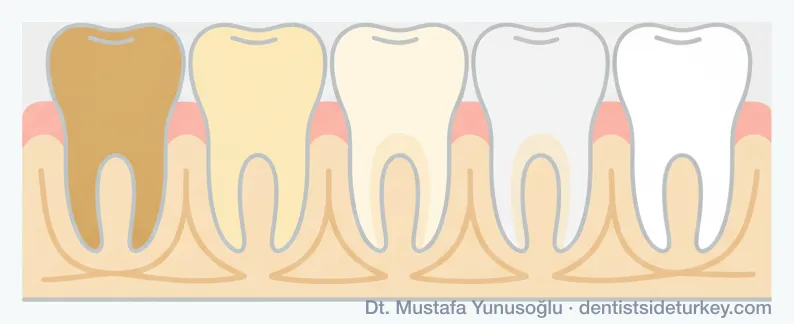
Yellow is not one problem. Surface stains from coffee, tea, red wine or smoking sit on the enamel. Natural yellow comes from the dentine underneath showing through, and it often increases with age as enamel thins. Grey, banded or very dark discolouration usually comes from inside the tooth. Old fillings and crowns discolour on their own and do not respond to whitening at all.
| What you see | Likely cause | Usual first choice |
|---|---|---|
| Brownish surface stain | Coffee, tea, wine, smoking | Professional cleaning, then whitening if needed |
| Even yellow on all teeth | Natural dentine colour, age | Whitening |
| White spots, small chips, gaps | Enamel defects, wear | Bonding on the affected teeth |
| Grey or banded colour | Discolouration inside the tooth | Veneers or crowns, after an honest test of whitening |
| One dark tooth | Often an old injury or root canal | Examination first; then a veneer or crown |
| Yellow plus crooked or worn shape | Colour and shape both | Veneers |
| Old fillings or crowns darker than the rest | Ageing restorations | Whitening first, then replace them to match |
What can whitening do, and what can it not?
Whitening lightens natural enamel and dentine with a peroxide gel. It removes nothing, which is why it is the first thing to try. A session at the clinic takes 60‑90 minutes. The result lasts about 1‑2 years, depending largely on coffee, tea, red wine and smoking, and a top-up brings it back. A 2016 meta-analysis found no difference in effect or in sensitivity between at-home and in-office whitening, so the choice is mostly about your time in Side.
What whitening cannot do is change fillings, crowns or veneers, change the shape of a tooth or fully lift grey discolouration that sits deep inside. Temporary sensitivity during the first days is common and passes. The NHS advises that whitening should be done by a dental professional, and the Oral Health Foundation describes the same limits. The session itself is described on the teeth whitening page.
When is bonding the better answer?
When only a few teeth are the problem, and the problem is a spot, a chip, a small gap or an uneven edge rather than overall colour. Bonding is tooth-coloured composite applied directly to the tooth and shaped by hand, in a single session of 30‑90 minutes, usually without anaesthesia. Little or no enamel is removed. Composite bonding lasts about 5‑7 years and can pick up stains over time, so it suits small, targeted corrections better than a full change of colour.
If you plan to whiten as well, whiten first. Composite is colour-matched to your teeth on the day, and it will not lighten later with them. The details are on the aesthetic fillings and bonding page.
When are veneers worth it?
When colour and shape both need to change, when the discolouration is grey or banded and whitening does not reach it, or when several teeth are worn, chipped or uneven at once. Porcelain veneers need 0.3‑0.5 mm of enamel shaping, take 5‑7 days with two appointments and carry a written guarantee of 5 years. Porcelain does not stain like composite, and its colour is chosen with you before the final work is made. How bright to go is a separate question, covered in how white your veneers should be.
The trade is that veneers are permanent: the shaped enamel does not grow back. That is why we would rather tell you whitening is enough than sell veneers you do not need. The difference between the three options in terms of tooth removed is set out in veneers, crowns or bonding.
When is the bigger option the wrong choice?
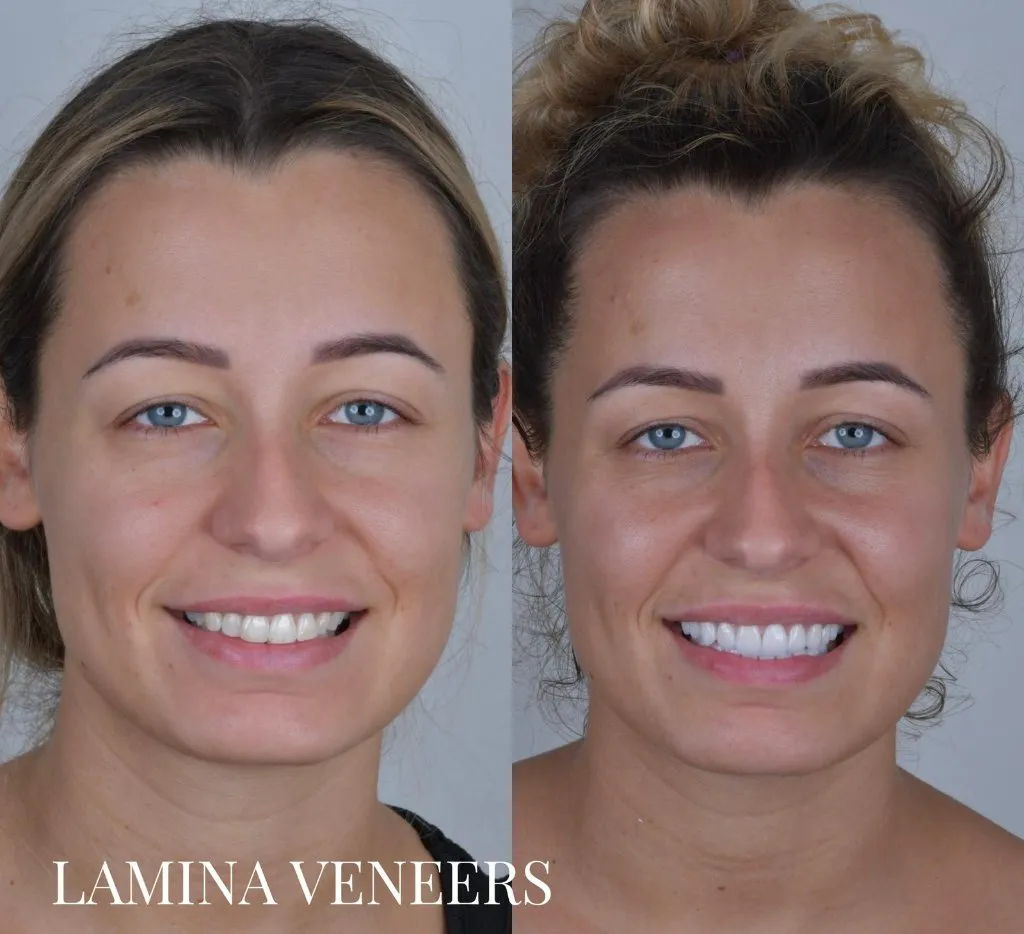
When your teeth are healthy, well shaped and only yellow. Veneers on such teeth remove enamel to solve a problem a peroxide gel would have solved. It is also the wrong order to place veneers on some teeth before whitening the others, because the veneers will stay at the old shade. And if your gums bleed or recede, the gums come first, as our post on gums before veneers explains.
Smokers should know that whitening and bonding both darken faster with smoking. That is not a reason to refuse them, but it changes how long the result lasts.
How do you find out which one your teeth need?
Send 2‑3 photos on WhatsApp, taken in daylight without filters, with your front teeth clearly visible. Dt. Mustafa Yunusoğlu reviews every case personally and the written plan within 24 hours says which option fits and why, including when whitening alone is enough. The plan is confirmed at the examination in Side.
Real results are in the smile gallery, the veneer treatment is on the porcelain veneers page, and the contact page lists every way to reach us. Results depend on each case and the examination.
Frequently Asked Questions
Should I get veneers or whitening for yellow teeth?
If the teeth are healthy and well shaped, start with whitening: it removes no tooth and works on most natural yellow. Veneers make sense when the shape also needs to change, when the colour is grey or banded and whitening does not reach it, or when several teeth are worn or chipped.
How long does whitening last?
About 1‑2 years, depending largely on coffee, tea, red wine and smoking. A top-up session brings the colour back. An in-office session at the clinic takes 60‑90 minutes.
Does whitening work on crowns, fillings or veneers?
No. Whitening only lightens natural enamel and dentine. Crowns, fillings and veneers keep their colour, so if they are in visible places, whitening first and then replacing them to match the new shade is the usual order.
Is bonding a good alternative to veneers?
For a few teeth with spots, chips or small gaps, often yes. Bonding is done in one session, usually without anaesthesia, and removes little or no enamel. It lasts about 5‑7 years and can stain over time, so it suits small corrections better than a full change of colour.
Why are my teeth yellow even though I brush well?
Often because the yellow is not on the surface. Dentine, the layer under the enamel, is naturally yellowish and shows through more as enamel thins with age. Brushing removes surface stain but not this inner colour; whitening can lighten it.
Does whitening damage teeth?
Whitening done by a dental professional is considered safe. Temporary sensitivity in the first days is common and passes. A 2016 meta-analysis found no difference in sensitivity between at-home and in-office whitening.
How do I know which option suits me?
Send 2‑3 daylight photos without filters on WhatsApp to +90 530 575 47 18. Dt. Mustafa Yunusoğlu reviews them personally and the written plan within 24 hours says whether whitening, bonding or veneers fit, and why. The plan is confirmed at the examination.