
How Many Veneers Do I Actually Need: 4, 6, 8 or 10?
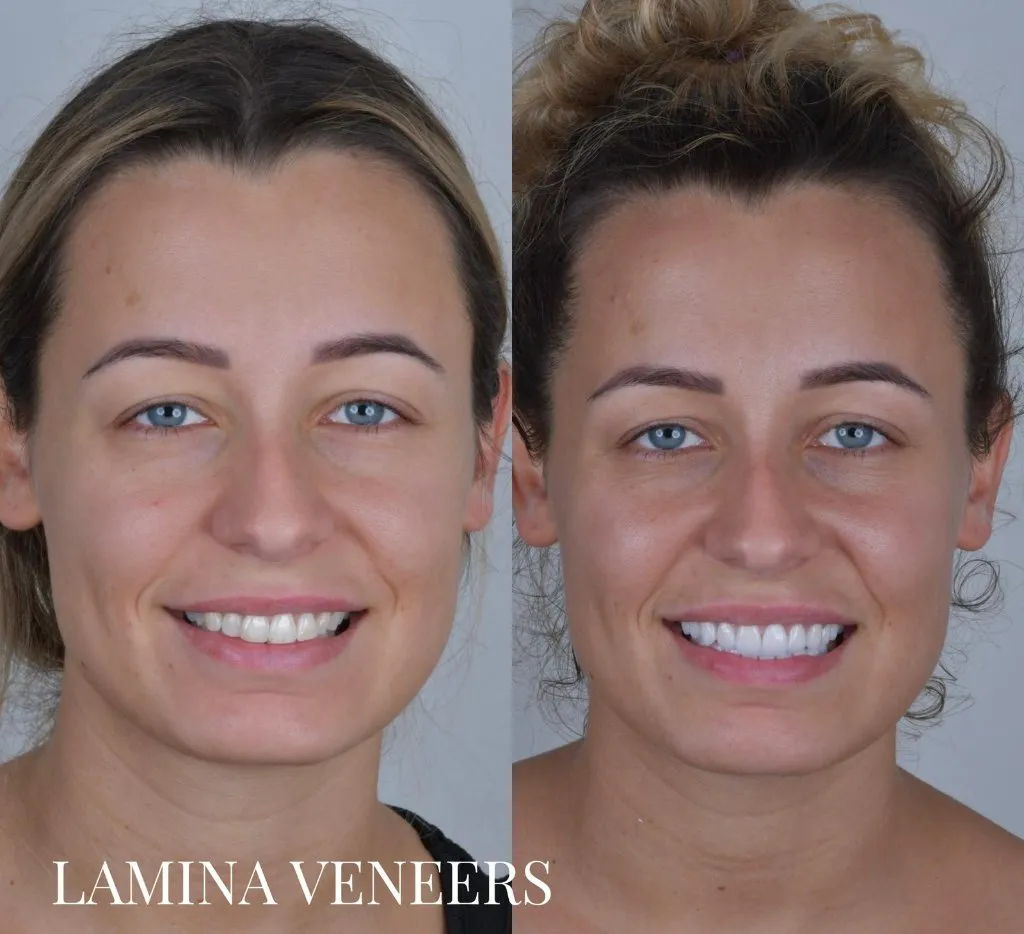
Most people show 6 to 10 upper teeth when they smile, so most veneer plans land on 6, 8 or 10 rather than a full arch. Fewer is often the right answer. The number depends on how wide your smile is, how far back a difference in colour would be visible, and which of those teeth already carry a crown or a large filling.
How many teeth actually show when you smile?
This is the one part of the planning you can do yourself, with a phone. Smile in a mirror in daylight the way you smile when someone photographs you, not a forced grin, and count the upper teeth you can see. Most adults land on six, eight or ten. That count, rather than a package name, is where a sensible plan starts, and it is the first thing we look at when somebody writes to us about dental treatment in Turkey.
A photograph is more reliable than a mirror, because in a mirror you unconsciously perform. Take two, front on, in natural light and without flash: your ordinary social smile, and a full laugh. The laugh shows the back limit, the last tooth that ever catches the light. Anything behind it does not need ceramic for cosmetic reasons.
Counting outwards from the middle: two central incisors, two laterals and two canines make six. The first premolars make eight, the second premolars ten. A narrow smile stops at the canines; a broad one carries on. Molars appear in very few smiles, and porcelain veneers are almost never placed on them for appearance alone.
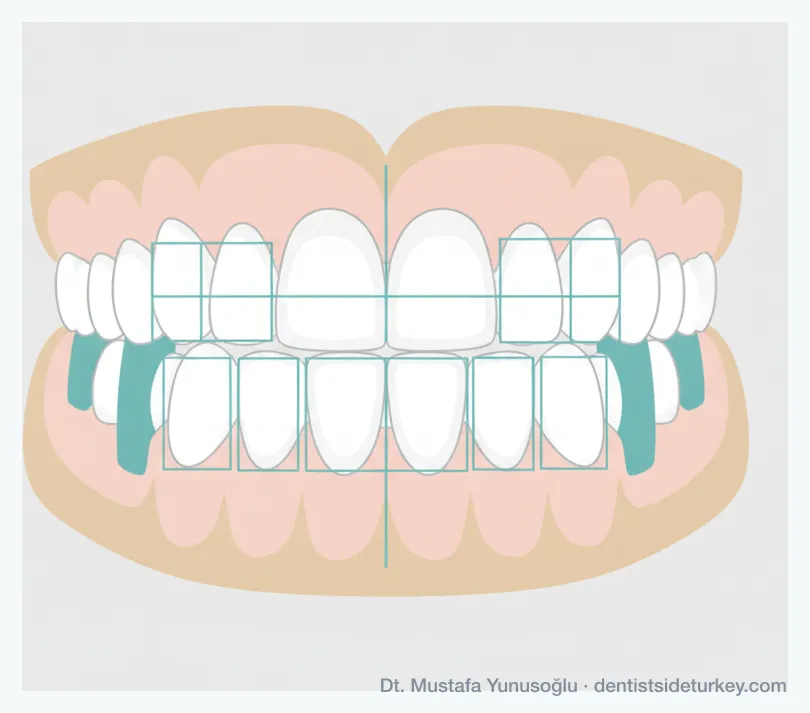
2, 4, 6, 8 or 10 veneers: which number suits which smile?
The risk column is worth reading twice. Every row describes the same problem: ceramic does not stain, wear or lighten the way enamel does, so wherever the veneers stop there is a join between a tooth that will never change colour and a tooth that will.
| Number | Who it usually suits | The main risk | Usually done alongside |
|---|---|---|---|
| 2 veneers | One or two front teeth chipped, worn or slightly out of line. | The hardest match in cosmetic dentistry: two new teeth among eight natural ones, where any drift in shade shows. | Whitening first, then matching the ceramic to the whitened result. |
| 4 veneers | The four upper incisors, on a narrow smile where the canines barely show. | Canines are naturally more yellow than incisors, so the join lands where the eye settles. | Whitening, and an honest look at whether six would sit better. |
| 6 veneers | Incisors and canines: the most common plan for a narrow to average smile. | If your smile reaches the premolars, the colour break moves one tooth back and still shows. | Whitening the premolars and molars before the shade is chosen. |
| 8 veneers | Adds the two first premolars. An average to wide smile. | The join falls on the second premolar, usually in shadow at the corner of the mouth: the most forgiving place to stop. | Whitening, and sometimes replacing a visible old restoration. |
| 10 veneers | A wide smile or broad arch, or a full smile makeover changing length and shape. | More enamel prepared than some cases need. The plan should give a reason for every unit. | Whitening the molars, and a night guard if you grind. |
Why do 4 veneers look wrong on a wide smile?
Because of the canines. In a healthy mouth the canine is not the same colour as the incisor beside it: more saturated, usually a shade or two more yellow. That is ordinary anatomy, not a fault. It becomes a problem only when four uniform, bright veneers go on the incisors and the canines are left alone. They then read as two dark bookends, sitting exactly where a viewer looks.
The arch is also not flat: it runs straight across the incisors and turns backwards at the canine, and light behaves differently on that turn. Extending to six puts the join past it, where it reads as depth rather than a line. On a genuinely narrow smile four can still be right, and the extra two would be enamel removed for nothing.
Do the lower teeth need veneers too?
Usually not, and the answer is again in your photographs. Most people show very little of the lower arch while speaking and only part of it while laughing. Where they do show, the concern is colour rather than shape: new upper veneers are chosen lighter than the teeth you started with, and a yellower lower arch makes the difference obvious. Whitening the lower teeth before the upper shade is chosen settles that for most people.
Lower teeth that are worn, chipped or crowded do need attention, but the reason is the bite rather than appearance, and that is a question for the examination. Lower incisors are also small and thin, with less enamel to bond to, so a dentist is generally more cautious about veneering them.
Not sure which of these describes your own smile? Send a photo on WhatsApp and we will tell you honestly, including when the answer is fewer than you expected.
What if one of those teeth already has a crown or a large filling?
Then the number of veneers goes down and the number of crowns goes up, which is the correct outcome rather than an upgrade. A veneer is a thin shell held on by its bond to enamel. Where a tooth has lost most of its enamel to a large restoration, an old crown or a root canal treatment, too little sound surface is left for that bond, and the honest answer is a crown. Our comparison of veneers, crowns and bonding sets out where each one stops being appropriate.
So a plan for eight visible teeth might read: six veneers and two crowns, tooth by tooth, with a reason for each. Materials follow the same logic: a glass-ceramic bonds to enamel and passes light through like enamel, while a crown on a darkened tooth is often better in a stronger, more opaque ceramic. Our post on choosing between E-max and zirconia explains which tends to go where.
One further point: ceramic cannot be re-shaded once made. Lighten the teeth around an old crown and it stays the colour it always was, so it usually has to be remade as part of the plan.
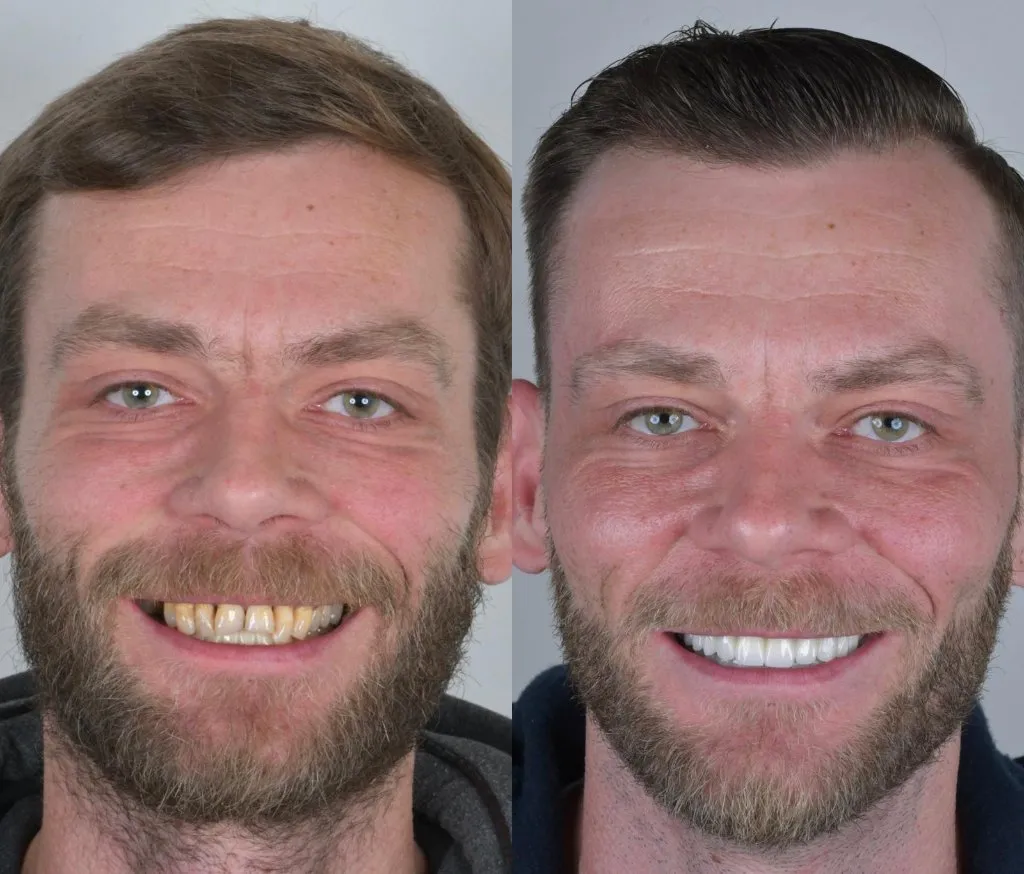
When is the right number zero?
More often than a veneers page tends to suggest. Three situations come up repeatedly, and in all three the enamel is better left alone.
The teeth are well shaped and straight, and the only complaint is colour. That is what teeth whitening is for. A session takes 60 to 90 minutes, nothing is taken off the tooth, and the result typically holds for 1‑2 years before it is topped up. If it reaches the shade you had in mind, the conversation about ceramic is over.
A chipped edge, a small gap, a worn corner. Composite bonding adds material to the tooth rather than taking material off it, it is done in a single appointment, and it can usually be adjusted or repaired later. It lasts 5‑7 years before it needs refreshing. The aesthetic fillings page covers what it can and cannot fix.
The teeth are crooked. Veneering a crooked smile straight means preparing the teeth that stick out more heavily than the rest, which is the opposite of conservative. Where teeth can be moved instead, an orthodontic opinion belongs before any ceramic, and whatever veneers are wanted afterwards will be fewer and thinner.
How is the number decided before anything is prepared?
In two stages, and nothing is touched in either. The first happens before you travel: you send two or three photographs of your teeth, and a panoramic X-ray if you have one, on WhatsApp. Dt. Mustafa Yunusoğlu reviews them personally, and within 24 hours you receive a written treatment plan, listing every item. If the photographs suggest six rather than ten, the plan says six.
The second stage happens at the clinic in Side, on the first day. After the examination and a digital X-ray, a digital smile design mock-up is built from your own proportions, and you see the proposed result before any enamel is prepared. The number can still move in either direction. The plan is then confirmed in writing, and the amount you approve is the amount you pay. Our guide to digital smile design goes through the steps; the smile gallery shows finished cases.
Photographs have limits: they cannot show how your teeth meet when you bite, where the gum line sits under a relaxed lip, or what lies under an old restoration, and results vary from person to person. A plan also gives itself away here. A quote offering every patient the same package of twenty units has not looked at the individual smile. A Hollywood Smile describes a result, not a quantity of ceramic, and a smaller number done well beats a larger number done to fill an arch.
What does the number commit you to?
Every veneer in the plan is a permanent decision about that tooth. Preparation for an E-max veneer removes 0.3‑0.5 mm of enamel, which is little, but it does not grow back: once a tooth has been prepared it will need a veneer or a crown for the rest of its life. Each unit you do not add is enamel you keep.
The difference in scale is measurable. In a laboratory study of preparation designs for front teeth, veneer preparations removed approximately 3% to 30% of the coronal tooth structure by weight, while preparations for complete-coverage crowns removed approximately 63% to 72%. That is why a careful plan reaches for a crown only where the tooth has already lost the argument.
Porcelain veneers typically last 10‑15 years. In a systematic review of ceramic veneers, glass-ceramic veneers showed an estimated survival of 94% over a median follow-up of 9 years, with fracture or chipping the most frequent complication at 4%. Veneers and crowns here carry a written guarantee of 5 years, and you can ask for its wording before you travel. Treatment is one visit of 5‑7 days with two or three appointments and temporaries in between. Our veneers guide covers that visit day by day, and the contact page lists every way to reach the clinic.
If you want the number for your own face rather than a package, send two or three photographs and you will be told what we would do and, just as usefully, what we would not.
Frequently Asked Questions
How many veneers do most people need?
Six, eight or ten upper veneers covers most cases, because most people show 6 to 10 upper teeth when they smile. Six covers the incisors and canines and suits a narrow to average smile. Eight adds the first premolars. Ten suits a wide smile or a broad arch. The count comes from your own photographs, not from a package.
Are 4 veneers enough?
Only on a narrow smile where the canines barely show. Canines are naturally more yellow and more saturated than the incisors next to them, so on an average or wide smile four veneers leave a visible colour break at the corner of the smile. If your canines show clearly in a relaxed smile, six is usually the more sensible number.
Do I need veneers on my lower teeth as well?
Usually not. Most people show very little of the lower arch while speaking and only part of it while laughing. Where the lower teeth do show, the issue is normally colour, and lightening them before the upper shade is chosen solves it without removing enamel. Worn or crowded lower incisors are a bite question and need an examination.
Can I have 6 veneers now and add more later?
Yes, and it happens. The practical difficulty is matching: ceramic made now and ceramic made in several years will come from different batches and sit against teeth that have aged in between, so an exact match is not certain. If you think you may extend the smile later, it is better to say so while the first shade is being chosen.
Will my natural teeth still match the veneers in a few years?
Ceramic does not stain or lighten, while natural enamel does both. Untreated teeth darken gradually with coffee, tea and red wine, so the ones beside the veneers will drift over time. Whitening them before the shade is chosen, and topping that up afterwards, is how the match is kept. Results vary from person to person.
Can veneers and crowns be mixed in the same smile?
Yes, and a mixed plan is often the honest one. A veneer needs enamel to bond to, so a tooth that has lost most of its enamel to a large restoration, an old crown or a root canal treatment needs a crown instead. A plan for eight visible teeth might list six veneers and two crowns, and it should say which tooth gets which.
Is 20 veneers ever the right number?
Rarely, and almost never because of a package. Twenty units means treating teeth that do not show when you smile, which removes enamel for no visible gain. A broad arch with heavy wear can genuinely reach ten upper units and some lower ones, but each one should be justified tooth by tooth in a written plan.
Sources
- Morimoto et al. (2016), Int J Prosthodont: Main clinical outcomes of feldspathic porcelain and glass-ceramic laminate veneers, systematic review and meta-analysis
- Edelhoff & Sorensen (2002), J Prosthet Dent: Tooth structure removal associated with various preparation designs for anterior teeth
- Oral Health Foundation: Veneers
- Oral Health Foundation: Tooth whitening
- Oral Health Foundation: Crowns