
Dental Implant Pain, Swelling or a Loose Implant: What It Means and What to Do
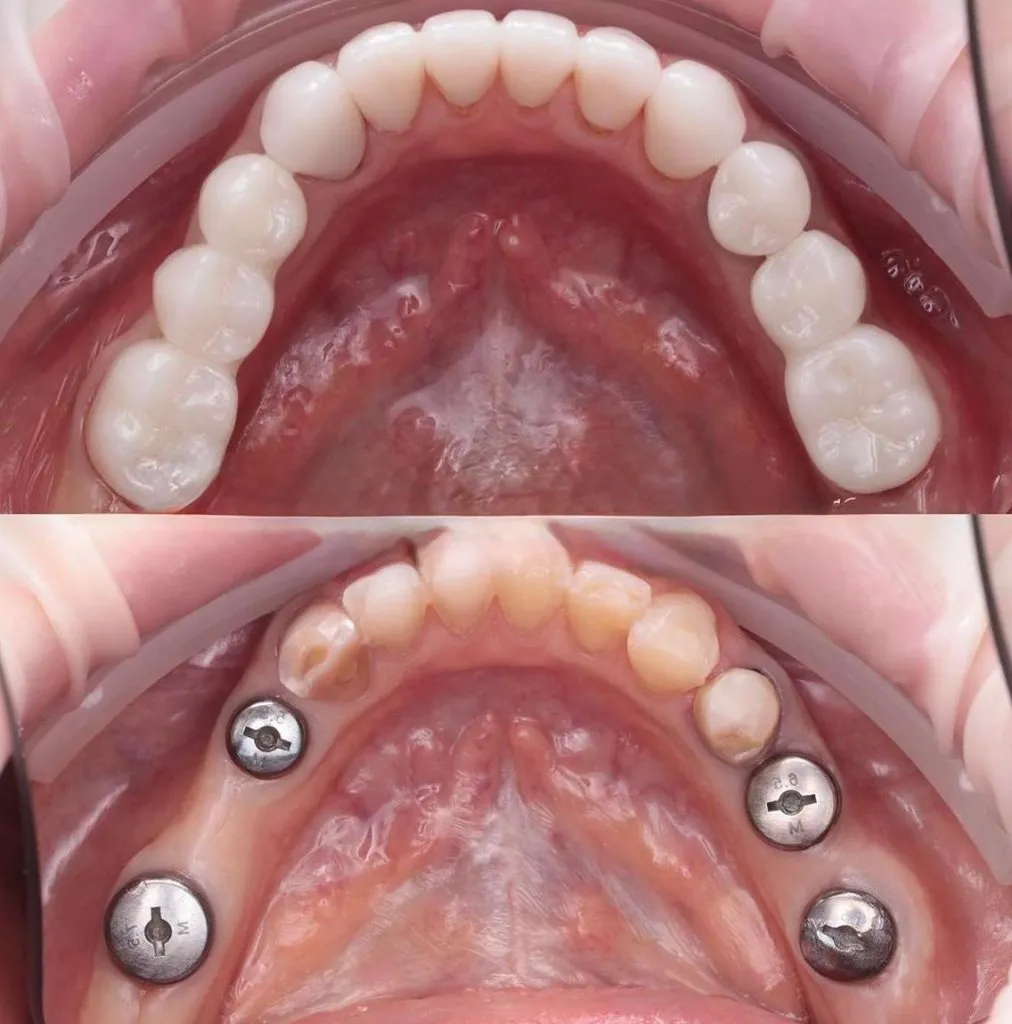
Some soreness and swelling for a few days after an implant is placed is normal. Pain that gets worse after the third or fourth day, gums around the implant that bleed or swell, pus, or anything that moves is not. A loose crown is usually a fixable screw or cement problem; an implant that itself moves in the bone is serious. In every case the next step is the same: have it examined with an X-ray, and the sooner the better.
What does each sign usually mean?
Most worried messages about implants describe one of a handful of signs. They mean very different things, so it helps to sort them before deciding how urgent it is.
| What you notice | Most common meaning | How soon |
|---|---|---|
| Soreness and mild swelling in the first days | Normal healing after surgery | Expected; call if it worsens after day 3‑4 |
| Gums around the implant bleed when you brush | Peri-implant mucositis: inflammation of the gum only | Within a few weeks; it is reversible |
| Swelling, pus or a bad taste around the implant | Infection, possibly peri-implantitis with bone loss | Within days |
| The crown wobbles or clicks | Loose screw or crown, implant usually fine | Soon; avoid chewing on it |
| The whole implant moves | The implant has not joined the bone or has lost it | Promptly |
| Numbness that does not wear off after surgery | Possible nerve irritation | Call the same day |
A crown that moves and an implant that moves feel similar to the patient. The difference is found by the dentist, often only with an X-ray, which is why describing it as "loose" is a reason to be seen rather than a diagnosis.
How much discomfort is normal after placement?
Placing an implant is minor surgery under local anaesthetic, and the gum and bone react to it. Mild discomfort for two or three days, some swelling and slight bruising are part of normal healing and are usually managed with ordinary painkillers. The trend matters: day two should feel better than day one, and day four better again. Pain that increases after the first few days, swelling that grows, a fever or a bad taste are signs to call.
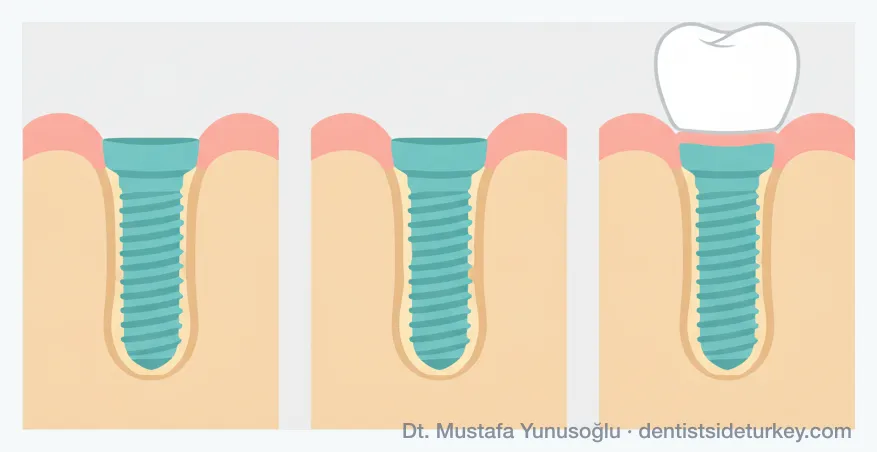
During healing the implant joins the bone, a process that takes 2‑4 months, up to 6 in the upper jaw, before the final crown is fitted on the second visit. The dental implants page describes both visits, and our post on what to eat after implants covers the first weeks at the table.
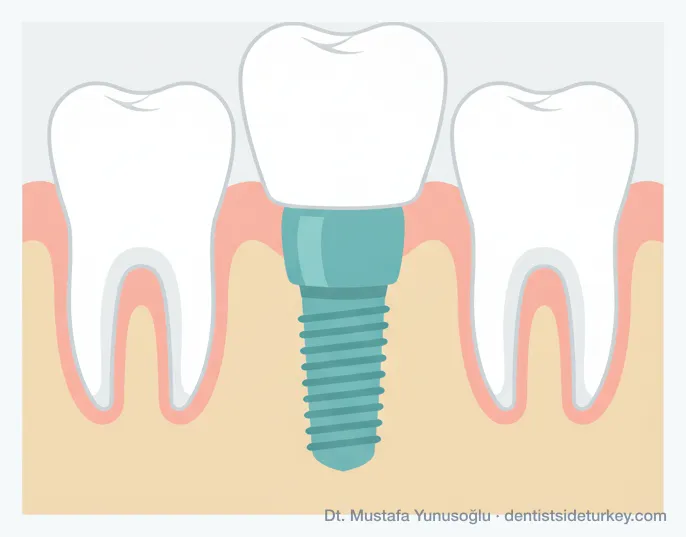
What are peri-implant mucositis and peri-implantitis?
They are the implant versions of gum disease, and they are more common than most patients are told. A systematic review of 11 studies estimated that about 43% of patients had peri-implant mucositis and about 22% had peri-implantitis, with the risk growing the longer implants had been in the mouth. Mucositis is inflammation of the gum around the implant: it bleeds and looks red, and it is reversible with cleaning and better daily care. Peri-implantitis goes further and destroys some of the bone that holds the implant. It needs professional treatment, and the earlier it is caught, the better the outlook.
The strongest risk factors are the same as for gum disease: smoking, uncontrolled diabetes and a history of periodontitis. A meta-analysis found that people with past periodontitis had a higher risk of losing an implant (risk ratio 1.69) and of developing peri-implantitis. Our guide to implants with smoking, diabetes or gum disease explains what that means before treatment, and the European Federation of Periodontology gives patient advice on keeping implants healthy.
What if the crown or the implant feels loose?
Start with the good news: most wobbling crowns are a loose screw or failed cement, and the implant underneath is fine. The fix is usually short: the crown is removed, the screw tightened or replaced, and the crown refitted. Stop chewing on that side until it is seen, because a crown rocking on a loose screw can damage the screw threads.
An implant that itself moves in the bone is different. In the first months it can mean the implant did not integrate; later it usually means bone loss around it. A moving implant generally has to be removed, the site allowed to heal, and a new implant planned, sometimes with bone grafting. That is a decision made with an X-ray, and it is covered in more detail in our post on not enough bone for implants.
What should you do if this happens after you fly home?
Write to us first, with photos and a short description: send them on WhatsApp. Dt. Mustafa Yunusoğlu reviews them personally and tells you honestly how urgent it looks. If it needs to be seen soon, see a dentist near you; your treatment documents name the implant brand, the components and the X-rays, so any dentist can work on it. Implants carry a written guarantee of 10 years, and what falls under it is handled with you, including a return visit where needed. Our post on follow-up after you fly home explains how this works.
Keep the documents somewhere you can find them. Knowing the implant brand matters more than most people think: a dentist abroad can order the right screw or abutment for a known system, and struggles with an unknown one.
When is the clinic that placed the implant not the right first stop?
When you need help within days and that clinic is a flight away. Swelling, pus, fever or a moving implant should be examined locally rather than wait for a trip. That applies to implants placed by us and to implants placed elsewhere. If your implant was placed by another clinic and you want a view on what is happening, send your X-ray and implant details; our post on getting a second opinion explains what a remote review can and cannot judge, and we will say plainly if your case is better handled near home.
Prevention is mostly daily: brush twice a day, clean around the implant with interdental brushes or floss, and have it checked once or twice a year. The contact page lists every way to reach us. Results vary from person to person and depend on the examination.
Frequently Asked Questions
How long does pain last after a dental implant?
Mild discomfort and swelling usually last two or three days and improve each day; ordinary painkillers are typically enough. Pain that gets worse after the third or fourth day, growing swelling, fever or a bad taste should be checked.
Why do the gums around my implant bleed?
The most common cause is peri-implant mucositis, inflammation of the gum around the implant. It is reversible with professional cleaning and better daily care around the implant. If it is left untreated it can progress to peri-implantitis, which affects the bone.
My implant crown is loose. Is the implant failing?
Usually not. Most loose implant crowns are caused by a loose screw or failed cement, and the implant itself is fine. Stop chewing on that side and have it seen soon; tightening or replacing the screw is usually a short appointment.
What does it mean if the implant itself moves?
An implant that moves in the bone has either not integrated or has lost bone around it. It usually has to be removed and the site allowed to heal before a new implant is planned. This is decided with an examination and X-ray.
How common is peri-implantitis?
A systematic review of 11 studies estimated a weighted mean prevalence of about 22% for peri-implantitis and about 43% for peri-implant mucositis, with risk rising the longer implants are in function. Smoking, uncontrolled diabetes and past gum disease increase the risk.
What should I do if my implant has a problem after I fly home?
Send photos and a short description on WhatsApp to +90 530 575 47 18; Dt. Mustafa Yunusoğlu reviews them personally. If it needs to be seen within days, see a local dentist with your treatment documents, which name the implant brand and components. Implants carry a written guarantee of 10 years.
How do I keep my implant healthy?
Brush twice a day, clean around the implant every day with interdental brushes or floss, avoid smoking and have it checked by a dentist once or twice a year. Early treatment of bleeding gums around an implant prevents most bigger problems.
Sources
- Derks & Tomasi (2015), J Clin Periodontol: Peri-implant health and disease, systematic review of current epidemiology
- Sgolastra et al. (2015), Clin Oral Implants Res: Periodontitis, implant loss and peri-implantitis, meta-analysis
- Oral Health Foundation: Dental implants
- ADA MouthHealthy: Implants
- European Federation of Periodontology: information for patients