
Not Enough Bone for Dental Implants? What It Means and What Your Options Are in Turkey
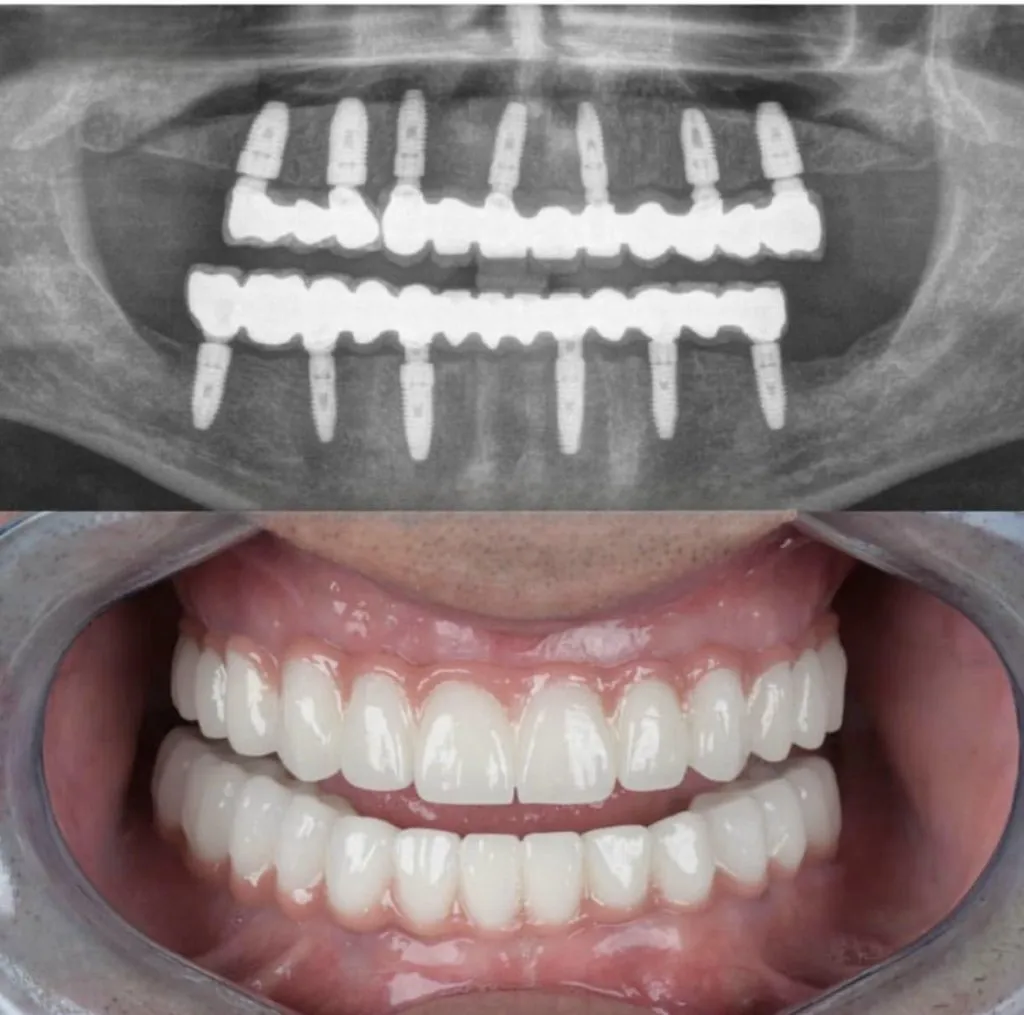
It almost never means never. In most cases it means the bone has shrunk in height or width since the tooth was lost, and the plan has to account for that: a graft, a sinus lift, a shorter or narrower implant, implants placed at an angle, or sometimes a bridge or a denture instead. Which of those applies is read off a 3D scan, not a photograph.
Being told there is not enough bone usually arrives as a verdict rather than an explanation. It is rarely a verdict. Bone volume is a measurement, and measurements come with options attached. Here is what is being measured, what the usual answers are, and what each one does to the time and the number of trips if you are weighing up dental treatment in Turkey.
And nobody can tell whether you have enough bone from a photograph. Photos show the gums and the shape of the gap. Bone is read from an X-ray, and properly from a 3D scan.
What are the usual options when there is not enough bone?
| Your situation | Usual options | Effect on the schedule |
|---|---|---|
| Upper back tooth missing, sinus low above it | Sinus lift, or a shorter implant if the height allows | A sinus lift adds healing time. A shorter implant often does not |
| Ridge is tall but narrow, tooth lost years ago | Bone graft to widen the site, or a narrower implant for a small tooth | A graft adds a healing period, around the implant or before it |
| Lower back jaw, little height above the nerve canal | Shorter implant, a graft, or a bridge on the neighbours | A bridge avoids surgery and healing. A graft does not |
| A whole jaw, denture worn for years | All-on-4 with angled implants, or grafting with more implants | All-on-4 usually keeps the two visit pattern with a fixed temporary bridge |
| Very little bone, or healing slowed by a medical condition | A removable denture, or an implant retained denture if the bone allows | No surgery means no healing period |
| Gum disease still active | Nothing yet. The gums are treated first | Adds weeks or months at home before anything is booked |
The table is a map, not a diagnosis: two people missing the same tooth end up with different plans. Our comparison of implant, bridge and denture covers the three routes in general.
Why does bone disappear after a tooth is lost?
The bone that holds a tooth exists because the tooth is there, and once the root has gone it gradually gives up its shape. That is ordinary biology, not neglect.
The speed is the part few people are told. A systematic review of human re-entry studies, published in 2012, reported horizontal bone loss of 29‑63% and vertical bone loss of 11‑22% at 6 months after tooth extraction, with rapid reductions in the first 3 to 6 months and gradual reductions after that. An earlier 12-month study concluded that major changes of an extraction site occurred during 1 year after the tooth was removed.
The loss is not even. The outer wall of the socket, the side you feel with your lip, is the thinnest, so a ridge narrows from the front. A gap can look normal from outside and still be too thin underneath, and a denture pressing on it keeps the process going.
What does "not enough bone" actually mean?
It is shorthand for one of four measurements.
- Height. How much bone lies between the top of the ridge and whatever is above or below it. Height decides how long an implant can be.
- Width. A ridge can be tall and still be as narrow as a blade. An implant needs bone on both sides of it, not only underneath.
- The sinus. Above the upper back teeth sits the maxillary sinus, an air space in the cheekbone. When upper molars are lost its floor commonly drops, leaving a few millimetres of bone between the sinus and the mouth.
- The nerve. In the lower jaw a nerve runs through a canal in the bone and gives feeling to the lip and chin. An implant has to keep a safe distance from it, and that distance is measured, not estimated.
The last two are why a serious answer is never "we will see on the day", and why the scan comes before the surgery.
What do bone grafting and a sinus lift actually do?
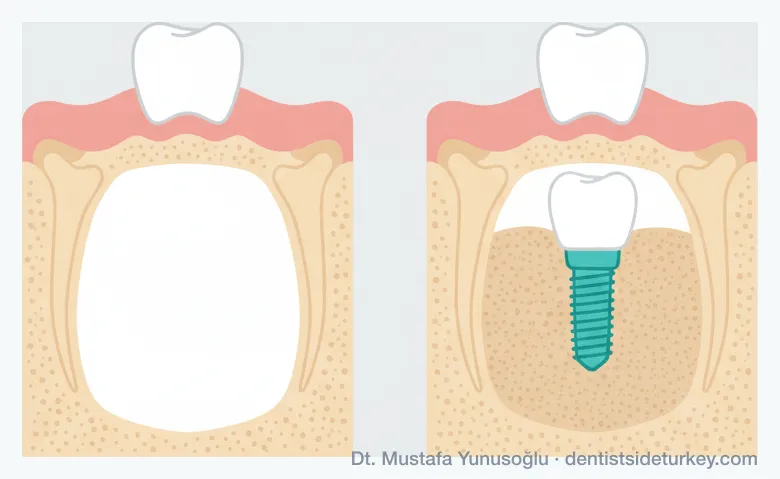
Bone grafting means rebuilding the site so that there is bone where the implant has to sit, in width, in height or both. Sometimes it happens at the same appointment as the implant, sometimes the site is rebuilt first and the implant placed later. Which applies is a surgical decision taken after the scan.
A sinus lift is the version used in the upper back jaw: the membrane on the floor of the sinus is raised and bone built up beneath it, so an implant has height to sit in without entering the air space. A systematic review published in 2019 compared implants placed after an open sinus lift with implants in native bone, and found similar implant survival and similar conditions around the implant, with more surgical complications in the sinus lift group.
That last point is the honest one: an added procedure adds healing, adds waiting and adds things that can go wrong. It is usually worth it when it buys a fixed tooth that would otherwise be out of reach. Results vary from person to person, and nobody can promise an outcome before seeing a scan. Not sure which of these applies to you? Send your X-ray on WhatsApp and you will get an honest reading of it.
Can a shorter or a narrower implant avoid a graft?
Sometimes. Where height is limited, a shorter implant may be an option instead of building height first. An umbrella review published in 2023 compared short implants of under 10 mm with regular implants placed after bone augmentation in the atrophic lower back jaw. It concluded that the available evidence partially suggests the use of short implants could decrease implant failure, marginal bone loss and biological complications, while calling for further trials.
Narrower implants do the same for a thin ridge, mostly where the tooth being replaced is small. Neither is a free choice: the implant still has to carry chewing load for years. What you can expect is that the option was considered and the reasoning written into your plan.
When does All-on-4 avoid grafting altogether?
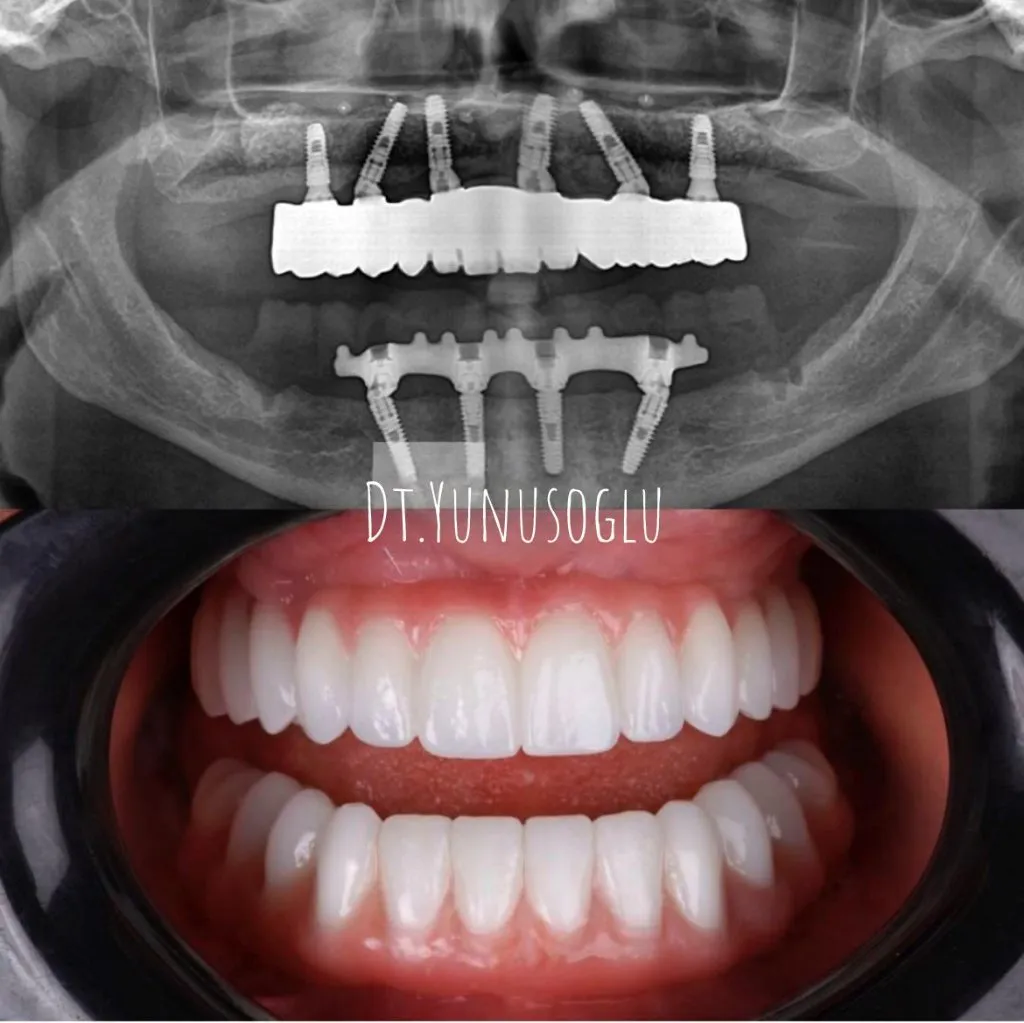
When a jaw has been without teeth for years, the bone does not disappear evenly. What usually remains is the front section, because the sinuses sit above the back of the upper jaw and the nerve runs through the back of the lower one. All-on-4 is built around that: four implants go into the bone that is still there, with the back two angled so they reach further back without entering the sinus or the nerve canal. Avoiding a graft is the reason the technique exists.
It is not a universal answer. If the front bone has gone as well, grafting or a different plan is needed, which is again a question for the scan. Where it does apply, the schedule keeps the usual two visits, with a fixed temporary bridge attached within 24‑72 hours of surgery. Our All-on-4 guide goes through the stages.
How much does a graft change the time and the number of trips?
This has to be settled before flights are booked, because it is the one thing that changes the shape of the trip. The standard implant route is two visits: 3‑5 days for the placement, then 2‑4 months of healing at home and up to 6 months in the upper jaw, then 4‑7 days for the final teeth. Where grafting happens at the same appointment as the implant, that pattern often holds, with a longer healing period in the middle. Where the site has to be rebuilt first, that is a separate stage with its own healing time, and it can mean a longer wait or an additional trip.
None of that is a problem if it is in your plan before you book, and a real problem if it is not. Ask any clinic, anywhere, to state in writing whether grafting is expected and what it does to the calendar. Our page on how many days treatment takes sets out the normal schedules, and the dental implants page covers the two visits.
What should I send, and who should not rush into this?
To get an answer worth having, send four things:
- Two or three photos of your teeth and of the gap, taken in daylight.
- Any panoramic X-ray or 3D scan you already have, even a year or two old. A phone photograph of the printed film is usually readable.
- When the teeth were lost, and whether you have worn a denture since.
- Your medical history and the medicines you take.
Send it on WhatsApp to +90 530 575 47 18 and you receive a written treatment plan within 24 hours, without obligation. If you have no X-ray, say so: the plan sets out the options and notes that the bone question stays open until a scan is taken. Whether bone grafting or a sinus lift applies to you is assessed on the 3D scan at the first examination. Implant surgery is carried out by a dental surgeon specialising in implantology, with Nobel Biocare and Straumann implants.
Some people should not rush. Untreated gum disease is dealt with first, because the same bacteria will work on the bone around an implant. If you smoke, or your diabetes is not under control at the moment, the plan changes too, as our post on implants with smoking, diabetes and gum disease explains.
And sometimes the honest answer is that an implant is not the right thing for you. A bridge on healthy neighbours, or a well made denture, can be the better plan, and a plan that never says so is not worth trusting. Ask about your own case through the contact page; our guide to dental implants in Turkey and the FAQ cover the rest.
Frequently Asked Questions
I was told I do not have enough bone for implants. Is that final?
Usually not. It means the bone was measured and found short in height or width, or too close to the sinus or the nerve. Bone grafting, a sinus lift, a shorter or narrower implant, or angled implants as used in All-on-4 are the usual ways around it. Which one applies is decided on a 3D scan, not from a photograph.
How quickly does bone shrink after a tooth is taken out?
Fastest at the beginning. A systematic review of human re-entry studies found horizontal bone loss of 29‑63% and vertical bone loss of 11‑22% at 6 months after extraction, with rapid reductions in the first 3 to 6 months and gradual reductions afterwards. It does not stop completely later, which is why a gap left for many years often needs rebuilding.
What is a sinus lift and would I need one?
It is the procedure used when there is not enough height in the upper back jaw, where the maxillary sinus sits above the teeth. The membrane on the floor of the sinus is raised and bone is built up beneath it, so that an implant has height to sit in. Whether you need one is visible on a 3D scan and nowhere else.
Does a bone graft mean an extra trip to Turkey?
Not always. When grafting is done at the same appointment as the implant, the usual two visits often stay as they are, with a longer healing period in between. When the site has to be rebuilt first and the implant placed later, that is a separate stage and can mean a longer wait or an extra visit. It belongs in your written plan before you book flights.
Can All-on-4 be done without a bone graft?
Often, and that is the point of the technique. The four implants are placed in the bone that remains at the front of the jaw, with the back two angled so they reach further back without entering the sinus or the nerve canal. If the front bone has gone as well, grafting or a different plan is needed, which the scan will show.
Can you tell from a photo whether I have enough bone for an implant?
No. Photos show the gums, the gap and the neighbouring teeth, which is enough for a first written plan and a realistic set of options. Bone height and width, the sinus and the nerve are visible only on an X-ray, and properly on a 3D scan. Send any panoramic X-ray you already have, even an old one, and the plan will be closer to the final one.
What if grafting is not an option for me?
Then the honest answer may be a bridge on the neighbouring teeth, or a denture, either removable or held by fewer implants where the bone allows. Neither is a failure. For a single gap a bridge can be the more sensible choice, and a plan that never offers an alternative to surgery is not a plan worth trusting.
Sources
- Tan et al. (2012), Clin Oral Implants Res: post-extraction alveolar hard and soft tissue dimensional changes in humans, systematic review
- Schropp et al. (2003), Int J Periodontics Restorative Dent: bone healing and soft tissue contour changes following single-tooth extraction, 12-month prospective study
- Romero-Millan et al. (2019), Int J Oral Maxillofac Implants: implants in the posterior maxilla, open sinus lift versus conventional implant placement, systematic review
- Saenz-Ravello et al. (2023), Int J Implant Dent: short implants compared to regular implants after bone augmentation in the atrophic posterior mandible, umbrella review and meta-analysis
- Oral Health Foundation: dental implants