
Can I Get Dental Implants in Turkey If I Smoke, Have Diabetes or Gum Disease?
Usually yes, but the plan changes. Smoking roughly doubles the chance that an implant fails. Well-controlled diabetes makes little measurable difference; poorly controlled diabetes does. Gum disease has to be treated and stable before anything is placed. Osteoporosis is rarely the problem, but some of the medicines for it are. None of these is decided from a photo: they are decided from your medical history, your X-ray and an honest conversation.
The short answer, condition by condition
| Your situation | What the evidence says | What it means for your plan |
|---|---|---|
| You smoke | About twice the failure rate of non-smokers, plus more infections and more bone loss around the implant | Possible. Stopping before surgery and through healing matters more than anything else you can do |
| Diabetes, well controlled | No significant difference in implant failure in a systematic review | Possible. Bring your latest HbA1c result |
| Diabetes, poorly controlled | Slower healing, higher infection risk | Wait until it is under control; your diabetes doctor decides when that is |
| Gum disease (periodontitis) | Higher risk of implant loss and of peri-implantitis | Treat first, implant second, regular maintenance for life |
| Osteoporosis | No difference in implant survival in a meta-analysis | Possible. Tell us exactly which medicine you take and for how long |
| Blood thinners | A question of managing bleeding, not of implant survival | Possible. Never stop them on your own; timing is agreed with your prescriber |
| Age over 65 | Age alone is not a risk factor | Possible. General health and bone decide, not the birth date |
| Under 18 | The jaw is still growing | Wait until growth is complete |
Can I get dental implants if I smoke?
Yes, but you should know the numbers. A meta-analysis by Chrcanovic and colleagues pooled more than a hundred studies: 6.35% of implants placed in smokers failed, against 3.18% in non-smokers. Smokers also had more infections after surgery and lost more bone around their implants over time.
The reason is blood supply. An implant heals because bone grows onto its surface, and that needs oxygen and a good circulation in the gum. Nicotine narrows the small blood vessels, carbon monoxide takes up room in the blood that oxygen needs, and the smoke itself irritates the wound. The early weeks are when it matters most, because that is when the bone either bonds to the implant or does not.
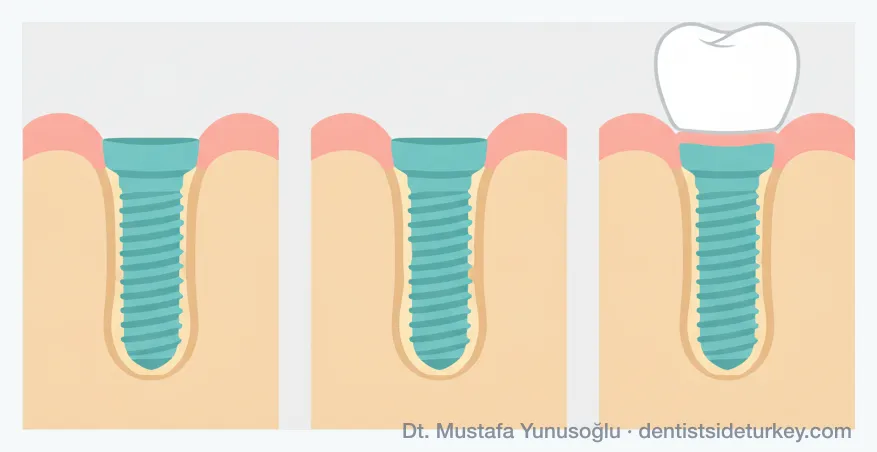
What dentists commonly advise is to stop before surgery and to stay stopped through the healing period; how long that means for you is your surgeon's call. Cutting down helps less than people hope. Vaping and nicotine pouches are not a free pass either, because nicotine is one of the culprits; the research on them is thinner, so treat them like cigarettes around surgery.
If you smoke heavily and do not intend to stop, say so. It is not a moral question, it is a planning one. For a single gap, a bridge is unaffected by smoking and may simply be the better choice; our comparison of implant, bridge and denture sets out when.
Can I get dental implants if I have diabetes?
If it is well controlled, the evidence is reassuring. A systematic review in the Journal of Dental Research compared diabetic and non-diabetic patients and found no statistically significant difference in implant failure, with a risk ratio of 1.07. It did find slightly more bone loss around the implants of diabetic patients, which is a reason for careful maintenance, not a reason to refuse.
Control is the word that matters. High blood sugar slows wound healing and makes infection more likely, so surgery is planned for a period when your diabetes is stable. The number that shows this is your HbA1c, the three-month average your diabetes doctor already measures. Send the latest result with your X-ray. What counts as well controlled for you is your doctor's decision, not ours and not a website's.
On the day, keep to your normal medication and meals unless your doctor says otherwise, and book a morning appointment if you can. Implant placement is done under local anaesthetic, so you do not need to fast.
Can I get dental implants if I have gum disease?
Not while it is active. Periodontitis is a bacterial infection that destroys the bone holding the teeth, and the same bacteria will attack the bone holding an implant. A meta-analysis found that patients with a history of periodontitis had a higher risk of losing an implant (risk ratio 1.69) and of developing peri-implantitis, the implant version of gum disease (risk ratio 2.17).
So the order is fixed: the gums are treated first, the result is checked, and only then is an implant planned. For many people it was gum disease that cost them the tooth in the first place, which makes this the most important paragraph in this guide. If your gums bleed when you brush, if teeth have loosened or drifted, or if you have been told you have "pockets", have that treated at home before you book a flight. It is slow work that cannot be compressed into a holiday week.
Afterwards the implant needs what the teeth needed: thorough daily cleaning between the teeth and professional cleaning at regular intervals with your dentist at home. An implant cannot decay, but the gum and bone around it can be lost in exactly the same way as around a tooth.
Can I get dental implants if I have osteoporosis?
Osteoporosis itself is rarely the obstacle. A meta-analysis of fifteen studies found no difference in implant survival between patients with and without osteoporosis, only slightly more bone loss around the implant neck.
The medicines are a different matter. Drugs that slow bone turnover, which include bisphosphonates such as alendronate and the injection denosumab, are linked to a rare but serious problem in which jawbone fails to heal after surgery. The risk is low with the tablets taken for osteoporosis and much higher with the high-dose infusions used in cancer treatment. Tell us the name of the medicine, the dose, and how long you have taken it. Whether and when surgery goes ahead is agreed with the doctor who prescribes it. Do not stop the medicine on your own.
What about blood thinners, heart conditions and other medicines?
Placing an implant is minor surgery, and for most people on blood thinners it can be done safely with local measures to control bleeding. What must never happen is that you stop an anticoagulant or antiplatelet drug by yourself before travelling; the risk of a clot is far more serious than the risk of a bleeding gum. Tell us what you take, and let your prescriber decide how the appointment is timed.
A few situations do mean waiting or choosing something else: radiotherapy to the jaw or neck, chemotherapy in progress, a recent heart attack or stroke, pregnancy, and any illness that is currently out of control. None of them rules out replacing the tooth. They rule out elective surgery right now.
What if there is not enough bone?
This is the most common obstacle of all, and it is not a disease. After a tooth is lost the bone that held it slowly shrinks, and in the upper jaw the sinus sits close above the back teeth. Where the bone is too thin, it can often be rebuilt with a graft or a sinus lift before or during implant placement. That adds healing time and can change the two-visit schedule, so it is something to know before you book, not after you land.
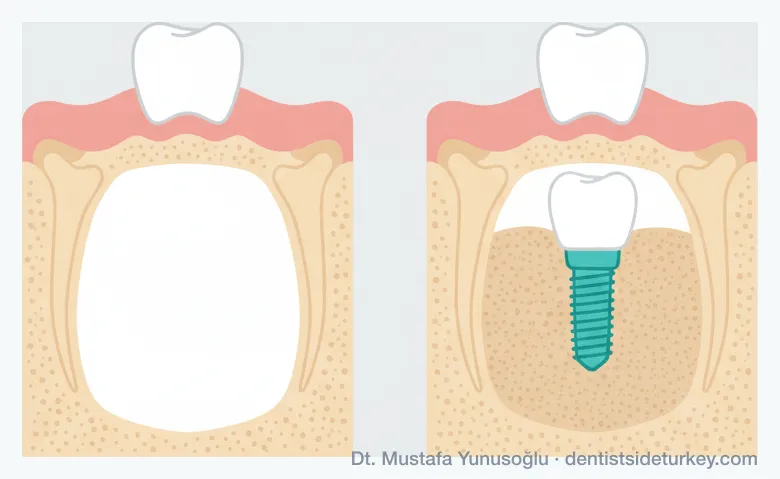
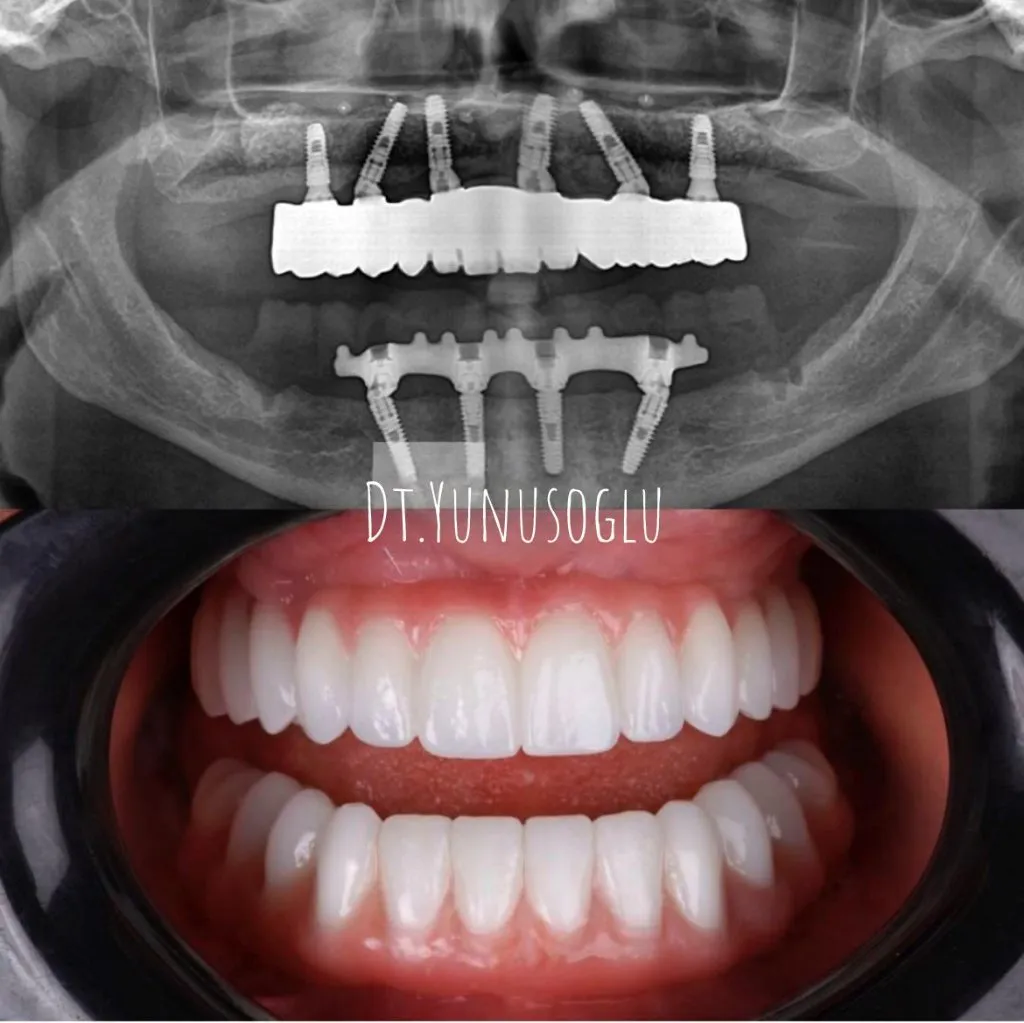
Whether it applies to you is visible on a scan, not in a photo. If you have a recent panoramic X-ray or a 3D scan from home, send it. For people who have worn dentures for years and have lost a lot of bone, All-on-4 is often planned precisely because the angled implants use the bone that is still there.
Am I too old for implants?
No. There is no upper age limit, and people in their seventies and eighties have implants placed routinely. What counts is general health, medication and bone, all of which are assessed individually. The only age limit is at the other end: implants are not placed until the jaw has finished growing, usually from the age of 18.
What to send so that your plan is honest
- Two or three photos of your teeth and, if you have one, a recent panoramic X-ray.
- A list of every medicine you take, with the dose. A photo of the boxes is enough.
- If you have diabetes, your latest HbA1c result and its date.
- Whether you smoke, and how much. Nobody will lecture you; it changes the plan.
- Anything you have been told about your gums, and when they were last treated.
- Any heart condition, radiotherapy, or treatment for osteoporosis or cancer.
Send it on WhatsApp to +90 530 575 47 18. Dt. Mustafa Yunusoğlu reviews it personally and you receive a written treatment plan within 24 hours. If implants are not the right answer for you at the moment, the plan says so and sets out the alternative. Implant surgery at the clinic is carried out by a dental surgeon specialising in implantology, with Nobel Biocare and Straumann implants and a written guarantee of 10 years on the implant.
The dental implants page explains the two visits (3‑5 days, then 4‑7 days after 2‑4 months of healing), our dental implants guide covers the surgery step by step, the holiday aftercare timeline covers the first days after surgery, and the FAQ and contact pages cover everything else.
Frequently Asked Questions
Do dental implants fail more often in smokers?
Yes, about twice as often. In a meta-analysis of more than a hundred studies, 6.35% of implants placed in smokers failed, against 3.18% in non-smokers, and smokers also had more infections and more bone loss around the implant. Stopping before surgery and staying stopped through the healing period is the single most useful thing a smoker can do; the exact period is your surgeon's call.
Can diabetics get dental implants?
Yes, when the diabetes is well controlled. A systematic review found no statistically significant difference in implant failure between diabetic and non-diabetic patients (risk ratio 1.07), although bone loss around the implant was slightly greater. Poorly controlled blood sugar slows healing and raises infection risk, so surgery is planned for a stable period. Send your latest HbA1c result with your X-ray.
Can I have implants if I have had gum disease?
Yes, once it has been treated and is stable. A history of periodontitis raises the risk of implant loss (risk ratio 1.69) and of peri-implantitis (2.17), so the gums are treated first and the implant is planned afterwards. After that the implant needs thorough daily cleaning and regular professional cleaning with your dentist at home.
Is osteoporosis a reason not to have implants?
Osteoporosis itself is not: a meta-analysis found no difference in implant survival between patients with and without it. The medicines matter more. Bisphosphonates and denosumab are linked to a rare problem with jawbone healing after surgery, so tell your surgeon the drug, the dose and how long you have taken it, and never stop it on your own.
Should I stop my blood thinners before implant surgery?
Not on your own, ever. Implant placement is minor surgery and bleeding can usually be controlled locally, while stopping an anticoagulant without advice can cause a clot. Tell the clinic exactly what you take, and let the doctor who prescribes it decide how the appointment is timed.
Is there an age limit for dental implants?
There is no upper limit. General health, medication and bone volume decide, not the year you were born, and implants are placed routinely in people in their seventies and eighties. The lower limit is the end of jaw growth, usually from the age of 18.
What happens if I do not have enough bone for an implant?
Bone can often be rebuilt with a graft or a sinus lift before or during implant placement, which adds healing time and can change the two-visit schedule. Whether you need it is visible on a scan, not in a photo, so send a recent panoramic X-ray if you have one. For a jaw that has lost a lot of bone, All-on-4 is often planned because its angled implants use the bone that remains.
Sources
- Chrcanovic et al. (2015), J Dent: Smoking and dental implants, systematic review and meta-analysis
- Chrcanovic et al. (2014), J Dent Res: Diabetes and oral implant failure, systematic review
- Sgolastra et al. (2015), Clin Oral Implants Res: Periodontitis, implant loss and peri-implantitis, meta-analysis
- de Medeiros et al. (2018), Int J Oral Maxillofac Surg: Dental implants in patients with osteoporosis, systematic review with meta-analysis
- Oral Health Foundation: Dental implants
- European Federation of Periodontology: information for patients