
Problems With Veneers or Crowns Done at Another Clinic: What Can Be Fixed, and What a Second Look Involves
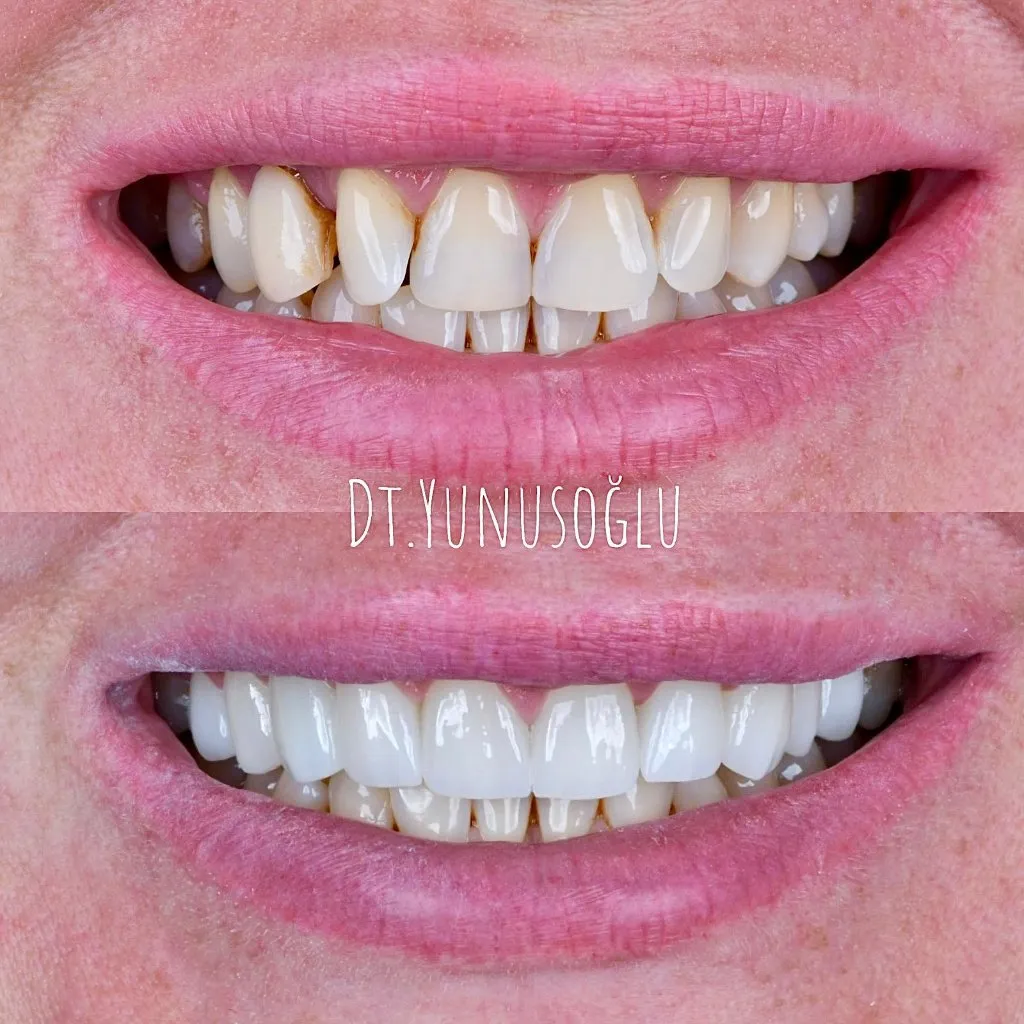
Most problems with veneers or crowns made elsewhere are small and can be put right without redoing the work: a high bite is adjusted, a rough edge is polished, a chip is repaired, a loose crown is re-cemented. Throbbing pain, swelling, a bad taste or a crown that has come off deserve a dentist within a day or so. A second look means an examination, an X-ray and a written plan with options, so you know what is wrong before anyone suggests replacing anything. If you are on holiday near Side, we can look at it Monday to Saturday.
What are the common problems, and what do they usually mean?
Veneers and crowns are among the most common dental restorations anywhere, so problems are not tied to one country or one clinic. They happen at home as well as abroad. The table shows what each sign usually points to; only an examination can confirm it.
| What you notice | What it usually means | What can be done |
|---|---|---|
| Sensitivity to cold, sweet or biting | A high bite, an exposed edge, or recent cementation. Less often decay under the crown or an irritated nerve | Bite adjustment, desensitising treatment, checking the edge. Root canal treatment if the nerve is inflamed |
| Gum red or bleeding at the edge | Plaque trapped at a rough or overhanging margin, or gum disease | Polishing or correcting the edge, professional cleaning, gum treatment. Replacement only if the edge cannot be corrected |
| Chipped porcelain | Often a bite or grinding problem. A small chip may be only cosmetic | Polishing or composite repair, a night guard if you grind. Replacement if the chip is large |
| Crown feels high, bite feels off | One contact is slightly too heavy | A quick adjustment at the chair, then a recheck |
| Dark line at the gum | The gum has moved back and shows the edge of the crown, a darker root or an underlying metal base | Often only cosmetic. Gum care and polishing, or a new crown if the edge is open |
| Bad smell or taste | Food trapped at an open edge, decay underneath, or a gum infection | Cleaning, re-cementing, treating decay. Same-day review if there is swelling |
| Throbbing pain under a crown | Decay under the crown, an inflamed or infected nerve, or a crack | X-ray, then root canal treatment through the crown, or removing the crown and rebuilding the tooth |
| Crown loose or off, veneer lifted | The cement has failed, or decay has formed underneath | Keep the piece. Clean, check the tooth, re-cement or rebond, or replace if it no longer fits |
How often do veneers and crowns have problems?
Less often than online stories suggest, but not never. A 2016 meta-analysis pooled 13 clinical studies of ceramic laminate veneers and estimated 89% survival over a median of 9 years. Chipping or fracture was the most frequent complication at 4%; debonding and nerve problems occurred in 2% each, secondary decay in 1%. Most veneers last, and when something goes wrong it is usually a chip or a veneer that lifts.
For crowns, a 2026 meta-analysis of 64 studies found five-year survival of 98.5% for monolithic lithium-disilicate and 96.8% for monolithic zirconia crowns, close to metal-ceramic at 97.1%. Monolithic designs, made from a single block, chipped less than layered ones. These are study averages, not promises for one mouth, but they explain why a problem is usually a repair job. More in how long do veneers last.
What can be fixed without redoing everything?
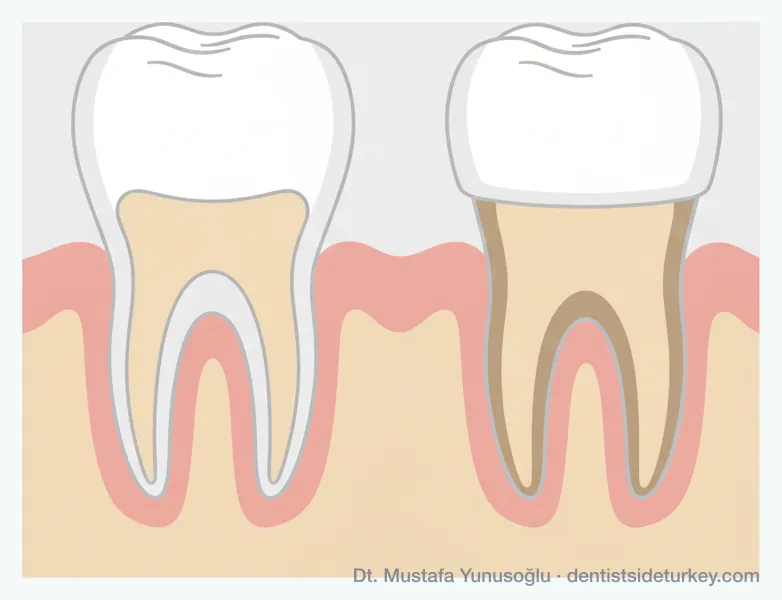
Adjusting a high spot takes minutes and often ends sensitivity, soreness and repeat chipping. Polishing and repair smooth a rough edge and mend a small chip, often with composite. Re-cementing puts back a crown or veneer that came off intact on a sound tooth: bring the piece and do not glue it yourself.
Gum inflammation at the edge settles with cleaning, and pain from the nerve can often be treated with root canal treatment through the crown. When one unit has a broken, open or poorly fitting edge, replacing just that unit is often enough, and redoing a whole smile is rarely the starting point. If you grind your teeth, a night guard protects the work; see teeth grinding and veneers.
Which signs should not wait?
See a dentist the same day for throbbing pain that keeps you awake, swelling of the gum, face or jaw, pus, a bad taste that keeps coming back, or a fever. The NHS lists a bad taste, a swollen face or jaw and a high temperature among the signs of a dental abscess and advises an urgent dentist appointment. Go to a hospital emergency department if you struggle to breathe, speak or swallow.
A crown that has come off is not an emergency in itself, but the tooth is exposed: keep the crown, avoid chewing on that side and read what to do when a crown or filling falls out. Bleeding gums at a crown edge can also be ordinary gum disease, which the NHS describes as bleeding when you brush or floss, with red, swollen gums.
What does a second look involve?
The dentist listens first: when the work was done, what you notice, what has changed. Then come an examination of the tooth, gum and edge of the restoration, a bite check, and an X-ray to look for decay, a root problem or a gap under the crown. If the cause is not visible from outside, you are told so, because sometimes it shows only when the crown is removed.
You then get a written plan: what is wrong, what is certain and what is not, the options from the least to the most invasive, how many appointments each needs, and what happens if you wait. If the work is sound, it should say so. It is the approach described in our guide to a second opinion on a treatment plan, and if old work must go, replacing old crowns and bridges explains how.

How do you get your records from the first clinic?
Start with the clinic that did the work. Many problems, especially in the first weeks, are handled by the original dentist, and a written guarantee may depend on it. Ask in writing, by email or message, so there is a record.
Ask for a treatment summary with tooth numbers, dates and materials, the X-rays from before and after as digital files, any lab or product details, and the guarantee document. Patients in most countries have a right to a copy of their dental records. Your own phone photos help too. If nothing arrives, a fresh X-ray gives a second dentist most of what is needed, so do not delay care. Our guide to dental treatment in Turkey lists what to ask before treatment starts.
When is coming to us not the right step?
If you have swelling that is spreading, difficulty breathing or swallowing, or a high fever, go to a hospital emergency department first. In Turkey the emergency number is 112. If the first clinic is reachable and its guarantee covers the problem, contact them first, because they know the case and the guarantee may depend on it.
If you fly home in a day or two and the fix would need a new crown or veneer from the lab, the better plan may be relief here and the definitive work with your own dentist or the first clinic. No dentist should push you to redo a whole smile in a hurry while you are in pain, and that includes us.
What if it happens while you are on holiday in Side?
Dentist Side Turkey was founded in Side in 2015 by Dt. Mustafa Yunusoğlu, with two other experienced dentists. The clinic is on Demokrasi Bulvarı in Manavgat, 5‑25 minutes by car from Side centre, Kumköy, Çolaklı, Titreyengöl, Evrenseki, Kızılağaç and Gündoğdu. Chairs run Monday to Saturday, 09:00 to 19:00, closed Sunday, and our emergency dentist page lists work done at another clinic that has failed or become painful.
Send photos on WhatsApp, say what hurts and since when, and a written plan follows within 24 hours. Our own work is on the veneers and crowns pages, with a written 5-year guarantee and 5‑7 days over 2 appointments. The contact page lists every way to reach us. Results depend on the individual case and the examination.
Frequently Asked Questions
Is a problem with veneers or crowns made abroad common?
Problems happen with veneers and crowns everywhere, at home and abroad. A 2016 meta-analysis estimated 89% survival of ceramic veneers over a median of 9 years, with chipping the most frequent complication at 4%. Most problems are small and can be repaired.
My new crown is sensitive. Is that normal?
Mild sensitivity in the first days after cementing can settle by itself. Sensitivity that gets worse, lasts longer, or comes with a high bite or throbbing pain should be checked, because the cause may be a high contact, an exposed edge, decay or an irritated nerve.
Can a chipped veneer or crown be repaired?
A small chip can often be polished or repaired with composite. A large chip, or one that exposes the tooth underneath, usually means replacing that unit. If grinding caused it, a night guard protects the new work.
Why is there a dark line at my gum?
Usually the gum has receded and shows the edge of the crown, a darker root or an underlying base. It is often cosmetic. It deserves a check if the edge is open, the gum bleeds or there is a smell.
Does pain under a crown always mean a root canal?
No. It can come from decay under the crown, an inflamed or infected nerve, or a crack. An X-ray and an examination decide. Root canal treatment can often be done through the crown, and sometimes the crown is removed and the tooth rebuilt.
How do I get my records from the first clinic?
Ask in writing for a treatment summary with tooth numbers, dates and materials, the X-rays as digital files, any lab details and the guarantee document. Patients in most countries may request a copy. If it does not arrive, a new X-ray gives a second dentist most of what is needed.
Can you look at work done elsewhere while I am on holiday in Side?
Yes. Chairs run Monday to Saturday, 09:00 to 19:00, and WhatsApp +90 530 575 47 18 is answered at any hour. Send photos and X-rays if you have them, and a written plan follows within 24 hours. If it needs a hospital instead, we say so.
Sources
- Morimoto et al. (2016), Int J Prosthodont: Main Clinical Outcomes of Feldspathic Porcelain and Glass-Ceramic Laminate Veneers, Survival and Complication Rates
- Pjetursson et al. (2026), Int J Prosthodont: Survival, Failure, and Complication Rates of Metal-Ceramic, Veneered, and Monolithic All-Ceramic Single Crowns, Part 1
- NHS: Dental abscess
- NHS: Gum disease