
Teeth Grinding and Veneers or Crowns: Can You Have Them If You Grind, and How to Protect Them

Yes, most people who grind their teeth can have veneers or crowns, but grinding changes three decisions: which material goes on which tooth, how the bite is designed, and whether you wear a night guard afterwards. Tell the dentist before the plan is written, not after the work is fitted. Hiding it is the most common reason good ceramic work chips early.
Does grinding rule out veneers and crowns?
No, but it is the single habit that most changes the plan. Grinding, or bruxism, is common: a 2024 meta-analysis put sleep grinding at about 21% of people and daytime clenching or grinding at about 23%. Many do not know they do it. A partner hears it at night, or the dentist sees flattened edges and small cracks before the patient mentions anything.
| What grinding changes | Usual adjustment |
|---|---|
| Material on back teeth | Zirconia, milled from one solid block, for the heaviest bite |
| Material on front teeth | Strong glass ceramic such as e.max, often as crowns or thicker veneers rather than thin shells |
| Bite design | Front teeth guide the jaw sideways without the ceramic edges catching |
| After treatment | A night guard worn while sleeping |
| Expectations | Regular checks; small chips can often be polished or repaired |
What does the research say about grinding and ceramic failure?
The honest answer is mixed. A 2018 systematic review that pooled the available studies found no overall link between sleep grinding and failure of ceramic restorations. But when it looked at thin porcelain veneers on front teeth alone, the odds of failure were about 2.5 times higher in grinders. The authors rated the evidence as weak, with few studies and high risk of bias, so nobody should quote it as a precise number. The direction is clear enough: thin ceramic on the front teeth is where grinding does the damage.
That matches what dentists see in practice. A crown on a back tooth that is milled from zirconia rarely suffers. A thin veneer whose edge is hit every night by the opposite tooth is the one that chips. The British Dental Journal overview of sleep bruxism makes the same point: protect the restoration and design the bite around the habit, because the habit itself rarely stops.
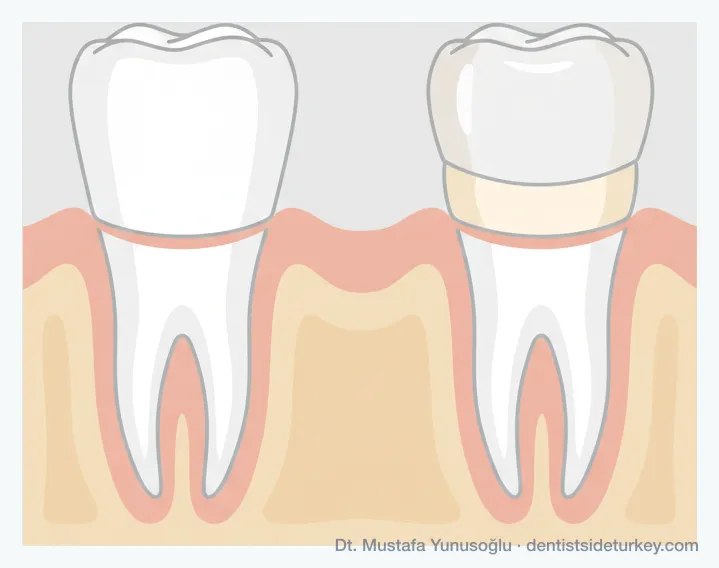
Which material belongs on which tooth if you grind?
On back teeth, zirconia is the usual choice. It is milled from one solid block, takes the heaviest chewing load and lasts 15 years or more with good care. On front teeth, where appearance matters most, a strong glass ceramic such as e.max is usually chosen, sometimes as a crown rather than a veneer when the tooth is already worn or heavily filled. Our post on e.max or zirconia explains the trade-off in detail.
Grinding also changes how much a veneer can be expected to do. If the edges of your front teeth are already worn flat, a veneer that simply restores their original length will be the first thing your bite meets every night. Sometimes the right answer is a crown, sometimes it is a slightly different length, and sometimes it is to treat the bite before any cosmetic work. The difference between the three options is set out in veneers, crowns or bonding.
Why does the night guard matter so much?
Because the habit usually continues after treatment. A night guard is a thin, hard plastic splint worn over the teeth while you sleep, so that the grinding forces meet plastic instead of ceramic. The NHS and the American Dental Association both describe mouth guards as the standard protection for people who grind. It is cheap insurance for work that is meant to last ten years or more.
Ask whether a night guard is part of your plan, and when it will be made: usually after the final crowns or veneers are fitted, so that it matches the new teeth. If you already wear one, bring it; the old one will not fit the new teeth, but it tells the dentist a lot about how you grind.
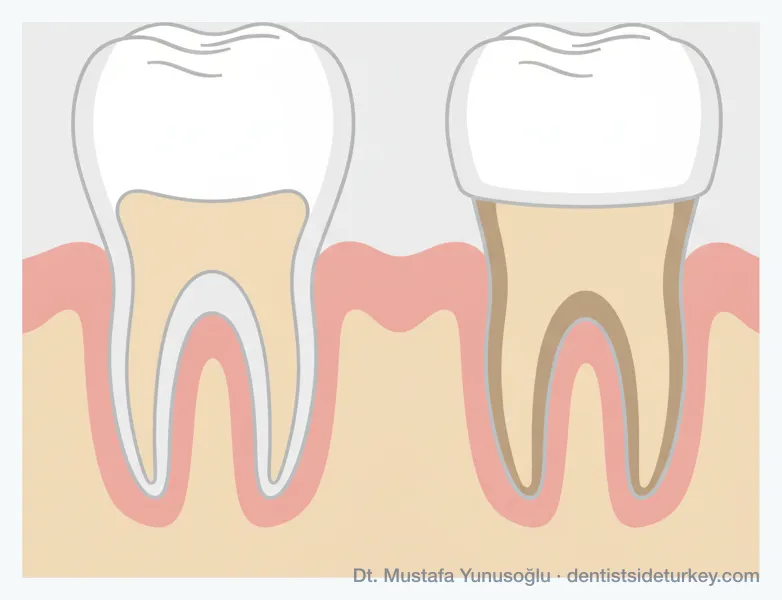
When is cosmetic work the wrong choice for a grinder?
When the grinding is severe and untreated and the patient will not wear a guard. Teeth worn down to stumps, a painful jaw in the morning and headaches suggest a problem that ceramic alone cannot fix. In that case a dentist at home who can see you over months, adjust a splint and follow the wear may be the better first step, with cosmetic work later. A single small chip on one front tooth is also no reason for a full set of veneers; bonding or polishing may be enough.
We would rather say this before you book than after you fly home. Grinding is not a reason to be refused treatment, but it is a reason to plan it differently.
How do you plan treatment if you grind?
Say so in your first message. Send 2‑3 photos on WhatsApp with a line about grinding, morning jaw pain or a guard you already wear. Dt. Mustafa Yunusoğlu reviews every case personally and the written plan within 24 hours says which material goes on which tooth and why.
The treatment itself takes 5‑7 days with two appointments, as described on the dental crowns and porcelain veneers pages. Crowns and veneers carry a written guarantee of 5 years; how follow-up works once you are home is in our post on aftercare and the guarantee. You can see real cases in the smile gallery, and the contact page has every way to reach us. Results depend on each case and the examination.
Frequently Asked Questions
Can I get veneers if I grind my teeth?
Usually yes, but the plan changes. Thin porcelain veneers on front teeth are the restorations most at risk from grinding, so a dentist may suggest a stronger ceramic, a crown instead of a veneer on worn teeth, a bite designed around the habit and a night guard afterwards. Mention grinding before the plan is written.
Which crown material is best for people who grind?
On back teeth zirconia is the usual choice: it is milled from one solid block, takes the heaviest bite and lasts 15 years or more with good care. On front teeth a strong glass ceramic such as e.max is common, chosen for appearance. The right material depends on each tooth and on the examination.
Do I need a night guard after veneers or crowns?
If you grind, almost certainly yes. A night guard is a thin hard splint worn while sleeping so that the grinding forces meet plastic instead of ceramic. It is usually made after the final work is fitted so that it matches the new teeth. Ask whether it is part of your plan.
How do I know if I grind my teeth?
Common signs are a partner hearing it at night, a stiff or aching jaw in the morning, headaches at the temples, flattened or chipped edges and sensitive teeth. Many people only find out when a dentist points out the wear. Photos often show it, which is why the plan asks about it.
Does grinding void the guarantee?
Crowns and veneers carry a written guarantee of 5 years. Telling the dentist about grinding before treatment and wearing the night guard you are given are the best ways to keep the work, and the guarantee, in good standing. Ask about the guarantee terms when you receive your plan.
Can a chipped veneer be repaired?
Small chips can often be polished or repaired with composite. A large fracture usually means the veneer has to be replaced. Frequent chipping is a sign that the bite or the material needs rethinking, and that a night guard is needed.
Should I stop grinding before having treatment?
Grinding is rarely stopped completely, so treatment is usually planned around it rather than waiting for it to end. If the grinding is severe, painful or causing headaches, treating that first with your own dentist, over months, may be the better order.
Sources
- Zieliński et al. (2024), J Clin Med: Global prevalence of sleep bruxism and awake bruxism, systematic review and meta-analysis
- de Souza Melo et al. (2018), J Prosthet Dent: Association of sleep bruxism with ceramic restoration failure, systematic review and meta-analysis
- Beddis et al. (2018), Br Dent J: Sleep bruxism, an overview for clinicians
- NHS: Teeth grinding (bruxism)
- ADA MouthHealthy: Teeth grinding