
Replacing Old Crowns and Bridges in Turkey: When It Is Needed and What Happens Under Them
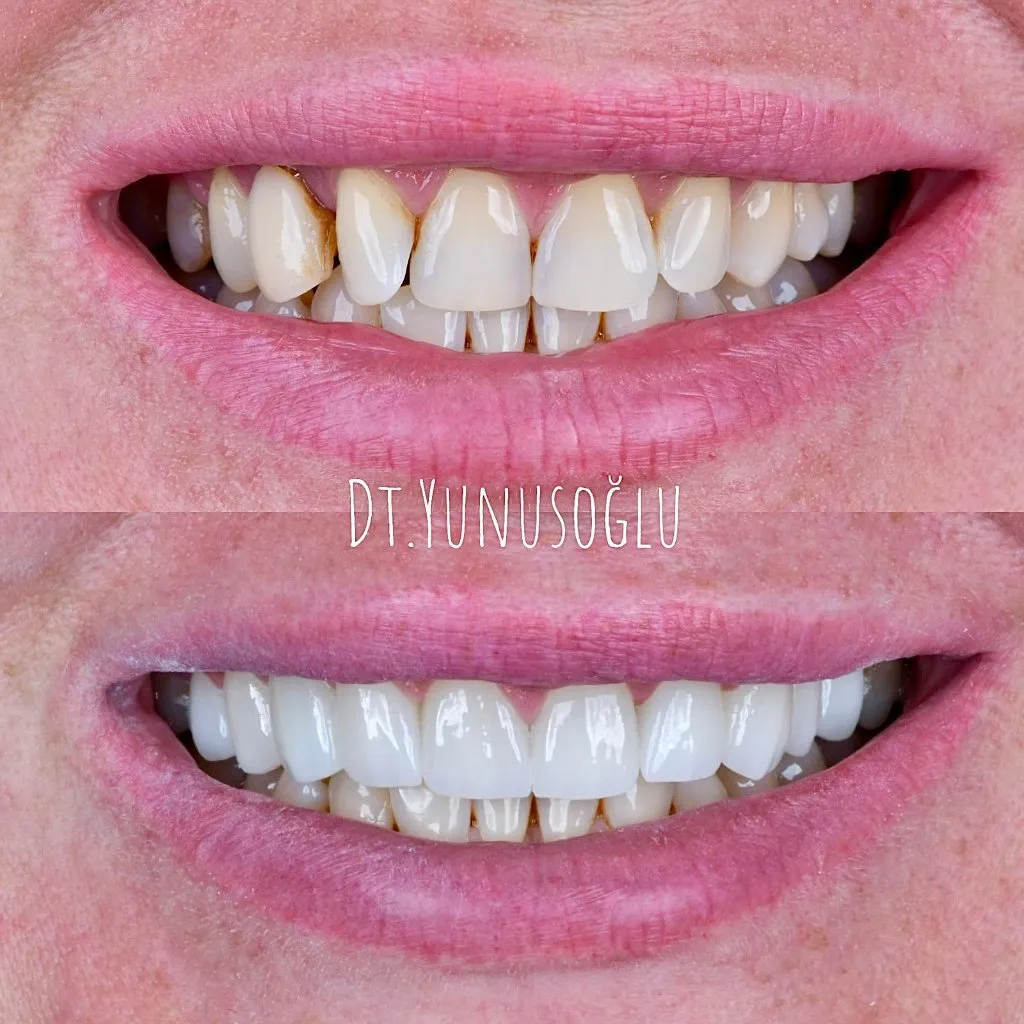
An old crown or bridge does not need replacing just because it is old. It needs replacing when something is wrong: decay under the edge, a leak you can taste, porcelain that has broken, a crown that has come loose, or a colour and shape you no longer want to live with. If it is sound and does not bother you, leave it. When replacement is needed, crowns and bridges are redone in 5‑7 days with two appointments, and you are never left without teeth in between.
Which signs mean an old crown needs attention, and how urgent is each?
Most people who ask about replacing crowns have had them for ten or twenty years and have noticed one of a handful of changes. Some are cosmetic, some are warnings, and a few need a dentist soon. The table sorts them.
| What you notice | What it usually means | How soon |
|---|---|---|
| A dark line at the gum edge | The metal core of an older crown showing as the gum recedes | Cosmetic, unless there is decay at the edge |
| Bad taste, smell or sensitivity around a crown | A leaking edge or new decay underneath | Have it checked within weeks |
| A small chip in the porcelain | Often polishable or repairable | Not urgent if it is smooth |
| A large fracture | The crown usually needs replacing | Soon, before the tooth underneath is damaged |
| A crown that is loose or has come off | Failed cement, sometimes decay | Within days; keep the crown |
| Pain on biting | A crack or a problem at the root | Have it examined soon |
| Crowns darker than your whitened teeth | Crowns do not whiten | A choice, not a need |
The Oral Health Foundation makes the same basic point about crowns and bridges: they last many years with good care, and what fails first is usually the tooth or gum around them rather than the crown itself. That is why a dark line and a bad taste mean very different things, even though both appear at the same edge.
How long do crowns really last, and why are they replaced?
Longer than their reputation suggests. A systematic review that pooled 67 studies estimated that 94.7% of metal-ceramic single crowns were still in place after five years, and 96.6% of crowns in lithium-disilicate glass ceramic, the e.max family. With good care, zirconia crowns last 15 years or more and porcelain crowns 10‑15 years.
Why they are replaced is just as revealing. A UK study followed 783 crowns placed by 40 general dentists: 31% were replacements, and the two most common reasons were appearance (21%) and new decay under the old crown (20%). Half of all replacement crowns were on upper front teeth, the teeth everyone sees. In other words, many crowns are replaced not because they broke but because the smile around them changed, or because the edge let bacteria in.
The same study found that 74% of replacement crowns were placed by a dentist other than the one who made the original, and noted that high-quality evidence on when to replace is lacking. If you have been told several crowns need redoing, a second opinion on the plan is a reasonable step before you agree to it.
What happens to the tooth under an old crown?
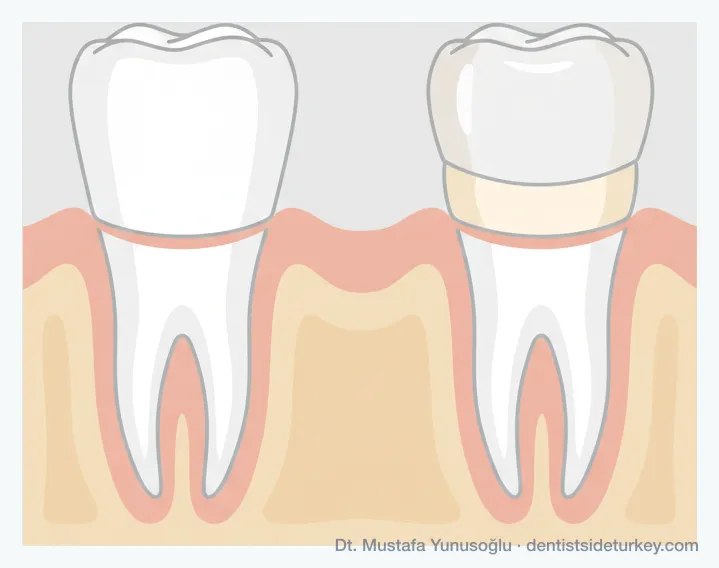
This is the honest uncertainty in every replacement. Nobody, not even with an X-ray, can see everything under a crown until it is off. When the old crown is removed, the dentist inspects the tooth, removes any decay and rebuilds the core if needed. Most teeth under old crowns are in good enough condition for a new crown straight away.
Some are not. If decay has reached the nerve, the tooth may need root canal treatment before the new crown, which usually adds appointments within the same stay. If the tooth cannot be saved, the options become an implant or a bridge, and the trade-offs are set out in our post on implant, bridge or denture. That is why a good plan for replacing crowns says in advance what happens if a tooth turns out worse than it looks, so you never have to decide something new in the chair without having heard of it before.
Bridges add one more consideration. A bridge rests on the teeth on either side of a gap, and if one of those supporting teeth fails, the whole bridge usually has to come off. The Oral Health Foundation notes that cleaning under a bridge matters as much as brushing the teeth themselves; food trapped under the false tooth is often the first sign that something is changing.
How does replacement work during a stay in Side?
Much like a first crown, with one step added. At the first appointment the old crowns or bridge are removed under local anaesthetic, the teeth are inspected and prepared, a scan or impressions are taken, and temporaries are fitted the same day. The laboratory then makes the new work, and at the second appointment it is tried in, adjusted and fitted. A stay of 5‑7 days covers both. How the temporaries look and feel is in our guide to temporary teeth during treatment.
The choice of material follows the tooth. Zirconia is milled from one solid block and suits back teeth that take the heaviest bite. Lithium-disilicate ceramic is more translucent and suits front teeth, where old crowns most often look wrong. Our post on e.max or zirconia explains the choice, and the dental crowns page describes the treatment. Replaced crowns and veneers carry the same written guarantee of 5 years as new ones.
When should you not replace an old crown?
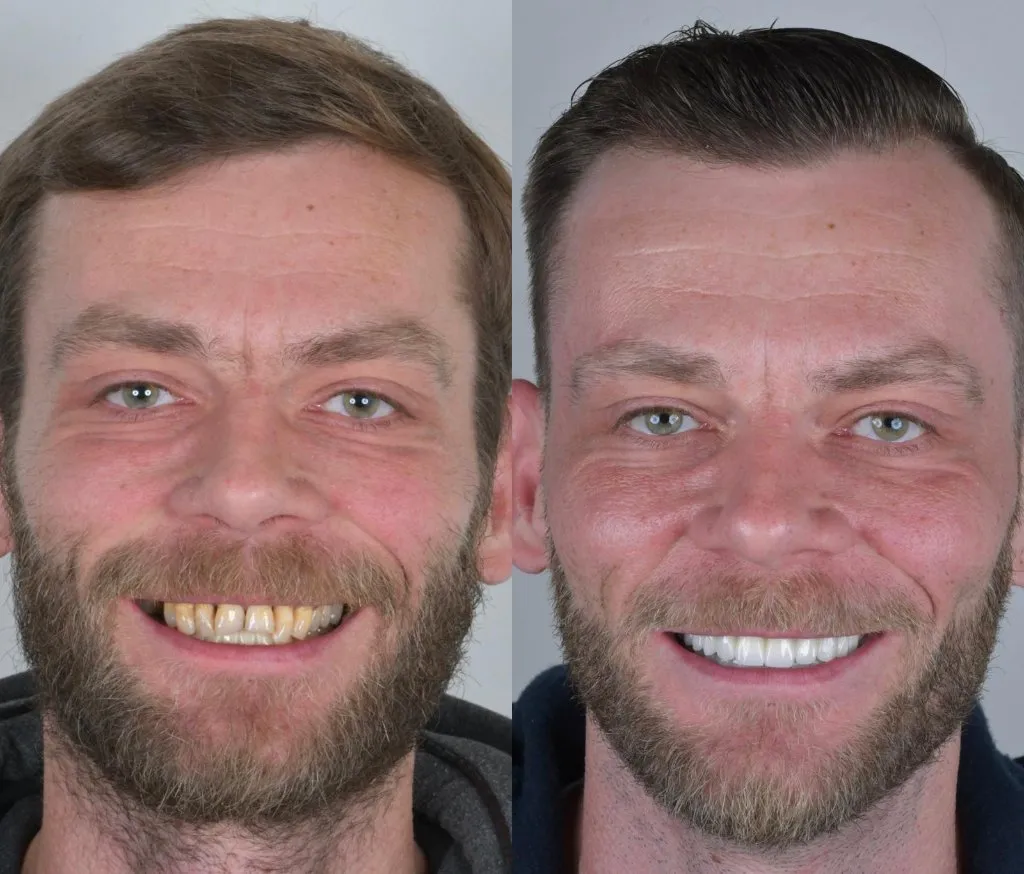
When it is sound. A crown with a tight edge, no decay on the X-ray, healthy gum around it and a colour you can live with has no reason to be touched, however old it is. Every replacement removes a little more tooth, so replacing crowns that work is not free of cost to the tooth. If the only issue is a small, smooth chip, polishing or a repair may be enough.
Two more situations argue for waiting. If your gums are inflamed or bleeding, they should be treated first, because a new crown fitted onto unhealthy gum will not sit as well. And if only one crown needs replacing and your own dentist can do it, the travel may not be worth it; our post on whether one or two teeth justify a trip is frank about that.
If your crowns simply look darker than your other teeth, remember that whitening changes natural teeth, not crowns. Some patients whiten first and then match new crowns to the brighter shade; the teeth whitening page explains how that is timed.
How do you find out whether your crowns need replacing?
Start with photos and, if you have one, a recent panoramic X-ray. Send them on WhatsApp and Dt. Mustafa Yunusoğlu reviews them personally; a written plan comes back within 24 hours, including what would happen if a tooth under a crown turns out to need more than expected. You can see real cases on our smile gallery.
If a crown has come off or is hurting while you are already on holiday nearby, do not wait for a plan: the emergency dentist in Side page explains what to do. For everything else, the contact page has every way to reach us. Results depend on each case and the examination.
Frequently Asked Questions
How do I know if my old crown needs replacing?
The signs that matter are decay or a leak at the edge (a bad taste, smell or sensitivity), a large fracture, a crown that is loose or has come off, and pain on biting. A dark line at the gum edge is usually cosmetic: the metal core of an older crown showing as the gum recedes. A sound crown with no symptoms does not need replacing just because of its age.
How long does it take to replace crowns in Turkey?
Replacing crowns or a bridge takes 5‑7 days with two appointments. The old work is removed and temporaries are fitted at the first, and the new crowns are fitted at the second. If a tooth under an old crown needs root canal treatment, extra appointments are usually added within the same stay.
What if the tooth under the crown is damaged?
Most teeth under old crowns can be rebuilt and crowned again straight away. If decay has reached the nerve, root canal treatment comes first. If the tooth cannot be saved, the options are an implant or a bridge. A good plan describes these possibilities in advance, so nothing new has to be decided in the chair without explanation.
Can a chipped crown be repaired instead of replaced?
Often, yes. A small chip that leaves a smooth surface can be polished or repaired. A large fracture, especially one that exposes the core or the tooth, usually means the crown has to be replaced before the tooth underneath is damaged.
Why is there a dark line at the gum above my crown?
Older metal-ceramic crowns have a metal core, and as the gum recedes over the years its edge can show as a grey or dark line. It is usually a cosmetic issue rather than a disease, but the edge should still be checked for decay. All-ceramic crowns such as zirconia or e.max have no metal core, so this does not happen.
Do I have to replace a whole bridge if one tooth fails?
Usually, yes. A bridge is one piece resting on the teeth on either side of a gap, so if one supporting tooth develops decay or breaks, the bridge normally has to come off to treat it. Depending on that tooth, the replacement may be a new bridge or an implant.
Will my new crowns match whitened teeth?
Crowns do not change colour with whitening. If you want a brighter shade overall, the natural teeth are usually whitened first and the new crowns are then matched to the result. The timing is planned before you arrive.
Sources
- Lynch et al. (2018), Br Dent J: Reasons for placement and replacement of crowns in general dental practice
- Sailer et al. (2015), Dent Mater: All-ceramic or metal-ceramic single crowns, systematic review of survival and complication rates
- Oral Health Foundation: Crowns
- Oral Health Foundation: Bridges
- ADA MouthHealthy: Crowns