
Can I swim, sunbathe, fly or drink after dental treatment on holiday?
After a filling, whitening or temporaries you can swim, sunbathe and fly as normal once any numbness has gone; only the buffet needs care. After an extraction or implant surgery the common advice is shade, water and soft food at first, no sea, pool or jacuzzi until the wound has closed, no alcohol early on, and a check-up before you fly. Your treating dentist's instruction overrides every figure here.
The short version: what is commonly advised after each treatment
| Treatment | Sea and pool | Sun and heat | Flying | Alcohol |
|---|---|---|---|---|
| Tooth extraction | Commonly advised: out of the sea, pool and jacuzzi until the socket has closed | Shade and water at first; no sunbathing or sauna while swollen | Not on the day of the extraction; ask about the days after | Commonly advised: none for at least 24 hours; check the rule for any antibiotic |
| Implant surgery | As for an extraction, often longer; stitches should not be soaked | No sunbathing, sauna or hamam while swollen | The visit ends with a check-up day before the flight | None while the wound is fresh; same antibiotic rule |
| Crowns and veneers (with temporaries) | Fine; water does not affect temporaries | No restriction | Fine; the check before flying is about the fit | Fine in moderation once the numbness has gone; red wine stains temporaries |
| Teeth whitening | Fine the same day | Fine; some sensitivity at first is common | Fine | No red wine or dark drinks while your dentist keeps you on the white diet |
| Fillings | Fine once the anaesthetic has worn off | No restriction | Fine; mention it if a new filling aches on descent | Fine once the numbness has gone |
Every cell is general guidance. Your dentist's instruction for your mouth overrides it.
Can I swim after a tooth extraction or implant surgery?
Not straight away, and the reason is the blood clot. After an extraction the socket is an open wound protected by a clot, which the gum gradually closes over; after implant surgery the gum has been opened and stitched around the implant. Swimming adds three things a fresh wound does not need: bacteria, chemicals and exertion.
The sea carries bacteria and salt. The pool is chlorinated, which irritates a raw socket and stitches. The jacuzzi is the worst of the three: warm water, bubbles and a high bacterial load at exactly the temperature that encourages bleeding. Jumping in, diving and swimming lengths raise your blood pressure, and water forced through the mouth works like vigorous rinsing; both can dislodge the clot. A lost clot exposes bone, the painful condition dentists call dry socket.
What is commonly advised: no strenuous exercise in the first 24 hours after an extraction, and no immersion until the wound has closed over, which takes days rather than hours. How many days that means depends on the tooth, the wound, any stitches and how you heal, so ask before you leave the chair. Your dentist's instruction overrides this.
After implant placement the same logic applies with a longer margin: the stitches should not be soaked, and the implant needs months of undisturbed healing. A first visit of 3‑5 days is built around that, then 2‑4 months of healing at home. Details are on the dental implants page and, for full-arch cases, the All-on-4 page.
Can I sunbathe or use the sauna after oral surgery?
Not while you are swollen. Swelling after an extraction or implant surgery is normal and usually gets a little worse before it settles. Sunbathing, a sauna, a hamam or a long hot shower widens the blood vessels in your face, which means more swelling, more oozing and a higher chance of the clot breaking down. Dehydration adds to it.
The commonly advised first days are shade rather than a sunbed, a hat, plenty of water, no sauna or hamam, and a cold pack against the cheek from the outside if your dentist suggests it. Sunbathing can wait until the swelling has gone and your dentist is happy with the wound; their instruction overrides this.
Can I fly after an extraction or implant surgery, or with a toothache?
Cabin pressure changes on take-off and descent. A healthy mouth does not notice. A tooth with an abscess, a leaking filling or a fresh wound can, because trapped gas expands and contracts and presses on nerve tissue; dentists call the resulting pain barodontalgia. It is why a toothache often gets worse in the air, and why a short treatment visit ends with a check-up rather than a dash to the airport.
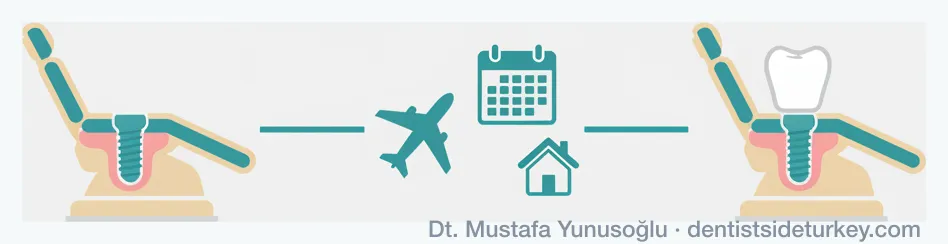
After an extraction or implant surgery the concern is timing more than pressure. On the day of surgery the wound is still oozing and the swelling has not peaked. The published advice is about protecting the clot and watching the swelling, not a set number of days before you can fly; the dentist who did the work decides when they are comfortable with you leaving. That is what the check-up day at the end of an implant visit is for: the stitches and the wound are inspected, and you leave with a written plan for the healing months. Antalya Airport (AYT) is about an hour away by car.
The second implant visit, when the final teeth are fitted after 2‑4 months of healing (up to 6 months in the upper jaw), lasts 4‑7 days and ends the same way: the bite is checked and you fly the day after, not the hour after. The how many days do I need page sets both visits out in full.
With a toothache, get it looked at before you board. An abscess that hurts on the ground is likely to hurt more at altitude. The emergency dentist in Side page explains what can be seen during your holiday.
Can I drink alcohol after dental work?
After local anaesthetic. Wait until the numbness has gone completely; a numb lip or cheek is easily bitten or burned. After a filling or a crown preparation with no open wound, a drink once the feeling is back is commonly considered fine.
With painkillers. NHS guidance is that it is usually safe to drink alcohol in moderation while taking ibuprofen, but that more than that irritates the stomach, which ibuprofen can also do. After surgery alcohol also masks the pain that tells you how the wound is doing. With any prescription painkiller, ask specifically.
With antibiotics. NHS guidance is that it is sensible to avoid alcohol while taking any medicine, and that a few antibiotics must not be combined with alcohol at all because the reaction can make you very unwell. If you leave with a prescription, ask which kind it is and follow that answer.
With a fresh wound. Commonly advised: no alcohol for at least 24 hours after an extraction, and the same after implant surgery, because alcohol widens the blood vessels, encourages bleeding, dries the mouth and slows healing. Commonly advised alongside it: no straws, because the suction can pull the clot out. Your dentist's instruction overrides both.
The all-inclusive wristband does not change any of this. The first evening after surgery is water, a soft meal and an early night; the bar comes back once your dentist says the wound is settling and no antibiotic rules it out.
What can I eat at the buffet with temporaries, after whitening or with a new filling?
Temporary crowns and veneers. Between preparation and fitting you wear temporaries. They are cemented lightly so that they come off easily at the fitting, which also means they come off easily on crusty bread. Commonly advised: nothing hard (nuts, crusts, ice, olive stones), nothing sticky (lokum, chewing gum, toffee), nothing very hot straight from the pot, and chewing on the other side where you can. Red wine and coffee stain temporaries, which is harmless. If one comes off, keep it and message the clinic rather than gluing it. The veneers page describes the two appointments.
The first days after whitening. Freshly whitened enamel takes up stain more easily for a short period, so dentists commonly advise a white diet straight after the session: no coffee, tea, red wine, cola, curry, tomato or soy sauce, berries or beetroot, and no smoking. Water, milk, white fish, chicken, rice and plain pasta are the usual suggestions. Some sensitivity to cold during or shortly after treatment is common and usually settles within a few days. How long you stay on the white diet is your dentist's call and overrides this. The teeth whitening page covers the 60‑90 minute session.
After a filling. A composite filling is set hard in the chair, so the waiting is about the anaesthetic, not the material. Eat once the numbness has gone. Mild sensitivity to hot and cold for a while is common; a filling that feels high when you bite is worth a message. Aesthetic fillings take 30‑90 minutes in the chair and are finished in one day.
Day by day: what a treatment visit to Side looks like
Both visit shapes put the clinical work early so that the last day before your flight is a check-up, not a procedure. The dates are set around your flights in the written treatment plan.
A 5‑7 day visit for crowns or veneers
- The first days. Consultation, the written plan and preparation; you leave with temporaries. That evening: soft food, no alcohol until the numbness has gone.
- The laboratory days. Swimming and sun do not affect temporaries, and the buffet follows the rules above. If your gums are tender after preparation, ask what to avoid. Side centre, Sorgun and Titreyengol are 5‑15 minutes by car from the clinic.
- Fitting day. The final crowns or veneers are tried in, adjusted and cemented. Eat once the numbness has gone again.
- Check-up day, before the flight. The bite is checked and any high spot is smoothed. You fly the next day with the final work and the written guarantee of 5 years on crowns and veneers.
Smile makeover and Hollywood Smile cases follow the same 5‑7 day shape. The dental tourism page explains how the appointments fit around a package holiday, and the getting here from your hotel page has the drive times from each resort.
A 3‑5 day implant visit
- The first days. Assessment, the written plan and placement, which itself takes 30 to 60 minutes and is carried out by a dental surgeon specialising in implantology. That evening: shade, water, soft cool food, no straws, no alcohol.
- The quiet days. Swelling is expected and should be settling rather than growing. No swimming, no sunbathing, no sauna or hamam. Evening walks, meals on the other side of the mouth, any medication exactly as your dentist instructed.
- Check-up day, before the flight. The stitches and the wound are checked before you fly.
- At home. 2‑4 months of healing, up to 6 months in the upper jaw, then a second visit of 4‑7 days for the final teeth. All-on-4 follows the same pattern: 3‑5 days, 2‑4 months of healing, then 4‑7 days for the fixed bridge. Implants carry a written guarantee of 10 years.
When should I message the dentist?
Some discomfort, some swelling and a little oozing on the first day are expected after surgery. These are not:
- Bleeding that does not settle with firm pressure on a clean gauze pad.
- Swelling that keeps growing instead of settling. If it makes swallowing or breathing difficult, that needs urgent medical attention as well as a message.
- Fever, or feeling generally unwell.
- Severe pain that painkillers do not touch, or pain that gets worse after the first days.
- A bad taste from the wound, or a temporary that has come off.
Message the clinic on WhatsApp at +90 530 575 47 18. It is answered at any hour, every day, and the chair is open Monday to Saturday from 09:00 to 19:00. The emergency dentist page explains what happens next, the FAQ covers visits and guarantees, and the contact page has the address in Manavgat for your taxi.
Frequently Asked Questions
Can I swim in the sea the day after a tooth extraction?
Commonly advised: no. The socket is still an open wound protected by a blood clot, sea water carries bacteria and salt, and the exertion of swimming can dislodge the clot. The common advice is to stay out of the sea, the pool and especially the jacuzzi until the wound has closed, which takes days rather than hours. Ask your dentist how many days apply to your mouth; their instruction overrides any general figure.
How soon can I fly after dental implant surgery?
The published advice is about protecting the wound rather than a set number of days. The practical concern is being in the air while the wound is still oozing and the swelling has not peaked. That is why a short implant visit in Side is planned as 3‑5 days, with placement early and a check-up on the last day before the flight, so the stitches and the wound are looked at in the chair. Your dentist decides when they are comfortable with you flying.
Can I drink alcohol after a filling or after local anaesthetic?
Wait until the numbness has gone completely, because a numb mouth is easy to bite or burn. After a filling with no open wound, a drink that evening is commonly considered fine. After an extraction or implant surgery the common advice is no alcohol for at least 24 hours. If you are given antibiotics, ask which kind: NHS guidance is that some must not be combined with alcohol at all. Your dentist's instruction overrides this.
What can I eat with temporary veneers or crowns on holiday?
Temporaries are cemented lightly so they can be removed at the fitting appointment, so treat them gently. Commonly advised: avoid hard foods such as nuts, crusts and ice, sticky foods such as lokum, toffee and chewing gum, and very hot food straight from the pot, and chew on the other side where you can. Red wine and coffee can stain them, which is harmless. If one comes off, keep it and message the clinic rather than gluing it yourself.
Can I sunbathe after having an implant placed?
Commonly advised: not while there is swelling. Heat widens the blood vessels in the face, which increases swelling and the chance of bleeding, and dehydration slows healing. On the first days after surgery the usual instructions are shade, a hat, plenty of water and no sauna or hamam, with a cold pack against the cheek from the outside if your dentist suggests it. Sunbathing can resume once the swelling has settled and your dentist is happy with the wound; their instruction overrides this.
What should I avoid in the first days after teeth whitening?
Freshly whitened enamel picks up stain more easily for a short time, so dentists commonly advise a white diet straight after the session: no coffee, tea, red wine, cola, curry, tomato or soy sauce, berries or smoking. Water, milk, chicken, white fish, rice and plain pasta are the usual suggestions. Some sensitivity to cold during or shortly after treatment is common and usually settles within a few days. How long you keep to the white diet is your dentist's call and overrides this.