
How Long Does Composite Bonding Last? Chipping, Staining and Repairs
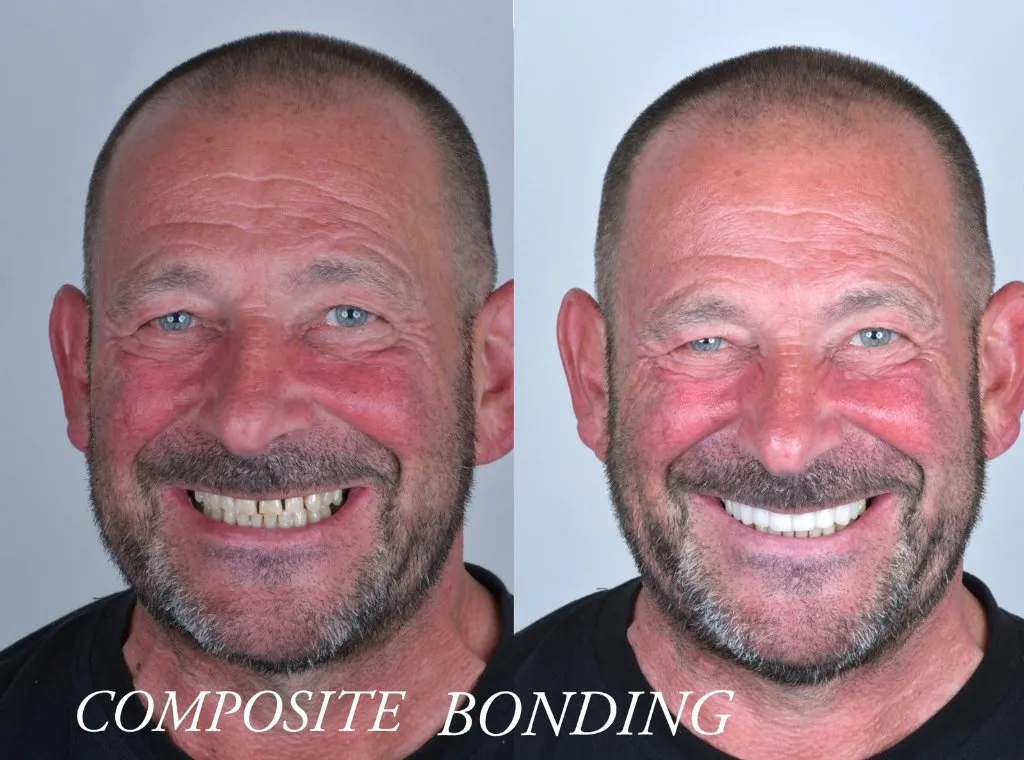
Composite bonding on front teeth typically lasts 5‑7 years before it needs polishing, a small repair or replacement, and many bondings last longer with good care. It rarely fails all at once: edges chip, the surface loses its shine, or a margin picks up stain from coffee, tea or smoking. Because composite can be repaired by adding new material, a chip usually means a short visit, not starting again. Veneers last longer, but they remove more tooth, which is why bonding is often the right first step.
What shortens the life of bonding?
| Risk | What happens | What helps |
|---|---|---|
| Biting nails, pens, opening packets | Chipped edges | Use your back teeth or scissors |
| Grinding or clenching | Chips, worn edges | A night guard |
| Coffee, tea, red wine, smoking | Stained margins, dull surface | Rinse with water after; polish at check-ups |
| Large build-ups on edges and corners | More stress, more fractures | Honest planning; sometimes a veneer is wiser |
| Poor cleaning at the gum line | Decay or gum inflammation at the edge | Floss or interdental brushes every day |
What do the long-term studies show?
Two large reviews from 2015 give a realistic picture. A meta-analysis of 21 studies estimated median success after ten years of 95% for small composite fillings between front teeth, and 90% for restorations that rebuild a corner or the biting edge; the main reason the latter were replaced was fracture. A second systematic review of 1,821 front-tooth composite restorations found that 24.1% had failed over the study periods, with annual failure rates between 0 and 4.1%. Fracture of the tooth or the restoration was the most common reason, and failures related to colour, shape and surface stain were more frequent when composite had been placed for cosmetic reasons.
The practical reading: the composite itself holds up well, but cosmetic bonding is judged on looks, and looks fade sooner than function. That is why the clinic plans with 5‑7 years before maintenance or replacement rather than promising a decade.
Why does bonding chip and stain?
Composite is a resin filled with fine glass particles. It is strong, but not as hard as porcelain, so thin edges can chip under a sudden load, such as biting a fork or a fingernail. Its surface is polished to a shine; over the years that polish wears and the surface picks up stain more easily, especially at the margins. A professional polish restores much of the shine. Our composite bonding guide explains how bonding is built up in layers.
Can chipped bonding be repaired?
Usually yes. Composite bonds to composite, so a small chip can be smoothed or rebuilt in one short visit, often without numbing. A large fracture or a stained, rough surface may be better replaced. If a piece comes off while you are on holiday, keep it and avoid biting on that tooth; chipped or broken front tooth explains the first steps.
Bonding or veneers: how do they compare over time?
| Composite bonding | Porcelain or E-max veneers | |
|---|---|---|
| Typical lifespan | 5‑7 years before maintenance | 10‑15 years |
| Tooth removed | Little or none | A thin layer of enamel |
| Stain resistance | Moderate; needs polishing | High |
| Repair | Easy, in one visit | Usually a new veneer |
| Visits in Side | One visit of 30 to 90 minutes | Two visits over roughly 5‑7 days |
Bonding suits small changes: a chip, a gap, a single dark tooth, uneven edges. Veneers suit bigger changes in colour and shape across many teeth. Read veneers, crowns or bonding, how long veneers last and a gap between front teeth for the trade-offs.
How do you make bonding last?
Do not bite nails, pens or packaging. Wear a night guard if you grind; teeth grinding with veneers and crowns covers why. Rinse with water after coffee, tea or red wine, and avoid smoking. Clean along the gum line every day, and ask for a polish at your check-ups. If you want your teeth whiter, whiten before the bonding is made, because composite does not change colour afterwards: see the teeth whitening page.
When is bonding the wrong choice?
When the changes are large, on many teeth, and you want them to stay unchanged for as long as possible, veneers are often the more durable plan. Bonding is also less predictable on teeth that take heavy biting forces at the edge, for example in someone with a deep bite who grinds. We will tell you in the plan if we think bonding will not hold up for you.
Get a written plan
Bonding is done in one visit of 30 to 90 minutes at the clinic; the aesthetic fillings page describes it. Send photos on WhatsApp and the written plan arrives within 24 hours, or use the contact page.
Frequently Asked Questions
How long does composite bonding last?
Typically 5‑7 years before it needs polishing, a repair or replacement, and well-kept bonding often lasts longer. It usually wears gradually rather than failing all at once.
Does composite bonding stain?
It can, especially at the edges and with coffee, tea, red wine or smoking. Rinsing with water after these drinks and a professional polish at check-ups keep it looking fresh.
Can chipped bonding be fixed?
Usually yes, in one short visit. New composite bonds to the old, so a small chip can be smoothed or rebuilt. A large fracture or a rough, stained surface may be better replaced.
Is bonding or veneers better?
Bonding removes little or no tooth and is easy to repair; veneers resist stain better and typically last 10‑15 years. Bonding suits small changes, veneers bigger changes in colour and shape.
Can I whiten my teeth after bonding?
Whitening will not change the colour of the composite, so bonding can look darker afterwards. If you want whiter teeth, whiten first and match the bonding to the new shade.
Does bonding damage teeth?
Very little. Usually no drilling or only light roughening of the surface is needed, and bonding can be removed or replaced later. That is one reason it is often the right first step.
How long does bonding take in Side?
One visit of 30 to 90 minutes, depending on how many teeth are treated. Send photos to WhatsApp +90 530 575 47 18 for a written plan within 24 hours.