
Veneers, Crowns or Bonding in Turkey: How Much Tooth Does Each One Remove?
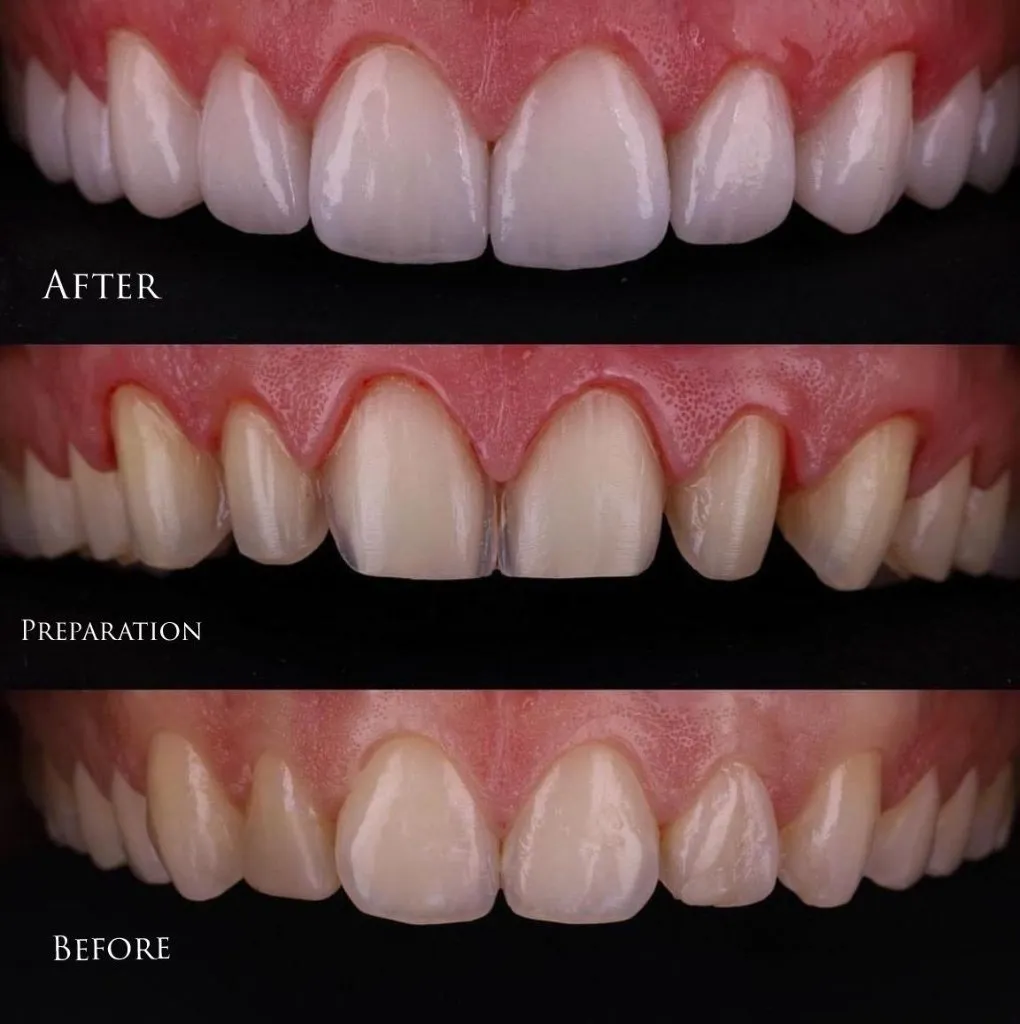
Bonding removes almost no tooth, a veneer removes 0.3‑0.5 mm from the front surface, and a crown removes roughly 1‑2 mm from every side. That single difference decides how the tooth ages, whether the step can ever be undone, and what the next dentist will have left to work with. Choose by how much healthy tooth you have, not by which result looks whitest in a photo.
The short answer: three treatments side by side
| Composite bonding | Porcelain veneer | Crown | |
|---|---|---|---|
| What it covers | Only the chipped, worn or gapped part | The front surface and biting edge | The whole tooth above the gum |
| Tooth removed | Usually none; the enamel is roughened | 0.3‑0.5 mm from the front | Roughly 1‑2 mm on every side |
| Share of the visible tooth lost in a laboratory study | Not measured; close to zero | About 3‑30% | About 63‑72% |
| Can it be undone? | Usually yes | No | No |
| How long it typically lasts | 5‑7 years | 10‑15 years | 15 years or more for zirconia |
| Time in Side | One visit of 30‑90 minutes | 5‑7 days | 5‑7 days |
| Made for | Small chips, small gaps, one uneven edge | Healthy front teeth whose colour, shape or length you want to change | Teeth that are broken down, heavily filled, cracked or root-treated |
The percentages come from a study by Edelhoff and Sorensen, who weighed front teeth before and after ten different preparation designs. Veneer designs removed about 3% to 30% of the crown of the tooth by weight; full crown designs removed about 63% to 72%. It is a laboratory study on extracted teeth, so treat the figures as a scale, not a promise, but the scale is the point: a crown costs the tooth two to four times more of itself than a veneer does.
How much tooth does a veneer remove?
A laminate veneer is a porcelain shell about as thick as a contact lens that is bonded to the front of the tooth. To make room for it without the tooth ending up bulky, the dentist removes 0.3‑0.5 mm from the front surface, which is the figure we work to at the clinic in Side. The back of the tooth, and most of the sides, are left alone.
That depth matters for a second reason. The enamel on the front of an upper incisor is only around a millimetre thick and thinner near the gum. Staying within it means the veneer is bonded to enamel, which holds porcelain far better than the softer dentine underneath. A veneer preparation that stays in enamel is both the gentlest and the most durable version of the treatment.
It is still irreversible. Enamel does not grow back, so a tooth that has been prepared for a veneer will always need a veneer or something more. A systematic review of porcelain veneers found an overall survival of 89% at a median follow-up of nine years, and 94% for the glass-ceramic type, so the usual plan is one replacement cycle every 10‑15 years rather than a lifetime of repairs. The dental veneers page describes the two appointments and the temporaries you wear between them.
How much tooth does a crown remove?
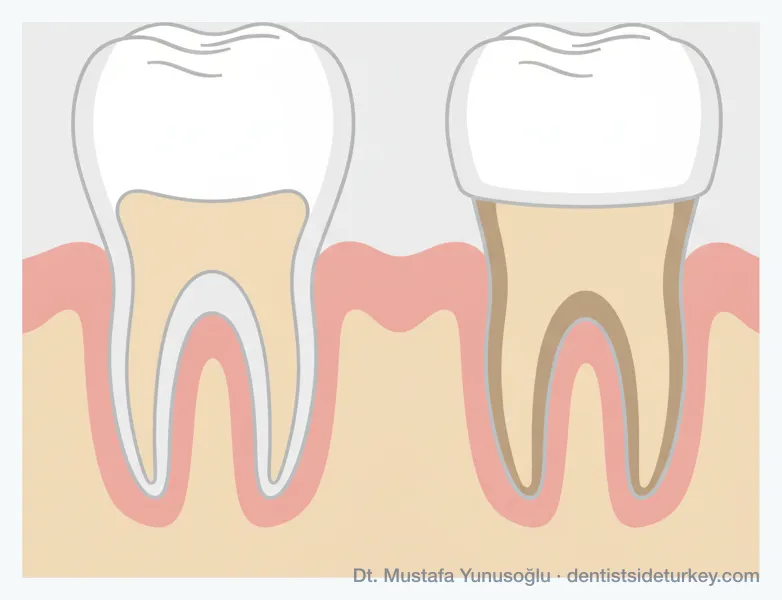
A crown is a cap that replaces the whole outer layer of the tooth. The dentist reduces the tooth on every side and across the biting surface, by roughly 1‑2 mm depending on the material, until a tapered core remains. The crown is then cemented over that core. This is why people describe crowned teeth as "filed down to pegs": for a full crown, that is simply what the preparation looks like.
That is not a criticism of crowns. When a tooth has lost a wall to decay, carries a filling larger than the tooth around it, has a crack, or has had root canal treatment, there is no healthy front surface left to bond a veneer to. A crown holds what remains together and protects it from splitting. On that tooth the crown is the conservative choice, because the alternative is losing the tooth. In a systematic review of single crowns, five-year survival was around 95% for metal-ceramic crowns and 96.6% for lithium-disilicate glass-ceramic ones. The dental crowns page covers materials and the fitting appointments.
There is one risk worth knowing about. The more tooth is removed, the closer the work comes to the nerve. A small share of crowned teeth lose their vitality in the years afterwards and then need root canal treatment through the crown. It is uncommon, but it is a reason not to crown a healthy tooth that did not need it.
Does bonding remove any tooth?
Usually not. With composite bonding the dentist roughens the enamel with a mild gel, applies a bonding agent and sculpts tooth-coloured composite directly onto the tooth, then hardens it with a light and polishes it. Nothing is sent to a laboratory, and one tooth takes 30‑90 minutes in a single visit. Where a sharp edge has to be smoothed first, the amount is a fraction of a veneer preparation.
The price of being that gentle is durability. Composite is softer than porcelain: it picks up stain from coffee, tea and red wine, it can chip on a hard crust, and it loses its gloss. Composite bonding typically lasts 5‑7 years before it needs repolishing, repair or replacement. The good news is that it can be repaired in the mouth, and when it is removed the tooth underneath is essentially what you started with. Details are on the aesthetic fillings and bonding page.
What "Turkey teeth" actually are
The phrase describes one specific mistake: healthy front teeth reduced to pegs and covered with crowns, when veneers, bonding or simply whitening would have done the job. The result can look striking on the day. The cost arrives later, as sensitivity, nerve problems and a set of teeth that can only ever be crowned again.
You can usually spot it in the quote before you travel. Twenty "zirconia crowns" for a patient in their twenties or thirties with intact teeth is a red flag. So is a plan that arrives within minutes with no questions about your bite, your fillings or your X-ray. Our longer piece on what Turkey teeth really means goes through the warning signs.
Which one fits which tooth?
- A small chip, a narrow gap, one short edge. Bonding. There is no reason to remove enamel to fix something this small.
- Healthy teeth that are just too dark. Whitening first. If the colour is the only complaint, it may be the whole treatment.
- Healthy front teeth that are discoloured from within, worn, uneven or slightly crooked. Veneers, typically on the teeth that show when you smile.
- A tooth with a large old filling, a crack, heavy wear or a root canal treatment. A crown.
- A mixed mouth. Most smile makeovers are exactly this: veneers on the intact front teeth, crowns on the two or three teeth that are already compromised, whitening for the lower teeth. A plan that treats every tooth the same way has not looked at the teeth one by one.
- Clearly crowded or rotated teeth. Straightening them first is kinder than grinding them into line. A good plan says so, even though it means we are not the ones who do the work.
- Night-time grinding. It does not rule out veneers, but it changes the material choice and usually means a night guard afterwards. Mention it when you send your photos.
What does the tooth look like in fifteen years?
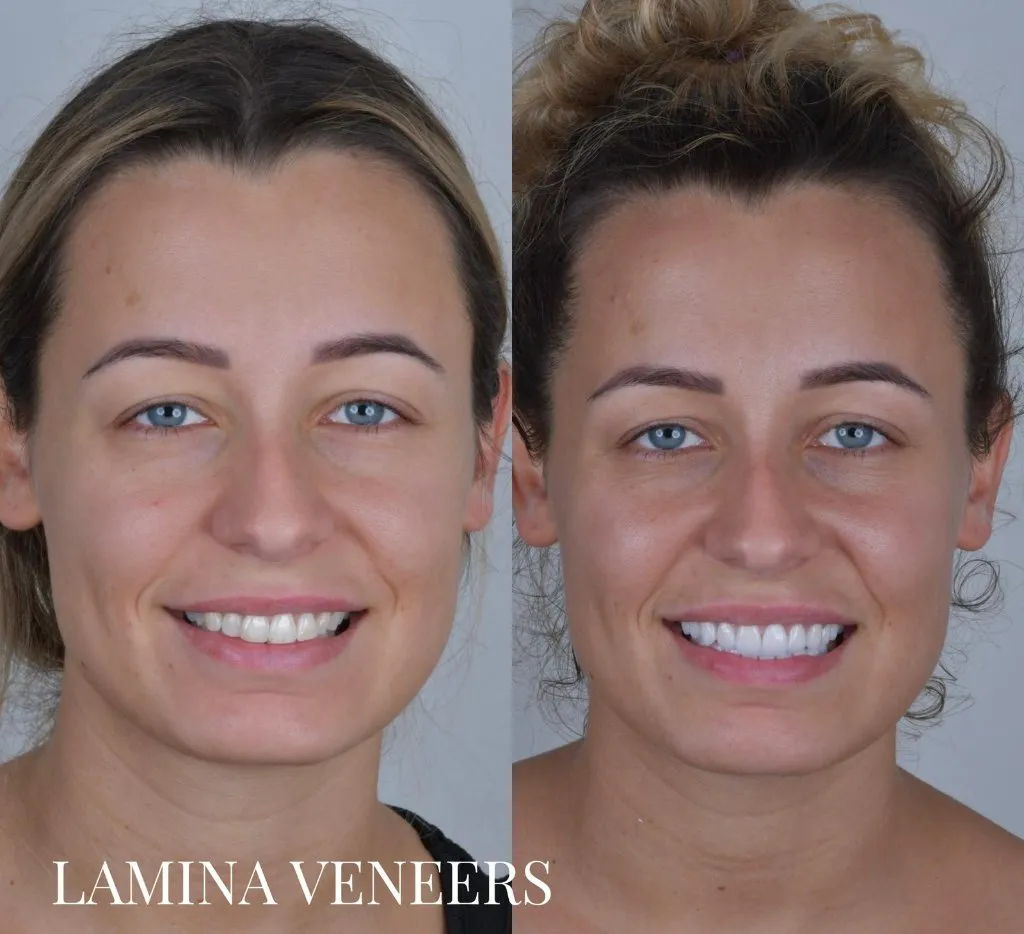
Every restoration is eventually replaced, so the honest comparison is between replacement cycles. A bonded tooth can be rebonded, or moved up to a veneer later, because nothing was taken away. A veneered tooth gets a new veneer, sometimes with a slightly deeper preparation. A crowned tooth gets a new crown, and each new crown needs sound tooth beneath it to hold on to.
That is the argument for starting with the least invasive option that actually solves the problem, especially if you are under forty. The treatment you choose now will be redone two or three times in your life, and every round can only go in one direction.
How we plan it in Side
Send two or three photos of your smile, and a panoramic X-ray if you have one, on WhatsApp to +90 530 575 47 18. Dt. Mustafa Yunusoğlu reviews them personally and you receive a written treatment plan within 24 hours. The plan lists tooth by tooth whether a veneer, a crown or bonding is proposed, and why, so you can compare it with any other quote you hold.
Veneers and crowns take two appointments inside one visit of 5‑7 days, with temporaries in between; bonding is finished in a day. Veneers are made in E-max glass-ceramic and crowns in zirconia, and both carry a written guarantee of 5 years. Each is quoted per case in a written plan. The page on how we quote explains how quotes are built, the smile gallery shows finished cases, and how many days do I need sets out the trip.
Seven questions to ask any clinic before you agree
- For each tooth on the plan: is it a veneer, a crown or bonding, and why that one?
- How many millimetres will be removed, and from which surfaces?
- Which of my teeth are healthy enough for a veneer instead of a crown?
- Will I see the planned shape on my own teeth, as a mock-up, before anything is prepared?
- What material is used, and from which manufacturer?
- What does the written guarantee cover, and for how many years?
- Who do I contact after I fly home, and how quickly do they answer?
A clinic that answers these in writing is planning your teeth. A clinic that answers with a package price for "20 crowns" is planning its week. If you would like our answers for your own teeth, the contact page has every way to reach us, and the Hollywood Smile and smile makeover pages show how full cases are put together.
Frequently Asked Questions
Do veneers ruin your natural teeth?
A correctly planned porcelain veneer removes 0.3‑0.5 mm from the front of the tooth and leaves the rest intact, so the tooth stays alive and strong. It is irreversible, because enamel does not grow back, and the veneer will need replacing after 10‑15 years. Damage happens when healthy teeth are ground down for crowns and the result is sold as veneers.
How much of the tooth is removed for a crown compared with a veneer?
A crown needs roughly 1‑2 mm removed from every side of the tooth and from the biting surface; a veneer needs 0.3‑0.5 mm from the front only. In a laboratory study by Edelhoff and Sorensen, veneer preparations removed about 3‑30% of the visible tooth by weight and full crown preparations about 63‑72%.
Is composite bonding better than veneers?
It is gentler, quicker and cheaper, and it can usually be undone, which makes it the better choice for small chips, small gaps and single uneven edges. It is not as durable: composite stains and chips more easily than porcelain and typically lasts 5‑7 years, against 10‑15 years for porcelain veneers. For a full change of colour and shape across the front teeth, veneers hold up better.
When is a crown the right choice instead of a veneer?
When the tooth is already badly compromised: a large old filling, a crack, heavy wear, a broken wall or a root canal treatment. A veneer needs a sound front surface to bond to, and such a tooth does not have one. A crown holds the remaining tooth together and protects it from splitting.
How can I tell from a quote whether a clinic plans crowns or veneers?
Read the item lines, not the package name. Count how many teeth are listed as crowns, and ask for each one why it is not a veneer. A plan of twenty zirconia crowns for a young patient with intact teeth, sent within minutes and without questions about your X-ray or bite, is the pattern behind the phrase Turkey teeth.
Can veneers or crowns be removed later to go back to my own teeth?
No. Both require tooth to be removed first, and that tooth does not return, so the tooth will always need a veneer or a crown afterwards. Composite bonding is the exception: it is added on top of the enamel and can usually be polished away.
How long do I need to stay in Side for veneers, crowns or bonding?
Veneers and crowns take two appointments within one visit of 5‑7 days: preparation and temporaries first, then fitting and a check-up before you fly. Bonding is done in a single appointment of 30‑90 minutes per tooth. You receive a written plan with the schedule within 24 hours of sending your photos.
Sources
- Edelhoff & Sorensen (2002), J Prosthet Dent: Tooth structure removal associated with various preparation designs for anterior teeth
- Morimoto et al. (2016), Int J Prosthodont: Survival of feldspathic porcelain and glass-ceramic laminate veneers, systematic review and meta-analysis
- Sailer et al. (2015), Dent Mater: All-ceramic or metal-ceramic single crowns, systematic review of survival and complication rates
- Oral Health Foundation: Veneers
- Oral Health Foundation: Crowns
- ADA MouthHealthy: Veneers