
A Missing Back Tooth: Does It Matter If You Do Not Replace It?
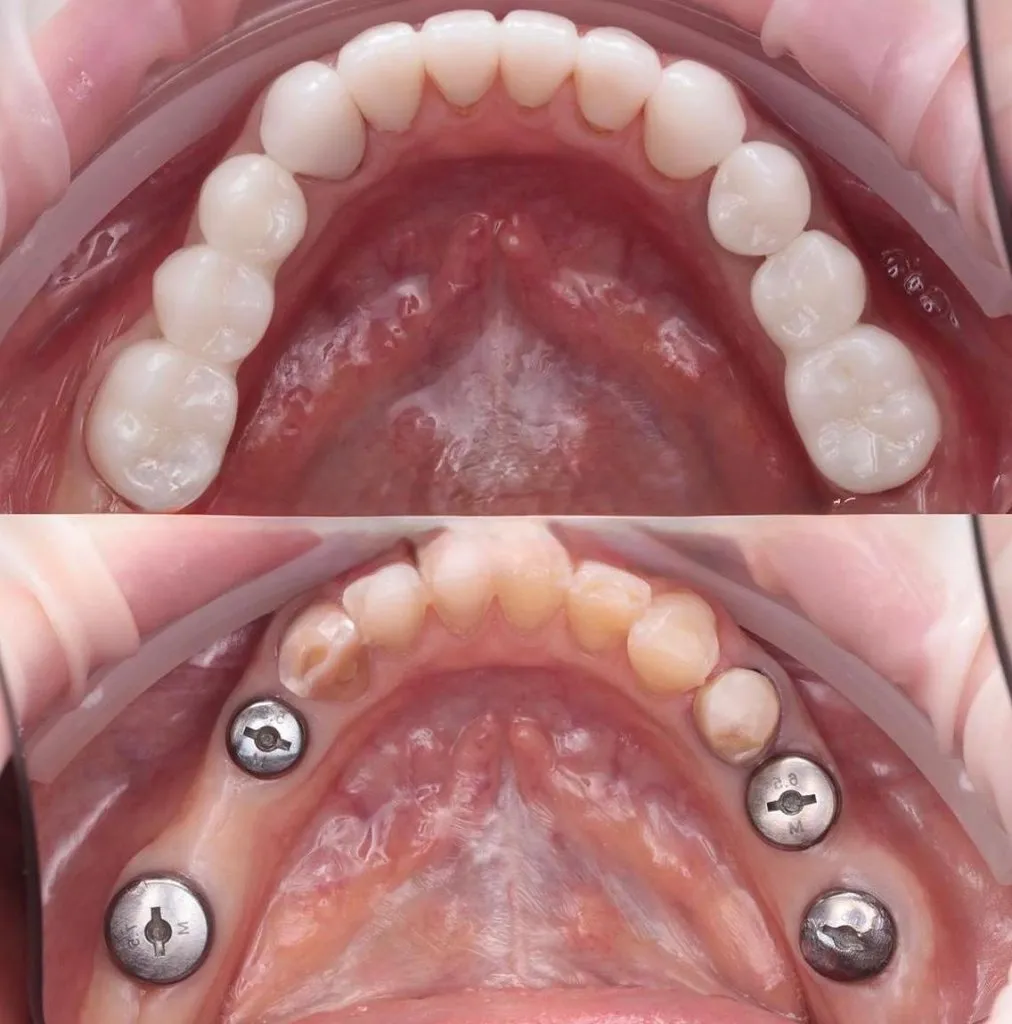
Sometimes it matters a lot, sometimes hardly at all. When a back tooth is lost, the tooth above or below it tends to drift into the gap, the neighbours tilt, and food starts to catch. But a single missing molar at the very back, with good teeth in front of it, often causes no real problem. The decision depends on where the gap is, what the neighbouring teeth look like, and how you chew, not on a rule that every gap must be filled.
What happens when a back tooth is not replaced?
Teeth are held in place partly by their neighbours and the tooth they bite against. Remove one and the balance changes slowly. In a study of adults who had lost back teeth, 92% of the teeth left without an opposing partner had grown down or up towards the gap, by 1.68 mm on average and up to almost 4 mm. Teeth beside the gap often tilt into it.
| What tends to happen | Why it matters |
|---|---|
| The opposite tooth over-erupts into the gap | The bite changes and replacing the tooth later can need extra work |
| Neighbouring teeth tilt | Food traps, cleaning gets harder, decay and gum problems follow |
| Bone in the gap shrinks | An implant later may need a bone graft |
| You chew on the other side | More load and wear on the remaining teeth |
| Often: nothing visible at all | Back gaps are hidden, so changes go unnoticed for years |
None of this happens overnight. It is a slow drift over years, which is exactly why it is easy to ignore until replacing the tooth has become more complicated than it would have been.
When does a missing back tooth genuinely not matter?
When it is the last molar in the row, when the tooth that bit against it is also missing, and when the teeth in front of it are healthy and you chew comfortably. Dentists call this a shortened dental arch, and it is a recognised, sensible choice. A 2017 meta-analysis of three studies with 516 participants found no significant difference in oral quality of life between people who left missing back molars unreplaced and people who wore a removable partial denture.
That is worth knowing before anyone sells you an implant for every gap. If the missing tooth is a wisdom tooth or a second molar at the very end, and nothing has moved, a check-up every year may be all it needs. The examination and an X-ray decide whether that applies to you.
When should it be replaced, and with what?
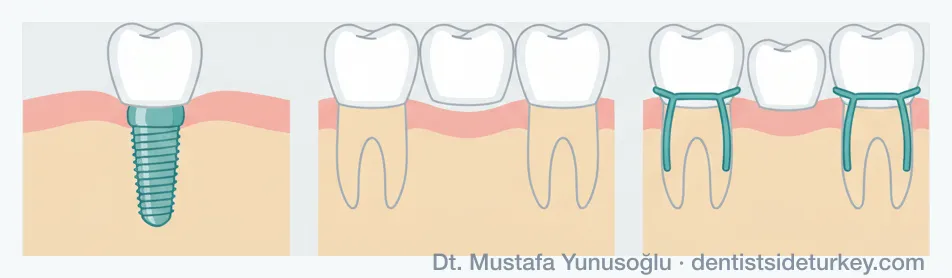
When the gap is in the middle of the row, when the opposite tooth has started to move, when food keeps catching, or when you have lost several back teeth and chewing has become hard. The three usual options each have a clear place.
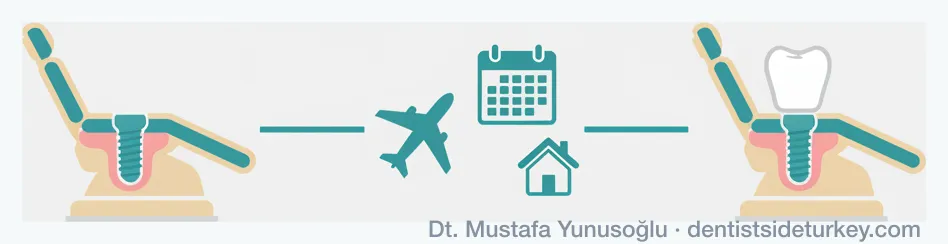
An implant replaces the tooth without touching its neighbours and keeps the bone in the gap. It needs two visits: 3‑5 days for placement, 2‑4 months of healing at home, up to 6 months in the upper jaw, then 4‑7 days for the final crown. If bone has already shrunk, a graft may be needed first; our post on not enough bone for implants explains when.
A bridge is finished in one visit of 5‑7 days, but the teeth on either side are prepared to carry it. It makes most sense when those teeth already have large fillings or crowns. A partial denture is removable and the least invasive, at the cost of comfort. The trade-offs are set out in implant, bridge or denture.
Is it worth travelling to Side for one back tooth?
For one implant, it depends on how often you are on this coast anyway, because two visits a few months apart fit best into two holidays you were already taking. For a bridge, one stay of 5‑7 days is enough. Our post on whether one or two teeth justify a trip is honest about when it does not.
When is leaving the gap the wrong choice?
When the opposite tooth is already moving, when the neighbours are tilting and trapping food, or when several back teeth are missing on the same side and you chew only on the other. Waiting in those situations usually makes the eventual treatment bigger, not smaller. The same applies if you plan an implant later: the bone in an empty gap thins over time, and a graft that was not needed early may be needed after a few years.
If gum disease played a part in losing the tooth, the gums come first, as our post on gums before veneers and implants explains.
How do you find out what your gap needs?
Send 2‑3 photos on WhatsApp, with a recent panoramic X-ray if you have one, because the X-ray shows bone and whether the opposite tooth has moved. Dt. Mustafa Yunusoğlu reviews every case personally, and the written plan within 24 hours says whether the gap needs treatment, which option suits it and how many days it takes. Sometimes the answer is that it can safely be left.
How implants work is on the dental implants page, the timings for each treatment on how many days you need, and the contact page has every way to reach us. Results depend on each case and the examination.
Frequently Asked Questions
Do I need to replace a missing back tooth?
Not always. A single missing last molar with healthy teeth in front of it and a comfortable bite often causes no real problem, a recognised approach called a shortened dental arch. A gap in the middle of the row, a tooth that has started to move, or several missing back teeth usually do need treatment.
What happens if I leave a gap at the back?
Over years, the tooth above or below the gap tends to grow into it and the neighbours tilt. In one study 92% of unopposed teeth had moved, by 1.68 mm on average. Food traps, cleaning gets harder and the bone in the gap shrinks, which can make an implant more complex later.
Implant or bridge for a missing molar?
An implant leaves the neighbouring teeth untouched and keeps the bone, but needs two visits a few months apart. A bridge is done in one visit of 5‑7 days, but the teeth on either side are prepared to carry it, which makes most sense when they already have large fillings or crowns.
How long does an implant for one back tooth take?
Two visits: 3‑5 days for placement, then 2‑4 months of healing at home, up to 6 months in the upper jaw, then 4‑7 days for the final crown. Healing varies between people.
Is it too late if the tooth has been missing for years?
Usually not, but the longer the gap, the more likely the bone has thinned and the opposite tooth has moved. A panoramic X-ray shows both. A graft may be needed before an implant, or the plan may include adjusting the opposite tooth.
Can a partial denture replace a back tooth?
Yes. It is removable and the least invasive option, and a meta-analysis found quality of life similar to leaving back molars unreplaced. Many people find it less comfortable than fixed teeth, which is why implants or bridges are often preferred when the gap needs filling.
How do I find out what my gap needs?
Send 2‑3 photos and, if you have one, a recent panoramic X-ray on WhatsApp to +90 530 575 47 18. Dt. Mustafa Yunusoğlu reviews them personally and the written plan within 24 hours says whether treatment is needed and which option suits it.
Sources
- Craddock et al. (2007), J Prosthodont: Occlusal changes following posterior tooth loss in adults, supraeruption of unopposed teeth
- Fueki & Baba (2017), J Oral Rehabil: Shortened dental arch and prosthetic effect on oral health-related quality of life, systematic review and meta-analysis
- Oral Health Foundation: Dental implants
- Oral Health Foundation: Bridges