
E-max or Zirconia in Turkey? Which Material Belongs on Which Tooth
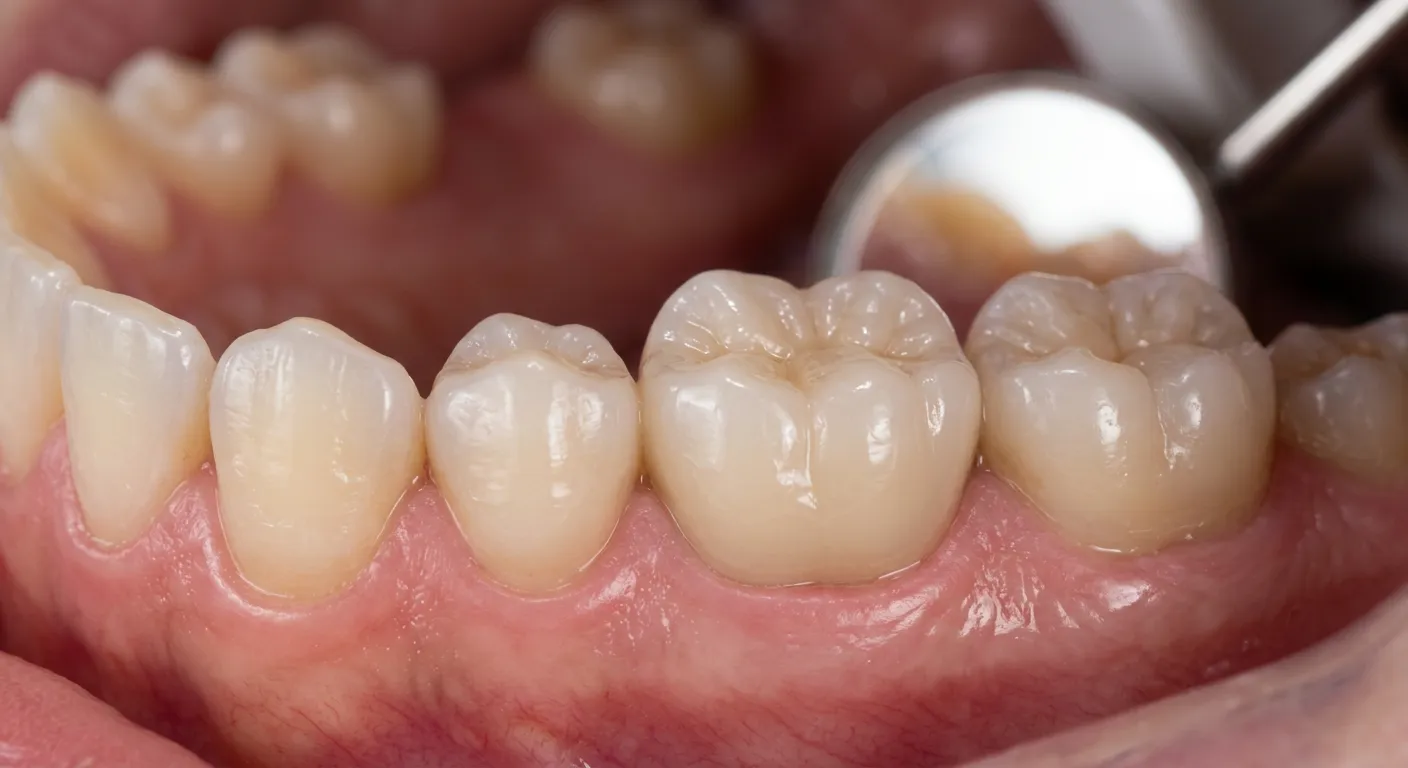
E-max is the more lifelike material and is bonded to the tooth, so it belongs on veneers and on front-tooth crowns. Zirconia is roughly twice as strong, so it belongs on back teeth, bridges, implant crowns and the teeth of people who grind. Neither is "better": they solve different problems, and most full smile cases in our clinic use both.
The short answer: E-max and zirconia side by side
| E-max (lithium disilicate) | Zirconia | |
|---|---|---|
| What it is | A glass-ceramic, pressed or milled | An oxide ceramic (zirconium dioxide), milled from a block |
| Bending strength | Roughly 400‑500 MPa | Roughly 900‑1,200 MPa for the classic type; the more translucent grades are weaker |
| How it looks | Translucent, closest to natural enamel | Denser and more opaque; the newer translucent grades come close on most teeth |
| How it is fixed | Adhesively bonded to etched enamel | Cemented over a prepared tooth, like a classic crown |
| Veneers | Yes, the standard material | Not the material of choice |
| Bridges | Only short ones at the front | Yes, including long spans and back teeth |
| Hides a dark tooth or metal post | Only partly | Yes |
| Best for | Veneers, front crowns, a single crown that must match its neighbours | Molars, bridges, implant crowns, grinders, discoloured teeth |
The strength figures are the ranges usually published for these materials and vary by manufacturer and by grade. What matters is the ratio: classic zirconia is about twice as strong as lithium disilicate.
What is E-max?
E-max is the trade name of a lithium-disilicate glass-ceramic made by Ivoclar; dentists use the name the way people say "Hoover" for a vacuum cleaner. It is a glass filled with fine needle-shaped crystals. The glass lets light pass into the tooth and scatter back out, which is what natural enamel does, and the crystals give it several times the strength of traditional dental porcelain.
Its second property matters just as much. Because it is a glass, its inner surface can be etched and chemically bonded to enamel. A bonded restoration does not rely on the shape of the tooth to stay on, so the dentist can leave far more tooth in place. That is the whole reason a veneer can work with 0.3‑0.5 mm of preparation. The dental veneers page explains the two appointments.
What is zirconia?
Zirconia, or zirconium dioxide, is a white oxide ceramic milled by computer from a solid block. It has nothing to do with the metal-backed crowns of the past: it is metal-free, so there is no grey line at the gum. Its defining property is toughness. It tolerates the bite forces on molars, it can span a gap as a bridge, and it survives the night-time grinding that cracks weaker ceramics.
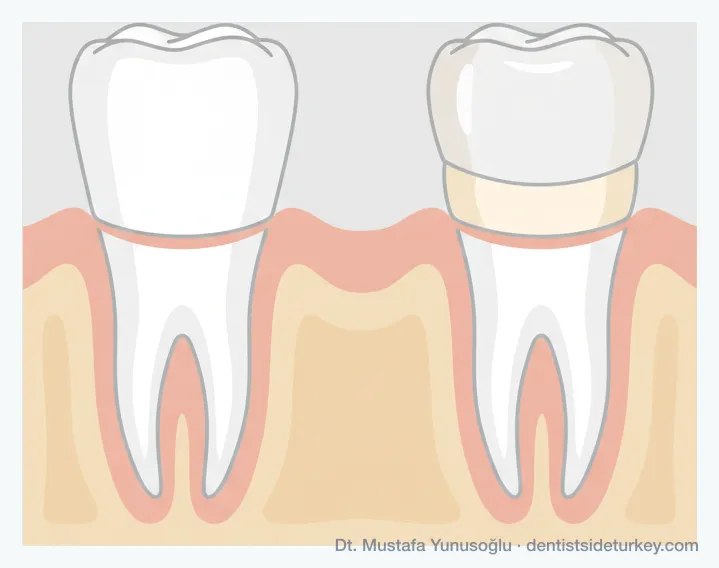
Two distinctions are worth knowing when you read a quote. The first is monolithic versus layered. A monolithic crown is milled from one block and is the strongest version. A layered crown has a zirconia core with porcelain baked on top for a livelier look, and it is that porcelain layer, not the zirconia, that occasionally chips. The second is the grade. Newer high-translucency zirconia looks far more natural than the chalky white crowns of fifteen years ago, but it gives up some strength to get there. The dental crowns page sets out the options.
Which one looks more natural?
On a front tooth of normal colour, E-max. Light travels into it and the edge of the tooth shows the slight translucency that real incisors have. That is why a single E-max crown can be matched to the natural teeth next to it, which is the hardest task in cosmetic dentistry.
Zirconia wins when there is something to hide. A tooth darkened by an old root canal treatment, a metal post or a grey amalgam stain will show through a translucent material as a shadow. Zirconia blocks it. And when every visible tooth is being restored at once, as in a Hollywood Smile, the difference narrows, because the restorations only need to match each other.
Which one is stronger, and does it matter?
Zirconia is stronger, and whether that matters depends on where the tooth sits. Front teeth cut; they take modest loads, and lithium disilicate copes well. Molars crush, and the forces are several times higher. In a systematic review of single crowns by Sailer and colleagues, five-year survival was 96.6% for lithium-disilicate crowns, around 95% for metal-ceramic crowns and 92.1% for the zirconia crowns studied at the time, which were mostly layered ones. The zirconia failures were dominated by chipping of the porcelain coating, not by the zirconia itself breaking. It is the main reason back-tooth crowns are now milled in one piece.
Strength also lets zirconia be made thinner where it counts. A monolithic zirconia crown on a molar can often be made with less reduction of the biting surface than a glass-ceramic crown would need, which leaves more tooth underneath.
Why veneers are E-max and bridges are zirconia
A veneer is a thin shell held on by its bond to enamel. Glass-ceramic bonds to enamel reliably; zirconia does not etch the same way and is normally cemented over a tooth that has been shaped to hold it. So when a clinic offers "zirconia veneers", ask how much tooth will be removed and from which surfaces: in practice the preparation is often closer to a crown. Our comparison of veneers, crowns and bonding shows what that difference costs the tooth.
A bridge is the opposite case. It carries a false tooth across a gap and flexes under load, so it needs the stiffest, toughest material available. That is zirconia. The same logic applies to the crown on a dental implant, and to the full fixed bridge of an All-on-4 case.
Tooth by tooth: what usually goes where
- Healthy front teeth you want to reshape or brighten. E-max veneers.
- A single front crown next to natural teeth. E-max, because it has to match.
- A dark, root-treated front tooth. Zirconia, often a layered or high-translucency grade, because the darkness must be blocked.
- Premolars. Either; it depends on your bite and on how much of the tooth shows when you smile.
- Molars. Monolithic zirconia.
- Any bridge, and any crown on an implant. Zirconia.
- You grind or clench at night. Zirconia on the back teeth, and a night guard afterwards whichever material is used.
- A full smile makeover. Usually a mix: E-max on the intact front teeth, zirconia where teeth are already heavily filled or where strength matters. The smile makeover page shows how such a plan is built.
What about porcelain fused to metal?
Metal-ceramic crowns are the older standard and they still work: the five-year survival in the same review was around 95%. Their weaknesses are cosmetic. The metal core blocks light, so the crown can look flat, and if the gum recedes a dark line appears at the margin. They remain a reasonable, lower-cost choice for a back tooth that nobody sees. Our dental crowns guide compares them in more detail.
How long do they last?
Both last long enough that the dentistry matters more than the material. Porcelain veneers typically last 10‑15 years; in a systematic review, glass-ceramic veneers showed 94% survival at a median follow-up of nine years. Zirconia crowns typically last 15 years or more. What ends a restoration early is rarely the ceramic: it is decay at the edge, gum disease, an untreated grinding habit or a bite that was never adjusted. In our clinic both E-max veneers and zirconia crowns carry a written guarantee of 5 years.
One practical point: neither material changes colour, and neither can be bleached. If you plan to whiten your natural teeth, do it before the shade of the new teeth is chosen, not after.
How to read the material line in a quote
- Is the material named for each tooth? "20 zirconium crowns" tells you nothing about why your healthy front teeth need crowns at all.
- Is the manufacturer named? "E-max" is a specific product. "Full porcelain", "empress type" or "E-max style" is not.
- Monolithic or layered, and which grade of zirconia? A clinic that knows will answer in one line.
- Will you receive the material documentation? Branded ceramics come with batch documentation from the laboratory.
- Does the price change with the material? It should, and the plan should say by how much.
How we decide in Side
Send two or three photos of your smile, and a panoramic X-ray if you have one, on WhatsApp to +90 530 575 47 18. Dt. Mustafa Yunusoğlu reviews them personally and you receive a written treatment plan within 24 hours, with the material stated tooth by tooth. Veneers and crowns are completed in one visit of 5‑7 days, with temporaries between the preparation and the fitting appointment.
Every quote is written per case and names the material for each tooth. The page on how we quote explains how it is built, the smile gallery shows finished cases in both materials, and the contact page has every way to reach us.
Frequently Asked Questions
Is E-max better than zirconia?
Neither is better overall. E-max looks more like natural enamel and can be bonded to the tooth, so it is the better choice for veneers and front-tooth crowns. Zirconia is roughly twice as strong, so it is the better choice for molars, bridges, implant crowns and patients who grind their teeth. Most full smile cases use both.
Which lasts longer, E-max or zirconia?
Both last many years when the planning and the fit are right. Porcelain veneers typically last 10‑15 years and zirconia crowns 15 years or more. In a systematic review, five-year survival of lithium-disilicate crowns was 96.6%; the older layered zirconia crowns scored 92.1%, mainly because the porcelain coating chipped, a problem that one-piece zirconia crowns avoid.
Can veneers be made from zirconia?
Veneers rely on a bond to enamel, and glass-ceramics such as E-max bond far more reliably than zirconia does. Zirconia is normally cemented over a tooth shaped to hold it, so a so-called zirconia veneer often needs a preparation closer to a crown. If you are offered one, ask how many millimetres will be removed and from which surfaces.
Which material is best for front teeth?
For healthy front teeth of normal colour, E-max: it is translucent like enamel and can be matched to the neighbouring teeth. For a front tooth that is dark after a root canal treatment or has a metal post, zirconia is often better because it blocks the dark colour from showing through.
Which material is best for back teeth and bridges?
Zirconia. Molars take several times the load of front teeth, and a bridge has to carry a false tooth across a gap without flexing. A crown milled from a single block of zirconia is the strongest option and can often be made with less reduction of the biting surface.
Do E-max or zirconia crowns stain or change colour?
No. Both are glazed ceramics that do not pick up stain from coffee, tea or red wine the way natural enamel and composite do. They also cannot be bleached, so if you want your natural teeth lighter, have them whitened before the shade of the new crowns or veneers is chosen.
Is zirconia safe if I have a metal allergy?
Yes. Despite the name, zirconia is a ceramic, not a metal alloy, and an all-ceramic crown contains no metal framework. The same is true of E-max. That is also why neither shows a grey line at the gum the way older metal-backed crowns can.
Sources
- Sailer et al. (2015), Dent Mater: All-ceramic or metal-ceramic single crowns, systematic review of survival and complication rates
- Morimoto et al. (2016), Int J Prosthodont: Survival of feldspathic porcelain and glass-ceramic laminate veneers, systematic review and meta-analysis
- Edelhoff & Sorensen (2002), J Prosthet Dent: Tooth structure removal associated with various preparation designs for anterior teeth
- Wikipedia: Lithium disilicate
- Wikipedia: Zirconium dioxide
- Oral Health Foundation: Crowns