
Worn-Down Teeth: Acid, Grinding or Age, and How They Are Repaired
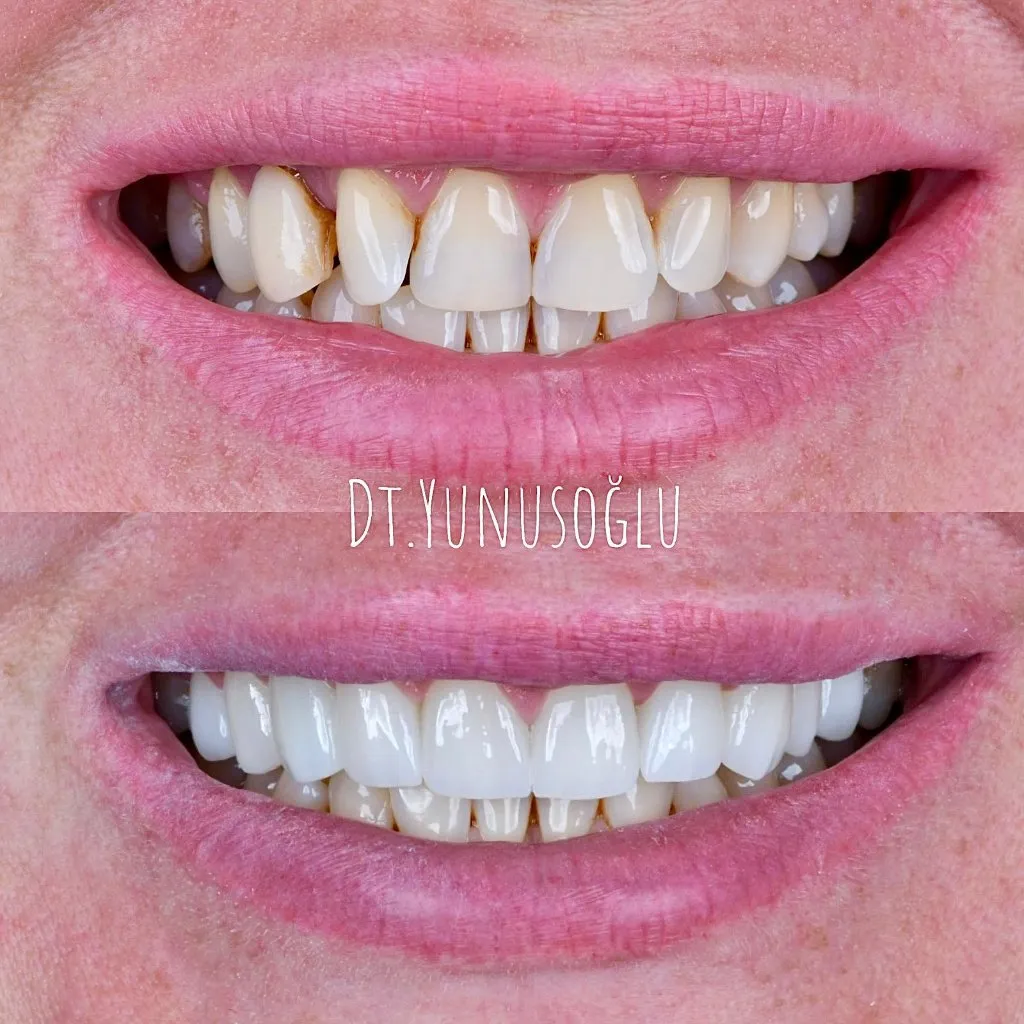
Teeth that look short, flat, glassy at the edges or yellower than they used to be are usually worn, and the cause is most often acid, grinding or a combination of both. Wear is common: in a study of 3,187 young European adults, 29% already had signs of it. The cause has to be found before anything is rebuilt, because new work wears just like enamel if the acid or grinding continues. European experts recommend the least invasive repair first, which often means bonding rather than crowns.
What is wearing your teeth?
| Type of wear | Typical look | Common causes |
|---|---|---|
| Acid erosion | Smooth, glassy surfaces, cupped back teeth, thin translucent edges | Reflux, vomiting, fizzy drinks, juice, citrus, sports drinks |
| Grinding (attrition) | Flat, matching edges on upper and lower teeth, chips | Night grinding, clenching under stress |
| Abrasion | Notches at the gum line | Hard brushing, abrasive toothpaste, habits such as pipe or pen biting |
| Mixed wear | Several of the above | Most often acid that softens enamel plus grinding that removes it |
How common is tooth wear?
More common than most people think. A study of 3,187 adults aged 18 to 35 in seven European countries found signs of tooth wear in 29%, with the highest levels in the UK. Risk factors included heartburn or acid reflux, repeated vomiting, snoring and a high intake of fresh fruit and juice. A related study of the same population linked erosive wear strongly to sensitivity to cold, so sensitive teeth are often an early sign. Some wear with age is normal; what matters is whether it is faster than it should be for your age.
Why must the cause come first?
Because restorations wear too. Composite bonding on a tooth that is still exposed to reflux or nightly grinding chips and thins; porcelain can crack or wear the opposing teeth. The European consensus on severe tooth wear is clear: diagnosis, prevention, counselling and monitoring come first, and restorative treatment is typically best delayed as long as possible. In practice that means asking your doctor about reflux if you have heartburn, cutting down acidic drinks or drinking them with meals, using a soft brush, and wearing a night guard if you grind; see teeth grinding with veneers and crowns. Sensitivity is covered in teeth sensitive to cold.
How are worn teeth repaired?
When repair is needed and you agree to it, the consensus recommends a conservative, minimally invasive adhesive approach. For many people that is composite bonding added to the worn edges and surfaces, with little or no drilling: it restores length and shape, protects the dentine and can be repaired later. Our article on how long bonding lasts explains what to expect, and the aesthetic fillings page describes the treatment. When wear is severe and many teeth have lost height, the bite itself may need to be rebuilt, and veneers or crowns may be part of the plan; see veneers, crowns or bonding and the dental crowns page.
Can worn teeth be fixed in one trip?
Bonding for a few worn front teeth is often done in one visit of 30 to 90 minutes. Veneers or crowns take two visits over roughly 5‑7 days. Severe wear that changes the bite needs more planning, and the written plan says how many visits it involves; see how many days you need. If you also have old crowns that no longer match, replacing old crowns and bridges explains how they fit into the plan.
When is restoration the wrong choice?
When the wear is mild and stable, monitoring with photos and check-ups is enough. When the cause is still active, such as untreated reflux or grinding without a night guard, new work is likely to fail. And covering mildly worn but healthy teeth with a full set of veneers is not a treatment for wear; it is a cosmetic choice that removes more tooth. We will tell you which of these applies to you.
Send photos of your teeth
Photos of your front teeth from the front and from below, with your teeth slightly apart, show the dentist the pattern of wear. Send them on WhatsApp and the written plan arrives within 24 hours. You can also use the contact page.
Frequently Asked Questions
What causes teeth to wear down?
Most often acid (reflux, vomiting, fizzy drinks, juice), grinding, hard brushing, or a combination. Acid softens enamel and grinding or brushing then removes it faster.
How common is tooth wear?
Common. In a study of 3,187 young European adults aged 18 to 35, 29% had signs of tooth wear, with the highest levels in the UK.
Can worn enamel grow back?
No. Enamel does not regenerate, which is why stopping the cause matters. Fluoride toothpaste can strengthen what is left, and lost shape can be rebuilt with bonding, veneers or crowns.
Is bonding a good option for worn teeth?
Often, yes. A European expert consensus recommends a conservative, minimally invasive adhesive approach, and bonding restores edges and surfaces with little or no drilling. It can be repaired later.
When are crowns needed for worn teeth?
When wear is severe, many teeth have lost height and the bite needs rebuilding, or when a tooth is too weakened for bonding. The cause should be under control first.
Does reflux damage teeth?
It can. Stomach acid is a common cause of erosion, especially on the inner surfaces of upper teeth. If you have heartburn, ask your doctor about it as well as your dentist.
How do I find out what my worn teeth need?
Send photos of your front teeth from the front and from below to WhatsApp +90 530 575 47 18. The written plan arrives within 24 hours.
Sources
- Bartlett et al. (2013), J Dent: Prevalence of tooth wear on buccal and lingual surfaces and possible risk factors in young European adults
- Loomans et al. (2017), J Adhes Dent: Severe tooth wear, European consensus statement on management guidelines
- West et al. (2013), J Dent: Prevalence of dentine hypersensitivity and study of associated factors, a European population-based cross-sectional study