
Wisdom Tooth Pain on Holiday: Gum, Decay or Abscess, and What to Do Tonight
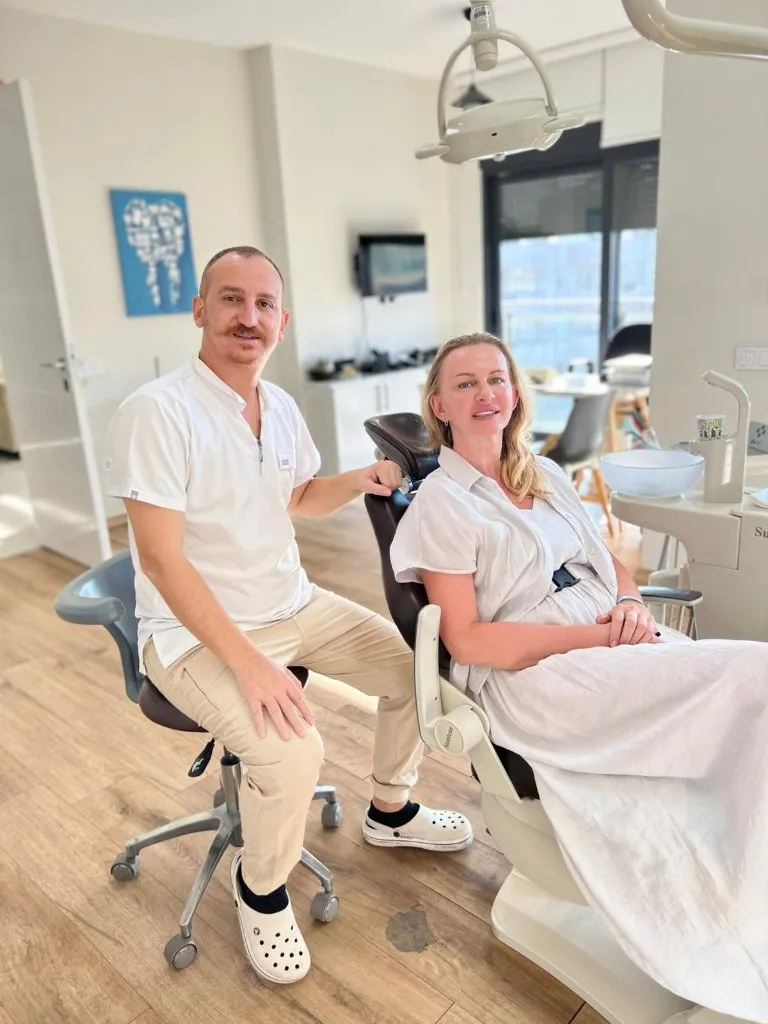
Pain at the back of the jaw on holiday is most often an inflamed flap of gum over a partly erupted wisdom tooth (pericoronitis), less often decay or an abscess. Tonight, rinse with warm salt water and take a painkiller exactly as the packet says; tomorrow, see a dentist, because it usually returns until the cause is dealt with. Swelling that spreads toward the eye or neck, a mouth you can hardly open, a high fever or trouble swallowing or breathing means a hospital emergency department, not a dental chair. Whether the tooth comes out here or at home depends on how settled it is and how many days you have left.
How do you tell the gum, decay and an abscess apart?
Wisdom teeth come through late and often lack room. The NHS lists teeth blocked by another tooth or partly covered by gum as a cause of pain, swelling, gum infection (pericoronitis), trapped food, decay and abscess. Where the pain sits, what the gum looks like and whether anything is spreading sort most cases.
| What you notice | Likely cause | How urgent | What to do |
|---|---|---|---|
| Dull ache at the very back, no swelling, no bad taste | Tooth pushing through, or a mild flare | Within a few days | Rinses, soft food, examined before you fly |
| Sore, red or puffy gum over a back tooth, pain on biting or swallowing, bad taste | Pericoronitis (inflamed gum flap) | Same day or next morning | Salt-water rinses and a painkiller tonight; the dentist cleans under the flap |
| Pain to sweet, hot or cold, a visible hole, food packing into it | Decay in or beside the tooth | A day or two, sooner if it throbs | Chew on the other side; filling or removal once examined |
| Throbbing that keeps you awake, a pimple on the gum, a swollen cheek | Abscess | The same day | Dentist today; an abscess does not go away on its own |
| Swelling toward the eye or neck, high temperature, trouble swallowing, breathing or opening your mouth | Spreading infection | Emergency, now | Call 112 or go to a hospital emergency department |
A dentist normally needs an X-ray to see how a wisdom tooth lies, so a photo cannot diagnose. It does show us which row you are in and how soon to see you.
What can you do tonight?
Rinse with salt water as the NHS describes: half a teaspoon of salt in a glass of warm water, spit it out, repeat as often as you like. Take ibuprofen or paracetamol exactly as the packet says, because a higher dose does not work better and can be dangerous; a pain-relieving gel from a pharmacy can also help. Eat soft food such as yoghurt, avoid sweet, very hot and very cold things, do not smoke, and sleep with your head raised. Never hold aspirin against the gum, it burns the tissue. All this eases a flare-up but does not remove the cause, which is why the pain tends to return.
When is it a hospital case rather than a dental one?
The NHS sends you to A&E for swelling around the eye or neck, or swelling that makes it hard to breathe, swallow or speak. Its dental abscess page adds a swollen or painful eye, sudden eyesight problems and finding it hard to open your mouth. In Turkey call 112 or go to the nearest hospital emergency department, and do not wait for a dental chair; a high fever with spreading swelling belongs on the same list.
A little stiffness around a wisdom tooth is common. A jaw that will barely open, or gets steadily worse over hours, is not. If in doubt, go to the hospital first and message us afterwards.
Do you need antibiotics for a flare-up?
Usually the cleaning comes first. A 2021 review recommends local treatment for pericoronitis and keeps antibiotics for severe cases, yet found they were given to more than half of the patients anyway. Fever or spreading swelling change the picture, and that call belongs to the dentist who examines you, so do not start left-over antibiotics on your own.
Should the tooth come out on holiday, or wait until you are home?
Calm it first. A badly inflamed gum is a poor moment for surgery, so the usual order is to settle the flare-up and then decide, based on how likely the tooth is to flare again and how many days you have.
For a tooth that keeps flaring, removal is a fair choice. In a Taiwanese cohort of 16,609 patients who had impacted lower wisdom teeth removed, dry socket needing an extra visit occurred in 3.6%, against 0.33‑19.14% in earlier studies. The risk was 1.3 times higher after gingivitis or pericoronitis and 2.5 times higher when the extraction was complex, and the authors argued for considering removal of teeth prone to pericoronitis.
The surgery takes a few minutes and no more than 40, says the NHS. The recovery is what you plan around: pain and swelling usually improve after 1 or 2 days, and soreness and a stiff jaw can last up to 2 weeks. A 2023 review advises at least 72 hours between a surgical extraction and a flight, and about a week after most dental treatment. Cabin pressure can also make an inflamed tooth hurt more.
With a week or more left and a settled tooth, removal here can fit, with a check before your flight. With only a few days left, or a tooth that has gone quiet, calm it now and have it out at home, where your own dentist follows it up. Both routes are sound. The poor choice is to ignore it and fly with the gum still inflamed.
What about swimming, flying and dry socket after a removal?
After a removal the NHS advises soft food, gentle rinsing with warm salt water, no smoking and no alcohol or very hot drinks. Sea, pool and jacuzzi wait until the wound has closed; our guide to swimming, flying and alcohol after dental treatment covers the days. Dry socket is the painful condition in which the clot over the socket does not form properly or is lost before the gum heals. Pain that worsens a few days later, especially with a bad taste, is the signal. The NHS advises an urgent dentist appointment, and it can be treated, so contact the dentist who did the removal.
When is the clinic route not the right choice?
Hospital first, as above. Not here either for a tooth that is quiet and has never troubled you, since the NHS says a wisdom tooth causing no problems is usually left and monitored, or when you fly in a day or two and the tooth would need surgery: calm it and have it removed at home. If the examination shows a difficult removal, you will be told plainly what can wait until you are home; the NHS notes that some wisdom teeth are referred to a hospital specialist. The chairs are closed on Sundays, but WhatsApp is not.
How does the clinic handle wisdom tooth pain in Side?
Send a photo on WhatsApp to +90 530 575 47 18 and say what hurts, since when, whether the cheek is swollen and when you fly. It is answered at any hour, and you get plain advice for the meantime and the earliest slot. Dentist Side Turkey was founded in Side in 2015 by Dt. Mustafa Yunusoğlu, with two other experienced dentists. The chairs run Monday to Saturday, 09:00 to 19:00, at Eskihisar in Manavgat, 5‑25 minutes by car from Side centre, Kumköy, Çolaklı, Titreyengöl, Evrenseki, Kızılağaç and Gündoğdu.
You are examined and told what is causing the pain, what stops it now and what can wait. A written treatment plan and quote follow within 24 hours, before anything starts. Our emergency dentist page explains the route, toothache on holiday covers other causes, and root canal on holiday applies if decay has reached the nerve. See also dentist near your hotel in Side, how many days for dental treatment and the guarantee after you fly home; every way to reach us is on the contact page.
If you have travel insurance, check your policy before you pay: whether dental emergencies are covered and what documents it wants. Results depend on the individual case and the examination.
Frequently Asked Questions
Is wisdom tooth pain on holiday an emergency?
Usually not an emergency, but it should be seen the same day or the next morning if the gum is swollen, there is a bad taste or the pain keeps you awake. It is a hospital emergency if the swelling spreads toward the eye or neck, or you have trouble swallowing, breathing or opening your mouth.
What can I do tonight for wisdom tooth pain?
Rinse with half a teaspoon of salt in a glass of warm water and spit it out, take ibuprofen or paracetamol exactly as the packet says, eat soft food, avoid sweet, very hot and very cold things, and sleep with your head raised. Do not smoke and do not hold aspirin against the gum.
When should I go to hospital instead of a dentist?
Go to a hospital emergency department, or call 112 in Turkey, for swelling around the eye or neck, trouble breathing, swallowing or speaking, a swollen or painful eye, a high fever with spreading swelling, or a mouth you find hard to open.
Do I need antibiotics for pericoronitis?
Not usually first. A 2021 review recommends local treatment, meaning cleaning and rinsing, and keeps antibiotics for severe cases. Fever or spreading swelling change that, and the examining dentist decides. Do not take left-over antibiotics on your own.
Should I have a wisdom tooth removed on holiday or at home?
Calm the flare-up first. With a week or more left and a settled tooth, removal here can fit, with a check before the flight. With only a few days left, or a tooth that has gone quiet, it is usually better to calm it now and have it removed at home. The dentist tells you which after examining it.
How long after a wisdom tooth removal can I fly or swim?
A 2023 review advises at least 72 hours after a surgical extraction and about a week after most dental treatment. Sea, pool and jacuzzi wait until the wound has closed, and your dentist's instruction overrides any general figure.
How do I reach the clinic if my wisdom tooth hurts at night or on a Sunday?
Send a photo on WhatsApp to +90 530 575 47 18; it is answered at any hour, including Sundays, when the chairs are closed. You get plain advice for the meantime and the earliest slot, Monday to Saturday, 09:00 to 19:00. A true emergency goes to a hospital, whatever the hour.
Sources
- Chen et al. (2021), PLoS One: Revisit incidence of complications after impacted mandibular third molar extraction: A nationwide population-based cohort study
- Schmidt et al. (2021), Int J Environ Res Public Health: A Review of Evidence-Based Recommendations for Pericoronitis Management and a Systematic Review of Antibiotic Prescribing for Pericoronitis among Dentists
- Felkai et al. (2023), Br Dent J: Dental tourism and the risk of barotrauma and barodontalgia
- NHS: Wisdom tooth removal
- NHS: Toothache
- NHS: Dental abscess