
Do You Need Antibiotics Before Dental Implants? What the Trials Show
For many people, a single dose of antibiotic shortly before implant surgery is reasonable: a Cochrane review of six trials found it cut early implant failures to about a third. What the trials do not support is a week of antibiotics afterwards as routine. The dentist decides from your health, the extent of surgery and any allergy, and you should never take leftover pills from home on your own, because a course you do not need brings side effects and resistance without a benefit.
Who usually needs what?
| Situation | Usual approach |
|---|---|
| Healthy adult, single or few implants | Often a single dose before surgery, or none; the dentist decides |
| Bone graft or several implants in one session | Preventive dose more often; sometimes a short course |
| Artificial heart valve or previous endocarditis | Antibiotic cover is decided with the cardiologist |
| Poorly controlled diabetes or weakened immunity | Individual plan; health first, then surgery |
| Penicillin allergy | An alternative antibiotic, if one is needed |
What does the evidence show?
The Cochrane review pooled six randomised trials with 1,162 participants, mostly comparing 2 g or 3 g of amoxicillin taken before surgery with a placebo. Implant failures were clearly more frequent without antibiotics (risk ratio 0.33). Put in absolute terms: with a failure rate of 6% in people who had no antibiotic, about 25 people need to take it for one to avoid an implant failure. Infections and side effects did not differ significantly, and only two minor side effects were recorded in total. A 2019 network meta-analysis of nine trials with 1,693 participants reached the same conclusion about protection against early failures. It could not name a best dose with confidence, and it found that courses of antibiotics after surgery do not seem justified by the trials.
Why not simply take antibiotics for a week to be safe?
Because more is not safer. The trials did not show that longer courses protect implants better, while every extra day brings a chance of diarrhoea, thrush or an allergic reaction, and adds to antibiotic resistance. What protects an implant after surgery is mostly practical: keeping the wound clean as instructed, not smoking, eating soft food and coming back if something feels wrong. Our article on what to eat after implants and the warning signs after implant surgery cover those days.
What should you tell the dentist?
Any allergy, especially to penicillin, and what happened when you reacted. Your full medication list, including blood thinners and medicines for bone density: see implants and osteoporosis medication. Heart conditions that need antibiotic cover, such as an artificial valve, are covered in dental treatment with a heart condition. And whether you smoke or have diabetes, because both affect healing more than the antibiotic question; read implants with smoking, diabetes or gum disease.
Does it matter when the implant goes in straight after an extraction?
An implant placed into a fresh socket, or one placed together with a bone graft, is a larger procedure, and the dentist is more likely to recommend a preventive dose. If there is an active infection around the tooth being removed, that is treated first. Our article on an implant straight after extraction explains when that route is chosen, and not enough bone for implants describes grafting.
When is the antibiotic question the wrong focus?
When it distracts from what decides implant success over the years: healthy gums, daily cleaning around the implant, not smoking and regular check-ups. Read how long implants last for the long view. A pill before surgery helps in the first weeks; your habits decide the next twenty years.
Plan your implant treatment
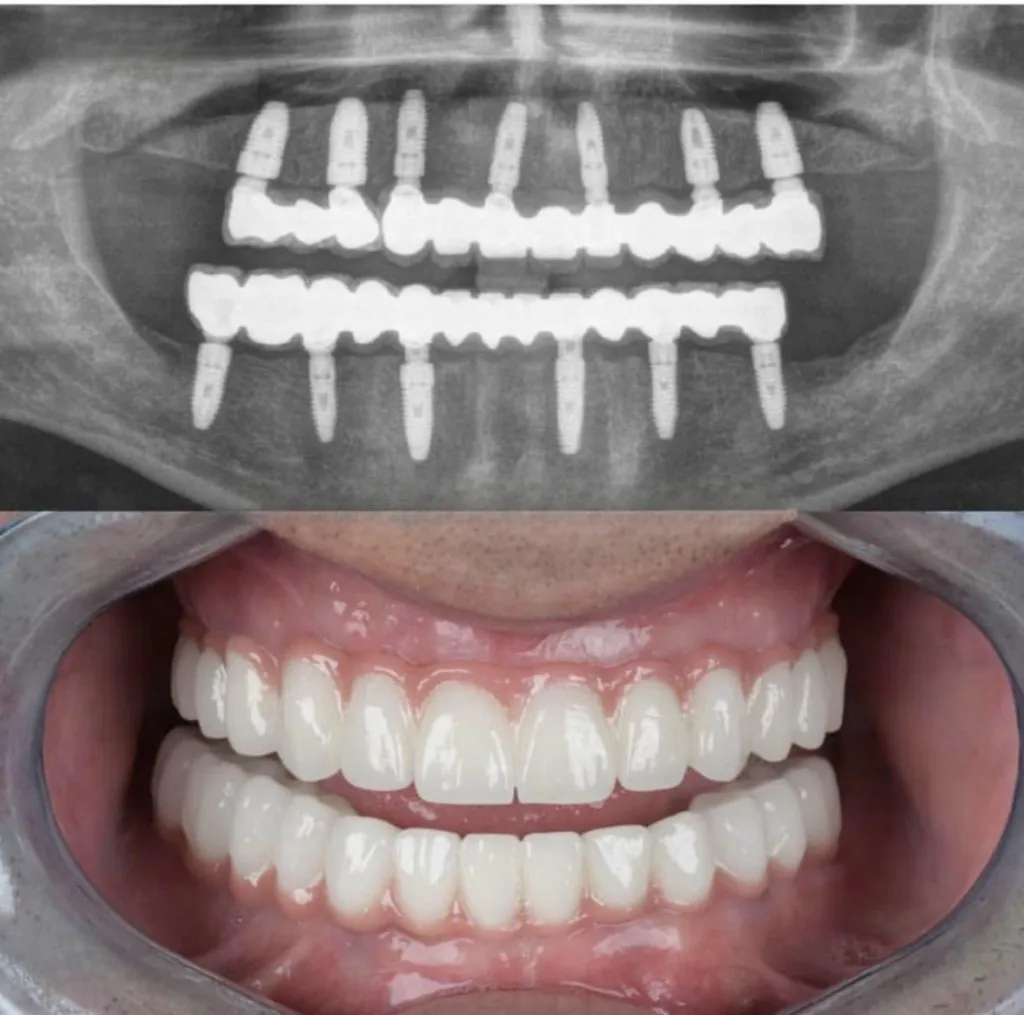
The dental implants page describes the treatment, which carries a 10-year written guarantee, and All-on-4 covers full-arch work. Send your medication list, allergies and an X-ray on WhatsApp and the written plan arrives within 24 hours, or use the contact page.
Frequently Asked Questions
Do I need antibiotics before dental implants?
Often a single preventive dose is reasonable. A Cochrane review of six trials found fewer implant failures with amoxicillin taken before surgery. The dentist decides from your health and the extent of surgery.
Do I need to take antibiotics for a week after implant surgery?
Usually not. A 2019 analysis of nine trials found that courses after surgery do not seem justified by the evidence. A course is prescribed for specific reasons, not as routine.
How much do antibiotics reduce implant failure?
In the Cochrane review, failures were about a third as frequent with antibiotics. With a 6% failure rate without them, about 25 people need the antibiotic to prevent one failure.
I am allergic to penicillin. Can I still have implants?
Yes. Tell the dentist what happened when you reacted. If an antibiotic is needed, an alternative is used.
Can I take leftover antibiotics from home before surgery?
No. The type, dose and timing matter, and taking antibiotics you do not need brings side effects and resistance without a benefit. Follow the dentist's instructions.
Do I need antibiotics if I have a heart condition?
Only some heart conditions call for antibiotic cover, such as an artificial heart valve or a previous endocarditis. That decision is made with your cardiologist.
What should I send before planning implants?
Your medication list, allergies, any heart or bone condition and an X-ray or photos. Send them to WhatsApp +90 530 575 47 18; the written plan arrives within 24 hours.
Sources
- Esposito, Grusovin and Worthington (2013), Cochrane Database Syst Rev: Interventions for replacing missing teeth, antibiotics at dental implant placement to prevent complications
- Romandini et al. (2019), J Clin Periodontol: Antibiotic prophylaxis at dental implant placement, which is the best protocol? Systematic review and network meta-analysis