
Sharp Pain When You Bite: Is It a Cracked Tooth?
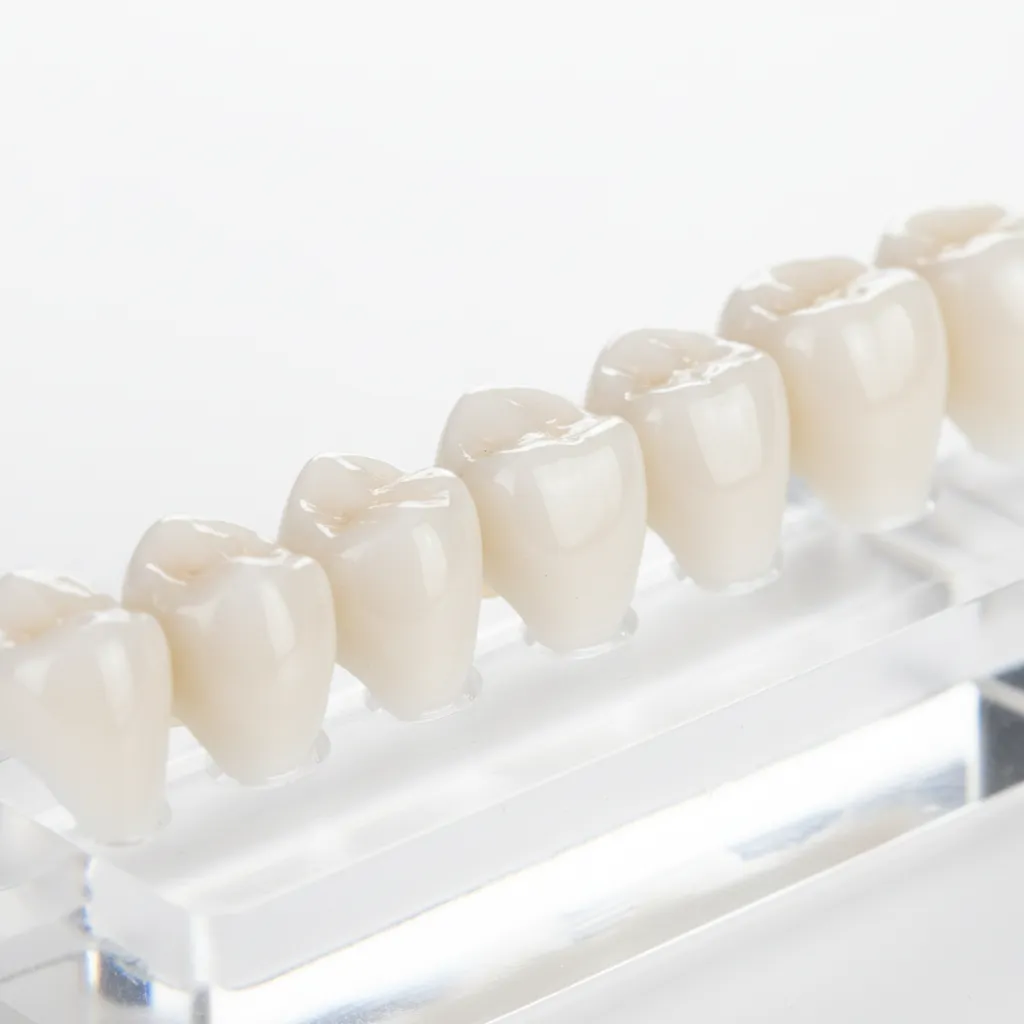
A short, sharp pain when you bite on something, often worst as you let go, and a twinge to cold, in a back tooth that looks normal: that is the typical pattern of a cracked tooth. Cracks rarely heal and tend to grow, so the aim is to catch it early. A crown that holds the tooth together often stops the pain and saves the tooth; if the nerve is already inflamed, root canal treatment comes first; and if the crack runs down into the root, the tooth usually cannot be kept. Until you see a dentist, chew on the other side.
What does a cracked tooth feel like?
| What you notice | What it often means | What usually helps |
|---|---|---|
| Sharp pain on biting or on release, short twinge to cold | Crack in the crown, nerve still healthy | Crown or a restoration that covers the cusps |
| Lingering ache after cold or heat, pain at night | Crack has reached the nerve | Root canal treatment, then a crown |
| A piece of tooth broke off, little pain | Fractured cusp | Filling or crown, depending on the size |
| Tooth moves in two parts, gum swelling along one side | Split tooth or crack into the root | Usually extraction and replacement |
Why are cracks so hard to find?
A crack can be thinner than a hair and invisible on an X-ray, and the pain is often hard to place in a particular tooth. A 2010 review of cracked tooth syndrome describes how dentists combine a bite test on individual cusps, cold testing, magnification and light shone through the tooth, and probing of the gum next to the suspected crack. Old large fillings, especially amalgam, and teeth grinding are common background factors; see teeth grinding and old amalgam fillings.
How is a cracked tooth treated?
If the nerve is healthy, the tooth is protected so the crack cannot flex: usually a crown, sometimes a band or bonded restoration first to test whether the pain settles. If the nerve is inflamed, root canal treatment comes first and a crown afterwards; our article on a crown after root canal treatment explains why. Results depend on the crack: a 2026 meta-analysis found a pooled 4- to 5-year survival of 82.2% for cracked teeth after root canal treatment, with survival falling over the following years and worse odds when the crack had created deep gum pockets, ran into the root or was left without a protective crown.
What can you do on holiday until you see a dentist?
Chew on the other side, avoid hard food such as nuts, ice and crusty bread, and avoid very cold drinks. A painkiller as the packet says helps but does not fix the crack. The NHS advises seeing a dentist, not a GP, for a cracked tooth, and keeping any broken piece. If a piece has already broken off, chipped or broken tooth and crown or filling fell out describe the first steps, and toothache on holiday helps you judge how urgent it is.
When is saving the tooth the wrong choice?
We try to keep cracked teeth whenever the outlook is reasonable. But when the crack runs down the root, the tooth splits into two parts, or a deep gum pocket shows the crack has travelled far, crowns and root canals rarely last, and spending time and effort on them only delays the inevitable. Then extraction and an implant or bridge is the better plan; our comparison of root canal or extraction and implant and the dental implants page explain the options.
Can you prevent cracks?
Not completely, but you can lower the risk: wear a night guard if you grind or clench, do not chew ice or bite hard objects, and have large old fillings checked before the walls around them give way. A tooth that has started to crack is easier to save than one that has split.
How to get it checked in Side
Describe when it hurts (biting, release, cold) and which side, and send a photo. Message us on WhatsApp, answered at any hour; the emergency dentist page explains what counts as urgent, and the contact page lists every way to reach us.
Frequently Asked Questions
How do I know if my tooth is cracked?
Typical signs are a short, sharp pain when you bite on something, often worst as you release, and a twinge to cold, in a tooth that may look normal. A dentist confirms it with bite tests on individual cusps, cold testing, magnification and light through the tooth.
Can a cracked tooth heal on its own?
No. Cracks in enamel and dentine do not heal and tend to grow with chewing. The aim is to protect the tooth early so the crack cannot flex.
How is a cracked tooth fixed?
If the nerve is healthy, usually with a crown that holds the tooth together. If the nerve is inflamed, root canal treatment comes first, then a crown. If the crack runs into the root, extraction is usually the better option.
Does a cracked tooth always need a root canal?
No. Only if the crack has reached the nerve, which shows as lingering pain after cold or heat, or pain at night. Many cracked teeth are treated with a crown alone.
How long does a cracked tooth last after treatment?
It depends on the crack. A 2026 meta-analysis found a pooled 4- to 5-year survival of 82.2% for cracked teeth after root canal treatment, with lower survival later and worse odds for cracks that reach the root or cause deep gum pockets.
What should I do if I think I cracked a tooth on holiday?
Chew on the other side, avoid hard food and very cold drinks, take a painkiller as the packet says, and see a dentist soon. Message WhatsApp +90 530 575 47 18 with a photo, answered at any hour.
When does a cracked tooth have to come out?
When the crack runs down into the root, the tooth splits into two parts, or a deep gum pocket shows the crack has spread far. Then an implant or bridge is the more reliable replacement.