
Do You Need a Crown After Root Canal Treatment?
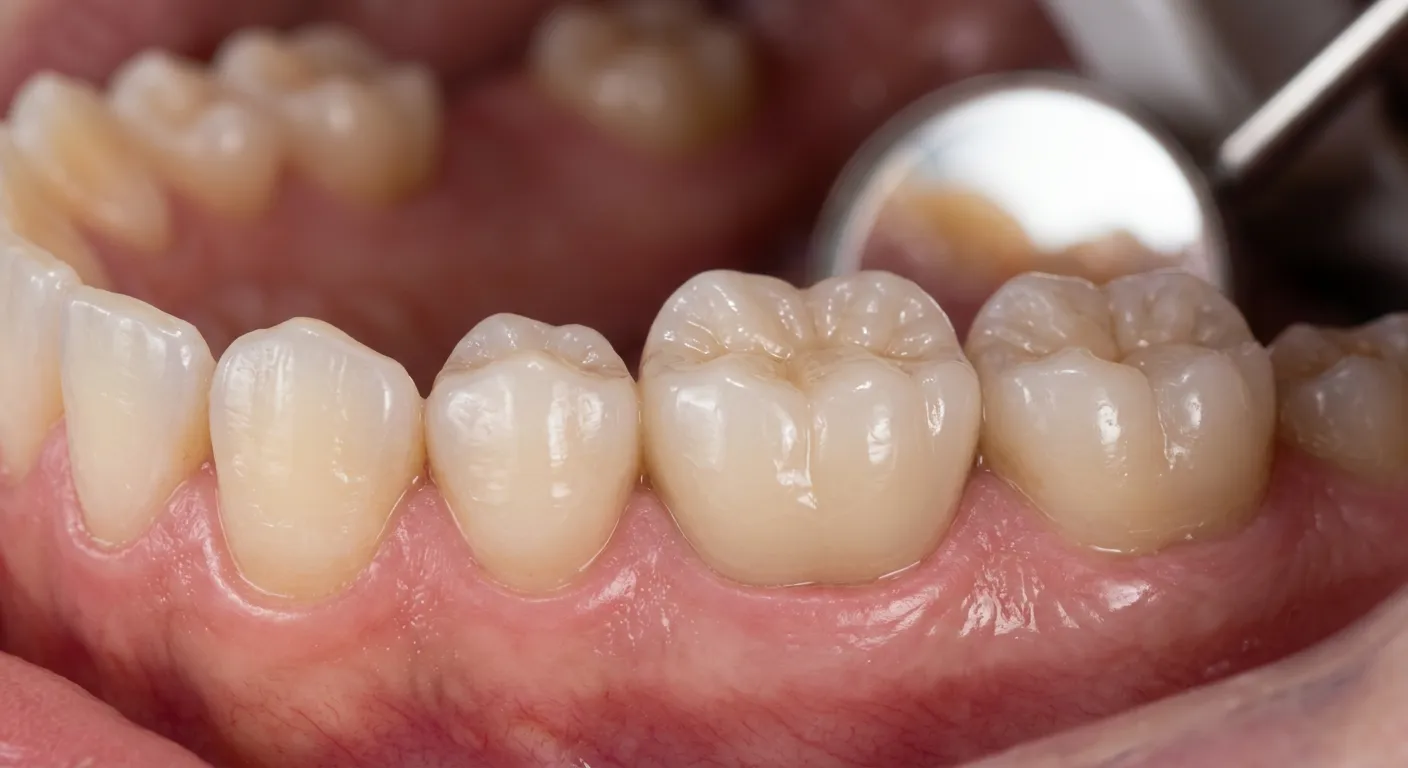
Not always, but often. A root-filled back tooth (premolar or molar) that has lost a lot of its structure is much more likely to survive with a crown that covers and holds it together: in one study, root-filled teeth without a crown were lost at six times the rate of crowned ones. A front tooth, or a back tooth that has lost only a little structure, often does just as well with a good bonded filling. The dentist decides from how much tooth is left, where it sits, and whether you grind.
Crown or filling after a root canal?
| Situation | Usual recommendation |
|---|---|
| Molar or premolar, large cavity, one or more walls lost | Crown, or a restoration that covers the cusps |
| Back tooth, small access hole, walls intact | Bonded filling may be enough; discuss with the dentist |
| Front tooth with a small access hole | Tooth-coloured filling, usually no crown |
| Front tooth badly broken or discoloured | Crown, sometimes with a post |
| Any root-filled tooth in someone who grinds | Crown more often, plus a night guard |
Why do root-filled teeth break?
A root canal removes the infected nerve, not the tooth's strength, but the decay, old fillings and access cavity that came before it usually have. Back teeth take strong chewing forces, and a tooth with thin, unsupported walls can split under them, sometimes down into the root, which ends with an extraction. That is why the restoration after the root canal matters as much as the root canal itself.
What does the evidence say?
A classic study of 203 root-filled teeth found that teeth not crowned after treatment were lost at a 6.0 times greater rate than crowned teeth. A 2017 systematic review adds the nuance: for back teeth that had lost only minimal to moderate structure, survival against fracture was similar with crowns (94% to 100%) and composite fillings (91.9% to 100%). The NHS notes that a crown may be needed, especially if the tooth was badly infected. Put together: the more tooth that is missing, the stronger the case for a crown.
How soon should the crown go on?
Soon. A temporary filling seals the tooth for weeks, not months, and a root-filled back tooth without its final restoration is at its most fragile. Chew on the other side until the crown is in. If you are travelling for treatment, a root canal and a crown can often be planned in the same trip: see root canal on holiday and how many days you need. A crown takes two visits over roughly 5‑7 days because the laboratory makes it.
Which crown material?
For back teeth, zirconia is strong and the usual choice; for front teeth, E-max often gives the more natural look. Our comparison of E-max and zirconia and the crown guide explain the differences, and the dental crowns page covers the procedure. If the tooth is discoloured after the root canal, a crown also solves that.
When is a crown the wrong choice?
We fit crowns every week, and still do not recommend one on every root-filled tooth. A front tooth with a small access hole and healthy walls is usually better off with a tooth-coloured filling, because a crown removes more healthy tooth. And if the tooth is already split down the root, or there is too little left to hold a crown, the honest answer may be extraction and an implant or bridge: our comparison of root canal or extraction and implant covers that decision.
What if the temporary filling or crown comes out?
Keep the piece, avoid chewing on that side, and see a dentist soon so the root filling does not get contaminated: crown or filling fell out on holiday explains the first steps. If you grind your teeth, read teeth grinding with crowns before the crown goes on.
Plan it before you travel
An X-ray of the tooth tells the dentist whether a crown is likely. Send it on WhatsApp and the written plan arrives within 24 hours; crowns carry a 5-year written guarantee. You can also use the contact page.
Frequently Asked Questions
Is a crown always needed after a root canal?
No. Root-filled back teeth that have lost a lot of structure usually need one; front teeth and back teeth with only a small access hole often do well with a bonded filling. The dentist decides from how much tooth is left.
What happens if I do not put a crown on a root-filled back tooth?
It is more likely to crack, sometimes into the root, which can mean losing the tooth. In one study, root-filled teeth without a crown were lost at six times the rate of crowned teeth.
How long can I wait before getting the crown?
Not long. A temporary filling is meant for weeks, not months. Chew on the other side until the final restoration is in.
Can the root canal and crown be done in one trip?
Often yes. The root canal usually takes one or two appointments, and the crown two visits over roughly 5‑7 days. The exact plan depends on the tooth and any infection.
Which crown is best after a root canal?
For back teeth, zirconia is the usual choice because of its strength; for front teeth, E-max often looks more natural. Both are options the dentist discusses with you.
Does a front tooth need a crown after root canal treatment?
Usually not, if only a small access hole was made and the walls are healthy; a tooth-coloured filling is enough. A badly broken or discoloured front tooth may need a crown.
How do I find out what my tooth needs?
Send an X-ray of the tooth to WhatsApp +90 530 575 47 18. The written plan arrives within 24 hours, and crowns placed at our clinic carry a 5-year written guarantee.
Sources
- Aquilino and Caplan (2002), J Prosthet Dent: Relationship between crown placement and the survival of endodontically treated teeth
- Suksaphar et al. (2017), Restor Dent Endod: Survival against fracture of endodontically treated posterior teeth restored with crowns or resin composite, systematic review
- NHS: Root canal treatment