
Dental Crowns Guide: Zirconia vs Porcelain, Cost Factors & Treatment Process
What Are Dental Crowns?
A dental crown is a custom-made protective cap that covers a damaged, broken or aesthetically compromised tooth, restoring its strength, shape and appearance. Modern zirconia crowns last 15 years or more, the procedure takes two visits over roughly 5‑7 days, and every crown is quoted in writing from your photos before you travel.
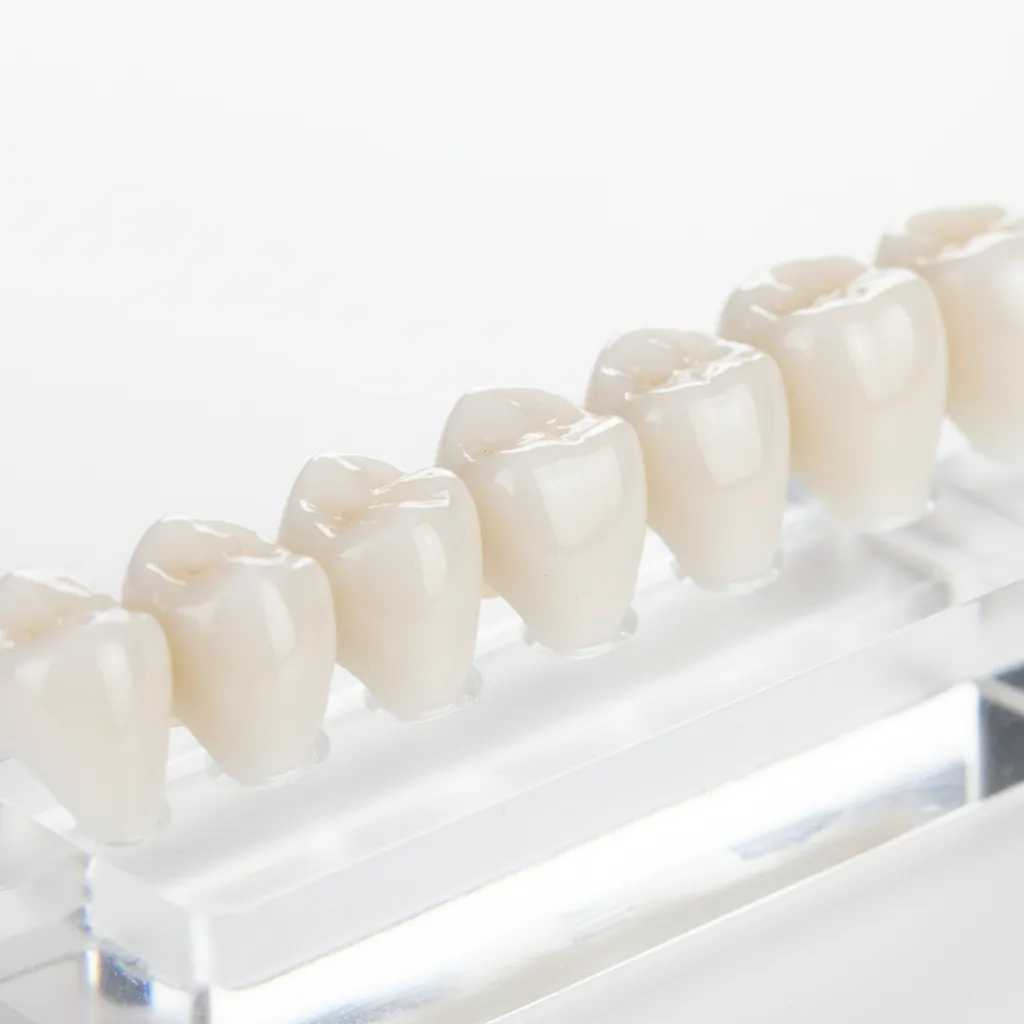
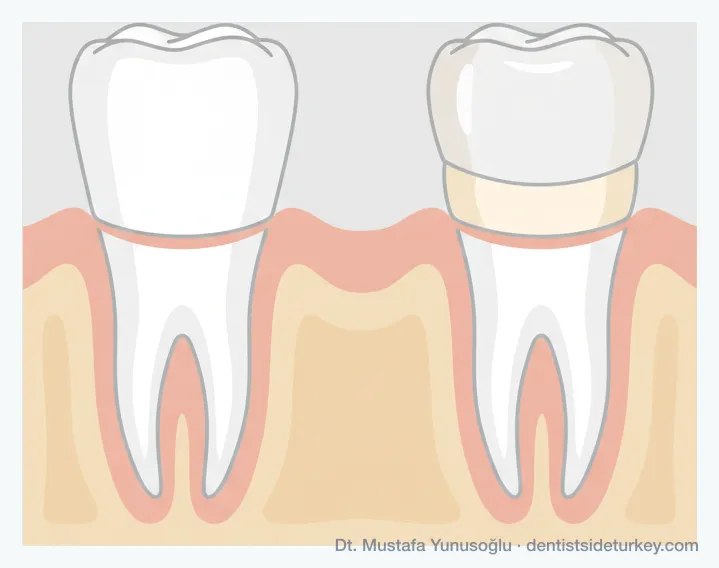
Dental crowns are protective coverings placed over damaged, broken or aesthetically insufficient teeth, restoring both function and aesthetics. Unlike a filling, which repairs a small part of the tooth, a crown wraps around the entire visible portion above the gumline. This makes it the treatment of choice when a tooth is too weakened to hold a filling but still healthy enough at the root to avoid extraction. At our clinic in Side, dental crowns are one of the most requested treatments among international patients, both for single damaged teeth and as part of complete smile transformations.
Crowns are made from several materials, but two dominate modern dentistry: monolithic zirconia and porcelain (ceramic) fused to a zirconia or metal-free core. Both are metal-free, biocompatible and highly aesthetic - the differences lie in strength, translucency and ideal placement in the mouth.
Zirconia vs Porcelain: Which Crown Is Right for You?
| Feature | Zirconia | Porcelain |
|---|---|---|
| Durability | Very high | High |
| Aesthetics | Excellent | Excellent |
| Metal content | None | None |
| Lifespan | 15+ years | 10‑15 years |
| Best position | Molars and front teeth | Front teeth |
| Fracture resistance | Exceptional | Good |
Zirconia is the strongest tooth-coloured material available today. It withstands heavy chewing forces, resists chipping and can be milled thin, which means less healthy tooth structure needs to be removed during preparation. Modern multi-layer zirconia has largely solved the older complaint that it looked opaque - today’s crowns show natural translucency at the edge and depth of colour at the core.
Porcelain (typically lithium disilicate ceramic such as E-max) offers slightly superior light transmission, which is why many dentists still prefer it for upper front teeth in patients with very translucent natural enamel. For back teeth or patients who grind, zirconia is usually the safer long-term choice. If your goal is a full aesthetic transformation rather than a single tooth, thin porcelain veneers may be an alternative worth discussing, since they require far less tooth reduction.
Who Is a Good Candidate for a Crown?
You are likely a good candidate for a crown if one or more of the following applies:
- A large cavity has destroyed too much of the tooth for a filling to hold
- The tooth is broken, cracked or severely worn
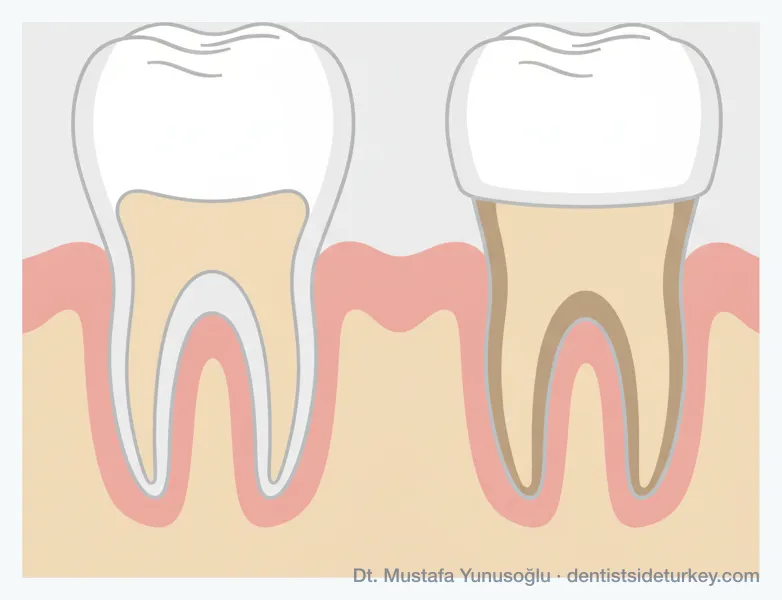
- The tooth has had root canal treatment and needs protection against fracture
- You need a restoration on top of a dental implant
- You want to correct the shape, size or colour of a tooth that veneers cannot fix
Good general oral health matters more than age. Active gum disease or untreated decay must be resolved first, and heavy grinders may be advised to wear a night guard to protect their new crowns. During your consultation, digital X-rays confirm that the tooth root and surrounding bone are healthy enough to support a crown; if the root cannot be saved, an implant-supported crown is the usual alternative.
The Treatment Procedure Step by Step
- Examination and planning - A clinical exam and digital X-rays assess the tooth, root and bite. You choose the shade together with the dentist using a professional shade guide, so the crown blends invisibly with neighbouring teeth.
- Tooth preparation - Under local anaesthesia, the tooth is gently reshaped to create room for the crown. The procedure is virtually painless; most patients compare it to having a filling done.
- Impressions - A digital or conventional impression captures the prepared tooth precisely. This data goes to the dental laboratory, where the crown is milled and hand-finished.
- Temporary crown - You leave the first appointment with a temporary crown, so you can eat and smile normally while the permanent one is manufactured.
- Fitting and cementation - A few days later the permanent crown is tried in. Fit, bite and colour are checked and fine-tuned before the crown is permanently bonded. Small bite adjustments are made until it feels completely natural.
Healing and Aftercare Timeline
First 24‑48 hours
Mild sensitivity to hot and cold is normal after cementation and settles quickly. Avoid very hard or sticky foods for the first day while the cement reaches full strength. Any tenderness in the gum around the crown usually disappears within two to three days.
First two weeks
Your bite adapts to the new crown. If it still feels “high” after a few days, a quick adjustment visit solves it - never try to get used to an uncomfortable bite. Brush and floss normally from day one; healthy gums around the crown margin are the key to its longevity.
Long-term care
- Brush twice daily and clean between teeth - the crown cannot decay, but the tooth beneath its margin can
- Attend a dental check-up every 6‑12 months
- Avoid chewing ice, pens or opening packaging with your teeth
- Wear a night guard if you grind or clench
Every crown placed at our clinic in Side comes with a 5-year guarantee, backed by Dt. Mustafa Yunusoğlu, who has treated international patients at his Side clinic personally since 2015.
Crown, Veneer or Filling - Which Restoration Do You Actually Need?
Patients often arrive asking for one treatment when another would serve them better, so it helps to understand where each restoration fits. A filling repairs small to medium cavities where most of the natural tooth remains intact. A veneer is a thin shell bonded to the front surface of a structurally healthy tooth - ideal for discolouration, small gaps or minor shape corrections, but it adds no strength. A crown replaces the entire outer shell of the tooth and is the only option that restores real chewing strength to a heavily damaged or root canal treated tooth. During the consultation the dentist examines each tooth individually; in full smile makeovers it is common to combine crowns on back teeth with veneers on front teeth to preserve as much healthy enamel as possible.
Living With a Temporary Crown
Between your two appointments you wear a temporary crown made of durable resin. It protects the prepared tooth and keeps your smile presentable, but it is cemented with a deliberately weaker adhesive so it can be removed easily. During this period, chew on the opposite side where possible, avoid chewing gum, toffee and very hard foods, and floss by sliding the floss out sideways rather than pulling it up. If a temporary comes loose while you are sightseeing, contact the clinic - re-cementing takes only minutes.
Possible Risks and How We Minimise Them
Crown treatment is one of the most predictable procedures in dentistry, but honest patient information includes the risks:
- Post-operative sensitivity - usually mild and temporary; persistent sensitivity is checked and resolved before you fly home
- Nerve irritation - in a small percentage of heavily damaged teeth the nerve may later need root canal treatment; careful preparation and cooling minimise this risk
- Chipping or debonding - rare with monolithic zirconia; covered by our 5-year guarantee if it occurs
- Gum recession over many years - can expose the crown margin; regular hygiene visits keep the gumline stable
Choosing an experienced clinic matters more than choosing a country. Ask any provider how many crowns they place per year, which material brands they use and what their guarantee covers in writing - we answer all three before you book.
What Decides the Cost of Crowns
We do not publish a price list, because a crown on one healthy-rooted molar and six crowns on heavily filled front teeth are different pieces of work. The amount in your plan depends on how many teeth are crowned, the material for each (monolithic zirconia, E-max or layered porcelain), whether a tooth needs root canal treatment or a core build-up first, and whether single crowns or a bridge are the right answer.
Send 2‑3 photos or a recent X-ray on WhatsApp and within 24 hours you receive a written plan that lists this tooth by tooth, with the full amount; the amount you approve after the examination is the amount you pay. Compare it line by line with any other quote: the same material and manufacturer, the same number of units, what is included and a written guarantee (5 years on crowns here). Our page on how we quote explains how every quote is built, and the treatment page is dental crowns in Side, Antalya.
How Many Days Do You Need in Turkey?
Plan 5 to 7 days in Side for crown treatment. Preparation and impressions happen on day one or two; the laboratory then needs three to five working days to mill and finish your crowns; fitting and cementation take place at the final appointment. Between visits you are free to enjoy the beaches and ancient ruins of Side - most patients simply combine treatment with a holiday. If crowns are combined with implants, two separate trips a few months apart are needed. Our dental tourism page explains airport transfers, hotel recommendations and how a typical treatment week is scheduled.
The day count for every treatment, side by side, is on our how many days do you need in Side for dental treatment page.
If you are deciding between materials, or between a crown and a veneer, see E-max or zirconia: which material belongs on which tooth and veneers, crowns or bonding: how much tooth each one removes.
Already have crowns that are ten or twenty years old? Our guide to replacing old crowns and bridges sorts the signs that need attention from those that can safely be left alone.
Why Choose Our Clinic in Side?
- Founded in 2015, with a 5.0-star Google rating from 63 patient reviews
- 5-year guarantee on crowns and veneers, 10-year guarantee on implants
- Premium materials and digital CAD/CAM workflow
- English, German and Russian speaking patient coordination
- Open Monday to Saturday, 09:00‑19:00
Written under the supervision of Dt. Mustafa Yunusoğlu.
Get Your Written Treatment Plan
Send 2 to 3 photos of your teeth or a current panoramic X-ray on WhatsApp. Dt. Mustafa Yunusoğlu reviews them personally and you receive a written treatment plan with the exact amount within 24 hours, with no obligation - contact us by WhatsApp, phone or email.
Frequently Asked Questions
How long do zirconia crowns last?
With good oral hygiene and regular check-ups, zirconia crowns typically last 15 years or more. Porcelain crowns average 10‑15 years. Our clinic backs every crown with a 5-year guarantee.
How much does a dental crown cost in Turkey?
We quote crowns per case rather than from a list, using the same materials and technology as clinics in Western Europe. Your exact price depends on how many teeth are involved and the condition of the tooth underneath, and is confirmed in writing before treatment.
Is getting a crown painful?
No. Tooth preparation is done under local anaesthesia and feels similar to having a filling. Mild sensitivity for a day or two after cementation is normal and passes quickly.
How many days do I need to stay in Turkey for crowns?
Plan 5‑7 days. Preparation and impressions happen at the first visit, the laboratory needs 3‑5 working days, and the permanent crowns are fitted at the final appointment.
Zirconia or porcelain - which should I choose?
Zirconia is stronger and ideal for molars and patients who grind their teeth; porcelain offers slightly more translucency for upper front teeth. Your dentist recommends the best option after examining your bite and enamel.
Can a crown be placed on a root canal treated tooth?
Yes - it is strongly recommended. Root canal treated teeth become brittle over time, and a crown protects them against fracture, often saving the tooth from extraction.