
Dental Veneers Guide: Types, Procedure, Benefits & Cost Factors in Turkey
What Are Dental Veneers?
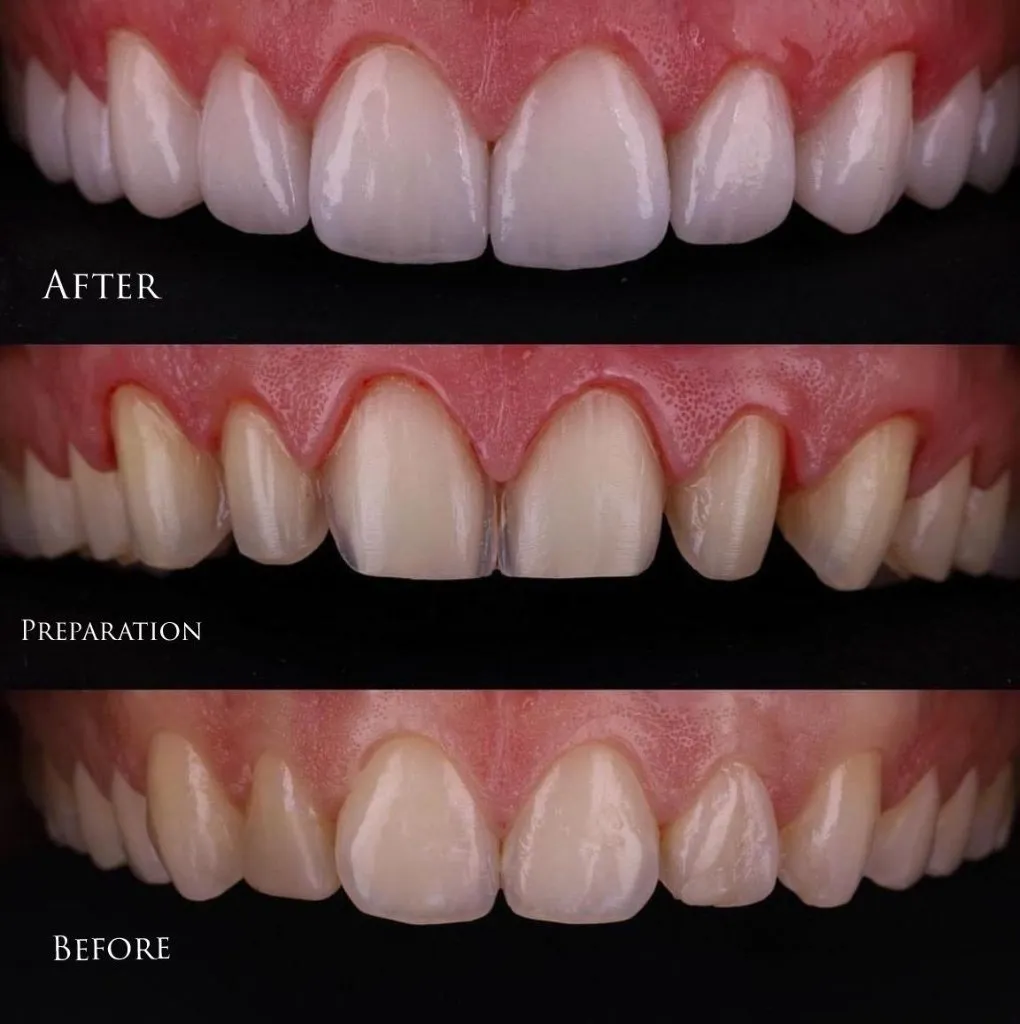
Dental veneers are ultra-thin porcelain shells bonded to the front surface of teeth. With minimal enamel reduction (0.3‑0.5mm), they deliver maximum aesthetic results while preserving natural tooth structure. Because so little of the tooth is touched, porcelain laminate veneers are widely considered the most conservative way to transform the colour, shape and alignment of the front teeth in a single treatment plan.
In short: laminate veneers are ultra-thin porcelain facings (prepared with a minimal but irreversible 0.3‑0.5mm enamel reduction) fitted over the front teeth in about 5‑7 days across two or three visits. Each case is quoted in writing from your photos, and with good care veneers last 10‑15 years.
Veneers correct discolouration that whitening cannot fix, close small gaps, mask chips and cracks, and even out mild crowding. They are the core building block of a full Hollywood Smile (see our Hollywood Smile cost guide) and one of the most requested treatments among international patients visiting Side and Antalya.
Types of Veneers
- E-max: Lithium disilicate glass-ceramic - the most aesthetic option. Its translucency mimics natural enamel so closely that even under studio lighting the veneer is virtually indistinguishable from a real tooth. Best for front teeth where appearance matters most.
- Empress: Leucite ceramic with high translucency - a proven material for patients who want a very natural, slightly softer light reflection.
- Zirconia: For extra durability. Recommended when a tooth needs more structural support, for patients who grind their teeth, or for veneers towards the back of the smile line.
- Composite: An economical, single-session option sculpted directly onto the tooth. It costs less and requires no lab work, but it stains faster and typically lasts 4‑7 years rather than 10‑15.
Who Is a Good Candidate?
Veneers suit most adults with healthy gums and sufficient enamel. You are likely a good candidate if you have:
- Permanent discolouration or tetracycline stains that whitening cannot remove
- Small gaps (diastema) between the front teeth
- Chipped, cracked or worn front teeth
- Mild crowding or slightly rotated teeth you want visually straightened
- Teeth whose shape or length you are simply unhappy with
Veneers are not the first choice if you have untreated gum disease, extensive decay, very large fillings in the front teeth, or severe bite problems - in those cases dental crowns or orthodontics may be recommended first. Heavy night-time grinding (bruxism) does not rule veneers out, but a protective night guard becomes essential. A proper assessment with X-rays always comes first.
How Many Veneers Do You Need?
The number depends on how wide your smile is and what you want to change. Most people show 8 to 10 upper teeth when they smile naturally, so the most common plan is 8‑10 veneers on the upper arch. If the lower teeth are visible when you speak or laugh, 6‑8 lower veneers may be added, bringing a full smile design to 16‑20 teeth. When only one or two teeth are chipped or discoloured, single veneers matched precisely to the neighbouring teeth are perfectly possible - colour matching is where an experienced ceramist makes all the difference. A frequent and budget-friendly compromise is veneering the upper arch only and brightening the lower teeth with professional whitening, so both arches end up at the same shade. The exact count is decided together with you during the digital smile design, never as a fixed package you must accept.
Advantages and Disadvantages
Like any treatment, veneers involve a trade-off worth understanding before you commit.
Advantages
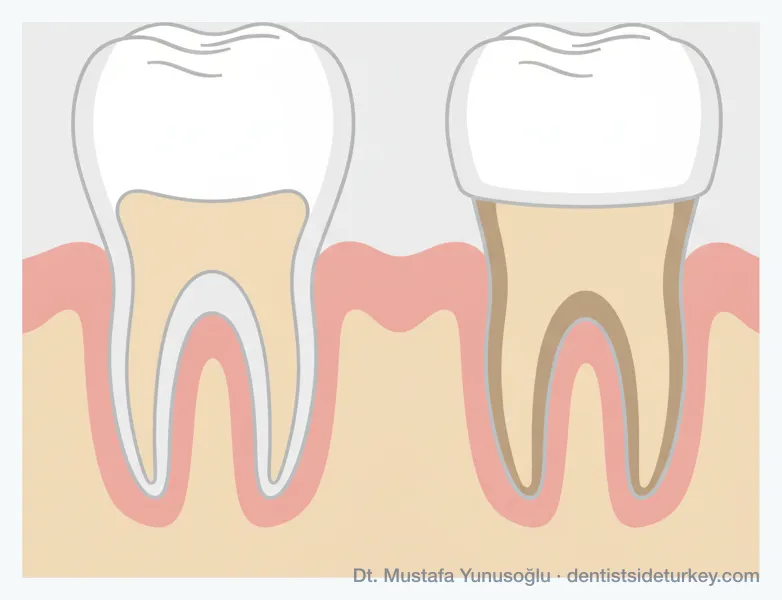
- Most conservative aesthetic restoration - only 0.3‑0.5mm of enamel is removed, versus 1.5‑2mm for a crown
- Porcelain is highly stain-resistant: coffee, tea and red wine do not discolour E-max or zirconia
- Natural light transmission that composite fillings and older crowns cannot match
- Fast: a complete smile transformation in 5‑7 days
- Long lifespan of 10‑15 years with a 5-year written guarantee
Disadvantages
- The procedure is irreversible - once enamel is prepared, the tooth will always need a veneer or crown
- Higher upfront cost than composite bonding
- Porcelain can chip under extreme point loads (biting ice, opening bottles), though repairs and single-veneer replacement are straightforward
- Not suitable while gum disease or active decay remains untreated
The Procedure Step by Step (5‑7 Days)
- Consultation & Digital Smile Design (Day 1) - Examination, X-rays and a digital smile simulation. You see a realistic preview of your new smile and approve the shape, length and shade before any tooth is touched.
- Preparation (Day 1‑2) - Minimal reduction of 0.3‑0.5mm of enamel under local anaesthesia. This is far less than a crown requires, and the session is virtually painless.
- Impressions (Day 2) - A digital scan or silicone impression is sent to the in-house laboratory, where each veneer is individually crafted and layered by a ceramist.
- Temporary veneers (Days 2‑5) - While the lab works, you wear aesthetic temporaries, so you are never without a presentable smile - you can sightsee, swim and dine normally.
- Try-in and placement (Day 5‑7) - Each veneer is checked for fit, colour and bite, then permanently bonded with light-cured adhesive cement. Final polishing and bite adjustment complete the treatment.
How Many Days Do You Need in Turkey?
Plan for 5 to 7 days in Side. Most patients arrive on day one, have preparation and impressions within the first 48 hours, and receive their final veneers between day five and day seven. Only two to three actual clinic visits are needed, so the rest of your stay is holiday time on the Antalya coast. Many patients combine treatment with a beach hotel package - see our dental tourism guide for how transfers, accommodation and appointment scheduling work in practice. If your schedule is tight, the trip can sometimes be split into two shorter visits.
The day count for every treatment, side by side, is on our how many days do you need in Side for dental treatment page.
Healing and Aftercare Timeline
First 24‑48 hours
- Avoid very hard, sticky or strongly coloured food while the bonding cement fully cures.
- Mild sensitivity to hot and cold is normal and fades within a few days.
- Brush gently but normally - veneers are cleaned exactly like natural teeth.
First two weeks
- Any awareness of the "new" feeling disappears; speech adapts within days.
- If a spot on your bite feels high, contact the clinic - a 5-minute adjustment fixes it.
Long term
- Brush twice daily, floss once daily, and attend a check-up and professional cleaning every 6‑12 months.
- Do not open packaging or bite fingernails, pens or ice with veneered teeth.
- If you grind at night, wear the night guard provided.
- Porcelain does not stain, but the cement margins can - moderate coffee, tea and smoking for the cleanest result.
What Decides the Cost of Veneers
We do not publish a price list, because two people asking for veneers rarely need the same work. The amount in your plan depends on how many teeth are treated, the material chosen for each (E-max glass-ceramic, zirconia or composite), how much preparation each tooth needs, and whether gum or bite problems have to be treated first.
Send 2‑3 photos on WhatsApp and within 24 hours you receive a written plan that lists all of this tooth by tooth, with the full amount. When you compare it with a quote from home, compare like with like: the same number of teeth, the same material and manufacturer, what is included and a written guarantee (5 years on crowns and veneers here). Our page on how we quote explains the process, and the full treatment page is dental veneers in Side, Antalya.
How Long Do Veneers Last?
With proper care, porcelain veneers last 10‑15 years; many patients keep them even longer. Longevity depends on oral hygiene, bite forces and habits rather than the material itself - E-max and zirconia are extremely stable and do not discolour. Our clinic backs every veneer with a 5-year written guarantee.
Choosing a Clinic Abroad: What to Check
Travelling for veneers is safe and routine when you vet the clinic properly. Before booking anywhere - including with us - check the following:
- A written treatment plan and fixed quote based on your photos or X-rays, before you fly. Vague "from" prices that change on arrival are a red flag.
- Named materials. The quote should state the exact ceramic (E-max, Empress, zirconia), not just "porcelain veneer".
- A real, written guarantee. Ours covers crowns and veneers for 5 years and implants for 5 years.
- Verifiable reviews. Look for consistent recent Google reviews rather than testimonials only on the clinic's own site - our Side clinic holds a 5.0-star rating across 63 Google reviews.
- A realistic schedule. Quality porcelain work needs 5‑7 days; anyone promising a full set of lab-made veneers in 2 days is cutting corners.
- Aftercare access. Ask how adjustments or a chipped veneer are handled after you return home.
Two comparisons go deeper on the decisions this guide touches: veneers, crowns or bonding: how much tooth each one removes, and E-max or zirconia: which material belongs on which tooth.
Veneers, Crowns or Composite - Which Is Right for You?
Veneers preserve the most tooth structure and give the best aesthetics for healthy front teeth. Crowns cover the entire tooth and are the better choice when a tooth is heavily filled or structurally weak. Composite bonding is the budget-friendly, reversible entry point, at the cost of shorter lifespan and faster staining. During the consultation we often combine options - for example whitening the lower teeth while veneering the uppers - to reach the best result for the budget.
Since 2015 our clinic in Side has treated international patients from the UK, Germany, Russia and beyond, with a 5.0-star Google rating from 63 reviews.
Written under the supervision of Dt. Mustafa Yunusoğlu. Have questions or want a written quote from your photos? Contact us or message us on WhatsApp at +90 530 575 47 18.
Get Your Written Treatment Plan
Send us a few photos of your smile and receive a personal treatment plan with a fixed price - and with no obligation.
Frequently Asked Questions
How much do veneers cost in Turkey?
We quote veneers per case rather than from a list. Your exact price depends on how many veneers you need and how much preparation each tooth requires, and is confirmed in writing before treatment.
How many days do I need in Turkey for veneers?
Plan for 5‑7 days. Preparation and impressions happen in the first 48 hours, the lab crafts your veneers while you wear temporaries, and final bonding takes place around day 5‑7. Only 2‑3 clinic visits are needed.
How long do porcelain veneers last?
With good oral hygiene, porcelain veneers last 10‑15 years. E-max and zirconia do not stain or discolour. Our clinic provides a 5-year written guarantee on all crowns and veneers.
Does getting veneers hurt?
Only 0.3‑0.5mm of enamel is reduced under local anaesthesia, so the procedure is virtually painless. Mild hot-and-cold sensitivity for a few days afterwards is normal and fades on its own.
Am I a good candidate for veneers?
Most adults with healthy gums and enough enamel qualify - ideal for discolouration, small gaps, chips or mild crowding. Untreated gum disease, large fillings or severe bite issues may point to crowns or orthodontics instead; an assessment confirms your options.
Should I choose veneers or a crown?
For healthy front teeth, veneers deliver the best aesthetics with minimal tissue removal. If a tooth has large fillings or is weakened, a full-coverage crown is the safer choice. Your dentist decides based on the clinical examination and X-ray findings.