
Dental Implants at 60, 70 or 80: Is There an Upper Age Limit?
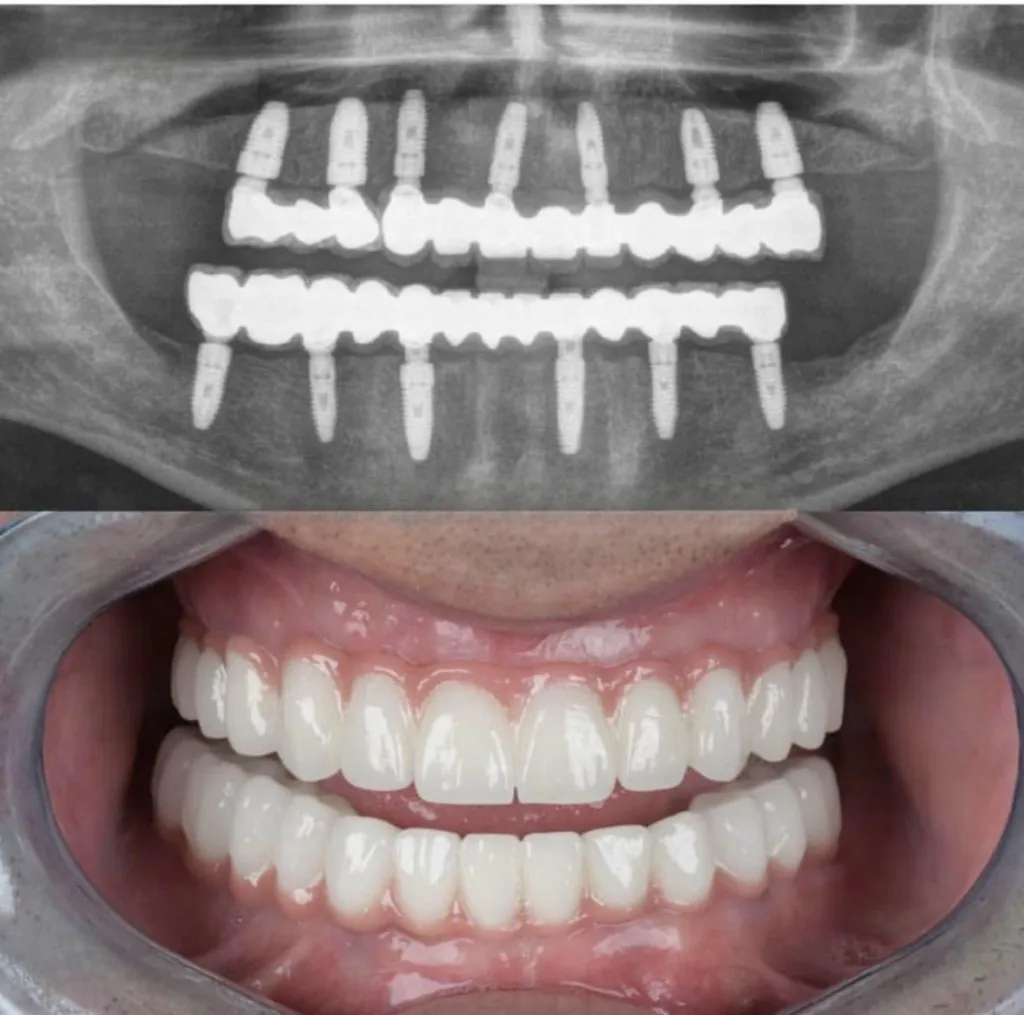
There is no upper age limit for dental implants. Reviews of implants in people aged 65 and over, including patients over 75, report that about 96‑97% of implants were still in place after five years, and a pooled analysis of prospective studies found no significant difference in implant loss between older and younger adults. What decides whether implants suit you at 70 or 80 is your general health, your medicines, diabetes control, smoking, the bone and how well you can keep the area clean. The birth date is not on that list.
At a glance: which health situations matter?
| Health situation | What it means for implants | What the dentist checks |
|---|---|---|
| Heart disease, stable | Reviews found implant survival similar to, or higher than, in healthy patients | Your cardiologist's view, your medicines, how long you have been stable |
| Blood thinners (warfarin, apixaban, aspirin and others) | Usually possible; bleeding is managed locally, not by stopping the drug | Which drug, which dose, your latest blood test, a plan agreed with your prescriber |
| Type 2 diabetes | High survival reported when it is controlled; poor control slows healing | A recent HbA1c result and how stable your sugar has been |
| Osteoporosis tablets (bisphosphonates) | Implants are usually possible; a rare jaw complication exists | Which drug, for how long, tablet or injection |
| High-dose bone injections for cancer, or radiotherapy to the jaw | Higher risk of complications; implants may not be advised | Written advice from your oncologist before anything is planned |
| Smoking | Raises the chance of failure and infection | Whether you can stop before surgery and through healing |
| Stiff hands, tremor, poor memory | Cleaning matters more than the number of years | Whether you or a carer can clean daily, and which design is simplest |
Is there really no upper age limit?
No study has found an age at which implants stop making sense. A 2017 systematic review of 11 prospective studies in people aged 65 and over found that 97.7% of implants survived the first year and 96.2% survived five years. Its authors concluded that age alone should not be a limiting factor. A 2018 review of patients aged 75 and over found 97.3% survival at one year and 96.1% at five years, and a meta-analysis of four prospective studies found no significant difference in the risk of implant loss between people of 60 and over and younger adults.
The newest review, from 2025, pooled 27 studies and found five-year survival of 96.8% in patients over 75, which was not worse than in the 65‑75 group. These are averages from studies, not a promise for any one person.
What matters more than age?
The 2018 review looked at the illnesses that are common in later life. In patients with cardiovascular disease, implant survival was similar to or higher than in healthy patients. High survival was reported in type 2 diabetes and Parkinson's disease. Radiotherapy for cancer was the clear exception, and patients receiving high-dose bone-protecting injections for bone metastases carried a high risk of complications.
Three more things count. Smoking and poorly controlled diabetes are covered in our guide to implants with smoking, diabetes or gum disease. Bone is the second: after years in a denture the jaw is often thinner, and what to do when there is not enough bone explains the options. The third is cleaning. In the 2025 review, plaque and gum bleeding were more common around implants in the older group, although bone levels did not differ significantly. An implant that is cleaned every day does well at any age, so be honest about how your hands and memory are.
Do bisphosphonates and blood thinners rule out implants?
Usually not. For osteoporosis tablets, a 2025 meta-analysis prepared for the International Task Force on Osteonecrosis of the Jaw pooled 21 cohorts and put the rate of jaw osteonecrosis after implants at 0.5%. With low certainty, antiresorptive treatment did not increase implant failure. Bisphosphonates were linked to that rare complication, which is why the dentist wants the drug name, the number of years and whether it is a tablet or an injection.
For blood thinners, a 2023 meta-analysis of seven studies found that continuing anticoagulants during implant surgery did not significantly raise bleeding risk when local measures to control bleeding were used. Never stop a blood thinner on your own. Any change is agreed between your prescriber and the dentist.
Which implant options suit older patients?
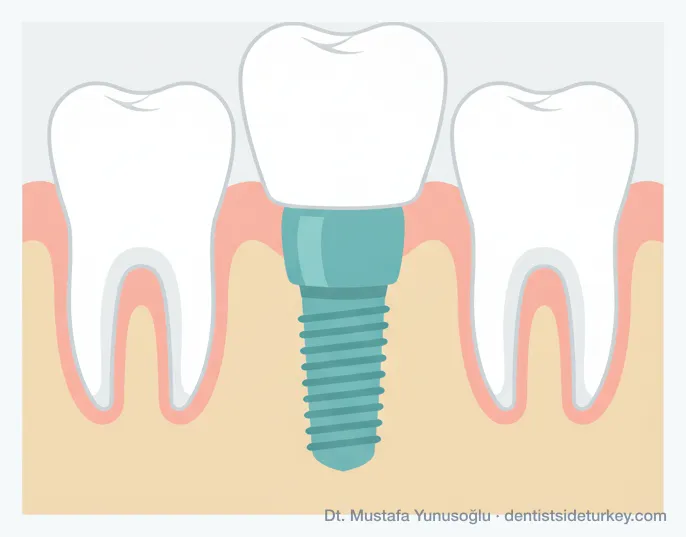
A single implant replaces one tooth and leaves the neighbours untouched. An implant bridge carries several teeth on fewer implants than teeth. All-on-4 fixes a whole arch on four implants, two upright at the front and two angled at the back, which uses the bone you already have, and a fixed temporary bridge is attached within 24‑72 hours. It is often the answer for people who have worn a full denture for years; the All-on-4 page and our All-on-4 guide explain who it suits.
A third route is an implant-retained denture: a removable denture that clicks onto implants, so it stays still when you eat. It needs fewer implants than a fixed bridge and is easy to take out and clean. In the 2025 review, joining the implants with a bar was linked to fewer implant losses than separate attachments. Ask the dentist whether it fits your case. A conventional denture needs no surgery, but it moves and does not stop the jawbone from shrinking. The trade-offs are compared in implant, bridge or denture.
How do the two trips work?
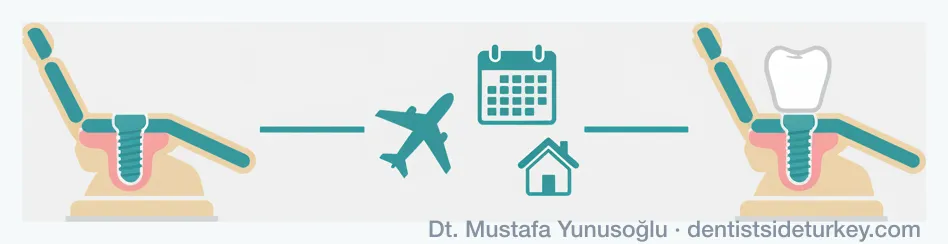
Implants need two visits to Side. On the first, the implants are placed under local anaesthesia, which takes 30‑60 minutes for a single implant, and a temporary solution is fitted. The visit lasts 3‑5 days. You then heal at home for 2‑4 months (up to 6 in the upper jaw), and on the second visit of 4‑7 days the permanent teeth are fitted. All-on-4 follows the same pattern. Implants carry a written 10-year guarantee, and WhatsApp is answered at any hour while you are at home.
Plan the first trip calmly: choose a quiet week, have someone to help you at home afterwards, and ask your own doctor if a long journey is a concern. Our dental trip checklist covers the practical side, what to eat after implants covers the first days, and after you fly home explains follow-up.
Why bring a medication list and recent blood tests?
Because the safe plan depends on them, not on your age. A written list with the name, dose and duration of every medicine tells the dentist which precautions to plan and whether to speak to your doctor first. If you take warfarin, bring your latest INR result; if you have diabetes, your latest HbA1c. A short letter from your GP or specialist about your heart or kidneys, a note of allergies and any earlier panoramic X-ray help too.
Send them with your photos before you travel. Dt. Mustafa Yunusoğlu reviews photos and X-rays personally, and the written plan arrives within 24 hours. That way any question is settled at home with your own doctor, not in the chair.
When is the clinic route not the right choice?
Wait, or talk to your own doctor first, after a recent heart attack or stroke, with diabetes that is poorly controlled, or when you are on high-dose bone injections for cancer or have had radiotherapy to the jaw. In those cases implants may be delayed or not advised. If nobody can help you clean the mouth, a simpler design is wiser than a complicated one. And if two trips are too much, a conventional denture or a bridge needs less travel and is a perfectly respectable choice.
If you are unsure, send us a message on WhatsApp with your photos, X-ray and medication list. Our dental implants page and the full implants guide cover the treatment, and the contact page lists every way to reach us. Results depend on the individual case and the examination.
Taking medicine for osteoporosis? See dental implants while taking osteoporosis medication.
Frequently Asked Questions
Is there an upper age limit for dental implants?
No. A 2017 systematic review of implants in people aged 65 and over concluded that age alone should not be a limiting factor, and a 2017 meta-analysis of prospective studies found no significant difference in implant loss between older and younger patients. General health, medicines, bone and cleaning ability decide.
How well do implants work in people over 75?
A 2018 review of patients aged 75 and over found 97.3% implant survival at one year and 96.1% at five years, and a 2025 review of 27 studies reported 96.8% at five years in patients over 75. These are study averages, not a guarantee for one person.
Can I have implants if I take blood thinners?
Usually yes. A 2023 meta-analysis of seven studies found that continuing anticoagulants did not significantly raise bleeding risk when local haemostatic measures were used. Never stop the drug on your own; the timing is agreed between your prescriber and the dentist.
Do osteoporosis tablets such as bisphosphonates rule out implants?
Usually not. A 2025 meta-analysis put jaw osteonecrosis after implants in people on osteoporosis antiresorptives at 0.5%, with low-certainty evidence of no increase in implant failure. The dentist needs the drug name, the years of treatment and whether it is a tablet or an injection.
Which option suits an older person: implant bridge, All-on-4 or denture?
It depends on how many teeth are missing, the bone and how easily you can clean. A single implant or an implant bridge suits a few missing teeth, All-on-4 suits a whole arch, and an implant-retained denture is a removable middle route. A conventional denture needs no surgery but moves and does not stop bone shrinking.
What should I bring or send before I travel?
A written medication list with doses and duration, your latest HbA1c if you have diabetes, your latest INR if you take warfarin, a note of allergies, a letter from your GP or specialist about heart or kidney conditions, and any earlier panoramic X-ray. Send them on WhatsApp with photos of your teeth.
How many trips do implants need, and is there a guarantee?
Two. The first visit of 3‑5 days places the implants, then you heal at home for 2‑4 months (up to 6 in the upper jaw), and the second visit of 4‑7 days fits the permanent teeth. Implants carry a written 10-year guarantee, and WhatsApp +90 530 575 47 18 is answered at any hour.
Sources
- Srinivasan et al. (2017), Clin Oral Implants Res: Dental implants in the elderly population: a systematic review and meta-analysis
- Schimmel et al. (2018), Clin Oral Implants Res: Effect of advanced age and/or systemic medical conditions on dental implant survival
- Sendyk et al. (2017), J Oral Rehabil: Dental implant loss in older versus younger patients, meta-analysis of prospective studies
- Abou-Ayash et al. (2025), Clin Oral Implants Res: Implant survival in patient populations with a mean age of 65‑75 years compared to older cohorts
- Mirza et al. (2025), Endocr Pract: Dental implant failure and MRONJ in patients taking antiresorptive therapy for osteoporosis
- Zou et al. (2023), Acta Odontol Scand: Risk of bleeding with dental implant surgery in patients on anticoagulant or antiplatelet drugs