
Teeth Whitening on Holiday in Turkey: In-Office or Home, Who It Suits, and the First 48 Hours
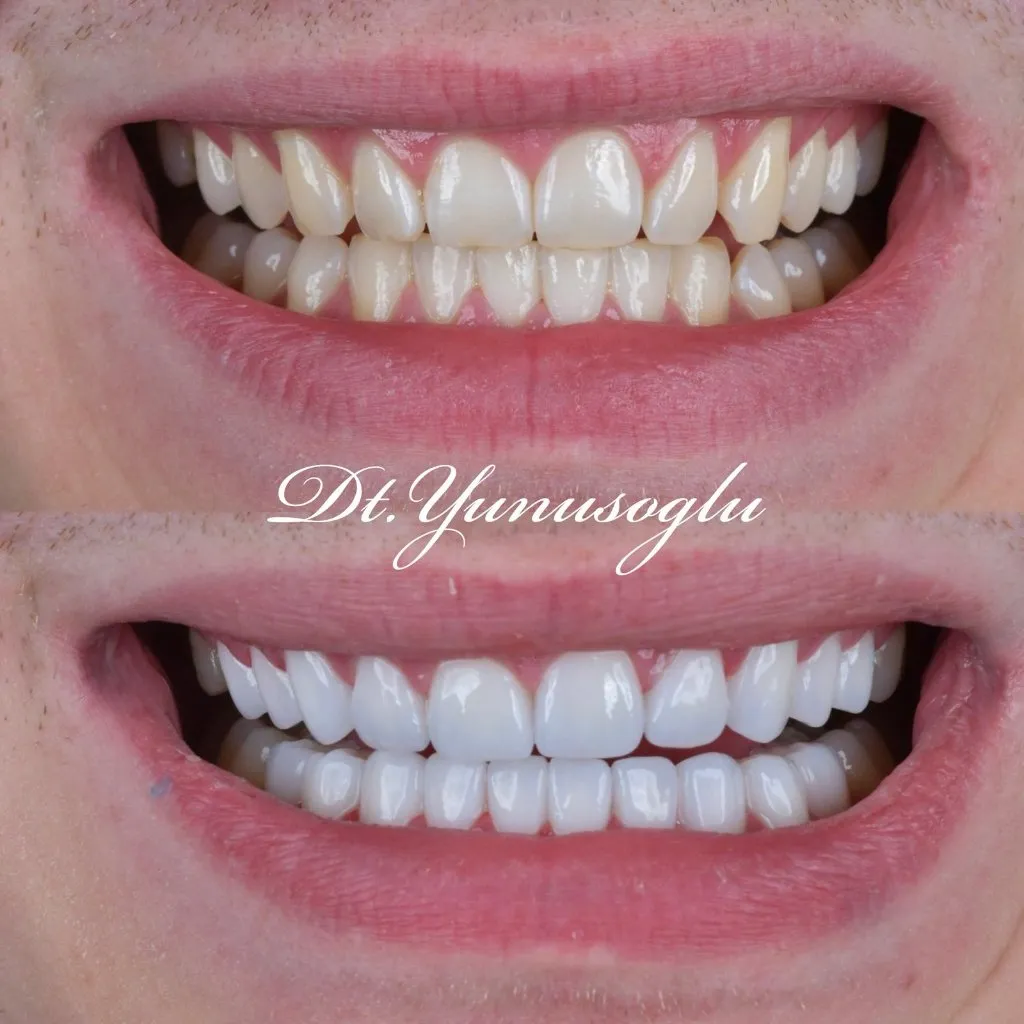
Yes, you can whiten your teeth on a holiday in Side. An in-office session takes 60‑90 minutes, so it fits into one afternoon, and a home kit is the slower, gentler alternative. Whitening suits healthy natural teeth with stains from coffee, tea or smoking. It does not suit pregnancy, untreated decay, gum disease, or teeth that are mostly crowns, veneers and fillings.
Is whitening right for you?
Whitening lightens natural teeth, and only natural teeth. That one fact decides most of the cases below, and the dentist confirms yours at the examination.
| Your situation | Is whitening suitable? | Alternative or next step |
|---|---|---|
| Healthy teeth and gums, even yellow tone or stains from coffee, tea, red wine or smoking | Yes | Whitening, with a professional clean first if there is tartar |
| Pregnant, breastfeeding or under 18 | No, wait | Check-up and cleaning now, whitening later |
| Untreated decay or active gum disease | Not yet | Treat first, then whiten |
| Crowns, veneers or fillings at the front | They will not change colour | Whiten the natural teeth, then match or replace the restorations |
| Very sensitive teeth | Possibly, with care | A gradual home kit may be gentler; the dentist decides |
| Grey, banded or one dark tooth | Limited effect | Examination, then bonding, a veneer or a crown |
| White spots, chips or small gaps | Not the right tool | Bonding |
In-office or home whitening: which suits a holiday?
The clinic's teeth whitening offers three routes. In-office whitening is one session of 60‑90 minutes with CE-certified systems and LED-activated gel, typically 2‑4 VITA shades lighter, visible the same day. A home kit uses a custom tray over 10‑14 days and typically gives 1‑3 shades, gradually. The combined method adds the kit to an office session and can reach 6‑8 shades, depending on the type of staining.
For a holiday, the office session is the natural fit: one afternoon, nothing left to do afterwards. A home kit continues after you fly home, so ask whether the tray can be made in the days you have. A 2025 meta-analysis of 32 studies found no significant difference between at-home and in-office bleaching in the risk of sensitivity or in whitening on the shade scale. Sensitivity was milder at home, although the evidence was rated low quality.
Who should not whiten, and what happens to crowns and fillings?
The NHS says whitening is not done on people aged 17 or younger or on unhealthy teeth or gums, and is not recommended in pregnancy or while breastfeeding. Decay and gum disease come first: gel on an open cavity or inflamed gums hurts and fixes nothing. See gum disease before cosmetic work.
Whitening gel lightens natural enamel only. Both the NHS and the Oral Health Foundation say it does not work on crowns, veneers or fillings. If a front filling or crown shows when you smile, it keeps its old shade and can look darker than the whitened teeth next to it. The sensible order is to whiten first, then match the restoration, with the dentist deciding the timing, using aesthetic fillings or porcelain veneers.
How common is sensitivity, and what does it feel like?
It is common, and usually short. A review in the British Dental Journal reported tooth sensitivity in 15‑78% of patients having external whitening, a wide range because products, strengths and study designs differ. A Cochrane review of 71 trials of home-based whitening named sensitivity and gum irritation as the common side effects, mild and transient, and more frequent with stronger gels. The NHS describes teeth that react to cold or sweet food and drink, and sore gums for a short time.
At the clinic, sensitivity typically fades within a few days. Tell the dentist beforehand if your teeth already react to cold, because that can change the method.

What should you avoid in the first 48 hours?
The traditional advice is a "white diet" for two days: no coffee, black tea, red wine, cola or smoking, and nothing very cold. The evidence is more relaxed than the tradition. A 2025 network meta-analysis of seven clinical studies found that grape juice, coffee, tea, wine, cola or a fully unrestricted diet gave a similar whitening result to a white diet. So a cup of coffee does not ruin the session.
A calm 48 hours is still worth it, for comfort more than colour:
- Skip very cold and very hot drinks if your teeth feel sensitive; cool water is fine.
- Skip smoking. It irritates the gums, and the Oral Health Foundation notes that smoking and drinks such as tea, coffee and red wine make staining return faster.
Sea, pool and sun do not take the colour back. Swimming and sunbathing are fine from the same day, as long as your teeth are not stung by ice-cold water. Our guide to swimming, sun and flying after treatment covers the rest.
How long do the results last?
At the clinic, the effect of in-office whitening typically lasts 1‑2 years, and a touch-up every 6‑12 months is recommended. The Oral Health Foundation says staining returns more quickly with smoking and with tea, coffee and red wine, and that good brushing and regular professional cleaning help the result stay.
When are bonding or veneers the better answer?
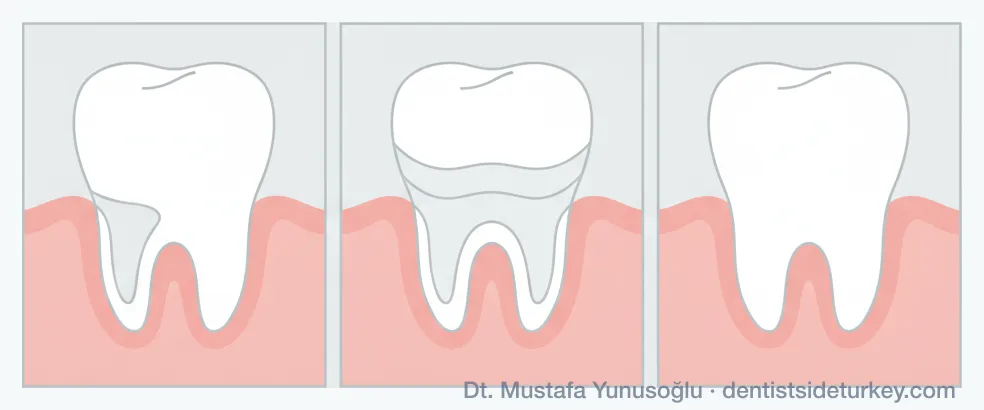
When the problem is not an overall yellow. Whitening cannot fix white spots, chips, small gaps, an uneven edge, or grey colour that sits deep inside the tooth. Bonding suits a few teeth: tooth-coloured composite is shaped by hand in one session of 30‑90 minutes, usually without anaesthesia, and no tooth reduction is needed. It lasts about 5‑7 years. Whiten first, because composite does not lighten later.
Veneers are for colour and shape that both need to change, or for discolouration too deep for gel. They take 5‑7 days over two appointments and carry a written guarantee of 5 years. They are permanent, which is why we would rather tell you that whitening is enough than sell veneers you do not need. The full comparison of yellow teeth, whitening, bonding and veneers is in yellow teeth: whitening, bonding or veneers.
When is whitening on holiday not the right choice?
When you have toothache, swelling or bleeding gums, the problem comes first. See emergency dentist and toothache on holiday for the first steps. Whitening also waits in pregnancy, while breastfeeding, under 18, and with untreated decay or gum disease. If most of your front teeth are crowns or veneers, gel will not change them.
It is also the wrong choice outside a dental clinic. The NHS says whitening from beauty salons or with a kit bought online does not work as well and may harm your teeth and gums, and the Oral Health Foundation says it must be done by a registered dental professional.
To plan it, send two or three photos on WhatsApp. Dt. Mustafa Yunusoğlu reviews them personally, and a written treatment plan arrives within 24 hours. The clinic is in Eskihisar, Manavgat, 5‑25 minutes by car from Side, Kumköy, Çolaklı, Titreyengöl and Evrenseki, with chairs open Monday to Saturday, 09:00 to 19:00. See a dentist near your hotel in Side, how many days to plan and contact. Results depend on the individual case and the examination.
Frequently Asked Questions
Can I have my teeth whitened on holiday in Side?
Yes. In-office whitening at Dentist Side Turkey is one session of 60‑90 minutes, so it fits into a holiday afternoon. The dentist examines your teeth and gums first. A home kit takes 10‑14 days, so it continues after you return home.
How common is sensitivity after whitening?
It is common and usually short. A review in the British Dental Journal reported sensitivity in 15‑78% of patients, and a Cochrane review of 71 trials called it mild and transient. At the clinic it typically fades within a few days. Tell the dentist beforehand if your teeth react to cold.
What should I avoid in the first 48 hours?
Very cold and very hot drinks if you are sensitive, smoking, and heavy coffee, black tea, red wine and cola. A 2025 analysis of seven clinical studies found these did not change the whitening effect, so the advice is about comfort and gum health more than colour. Sea, pool and sun are fine.
Who should not have teeth whitening?
People under 18, women who are pregnant or breastfeeding, and anyone with untreated decay or active gum disease. These need treatment or time first. The dentist also checks whether your visible teeth are natural or crowns, veneers and fillings.
Do crowns, veneers and fillings whiten?
No. Whitening gel lightens natural enamel only. Restorations keep their shade, so after whitening a visible one can look darker than the natural teeth and may need to be matched or replaced. The dentist decides the order and the timing.
How long do the results last?
In-office whitening typically lasts 1‑2 years, and a touch-up every 6‑12 months is recommended. Coffee, tea, red wine and smoking shorten it. Brushing well and regular professional cleaning help it hold.
When are bonding or veneers better than whitening?
When the problem is white spots, chips, gaps, an uneven edge or deep grey discolouration. Bonding is one session of 30‑90 minutes and lasts about 5‑7 years. Veneers take 5‑7 days over two appointments with a written 5-year guarantee. Whitening first is the usual order.
Sources
- de Geus et al. (2025), Oper Dent: At-home vs In-office Bleaching: An Updated Systematic Review and Meta-analysis
- Eachempati et al. (2018), Cochrane Database Syst Rev: Home-based chemically-induced whitening (bleaching) of teeth in adults
- Tredwin et al. (2006), Br Dent J: Hydrogen peroxide tooth-whitening (bleaching) products: review of adverse effects and safety issues
- Münchow et al. (2025), J Dent: White diet is not necessary during dental bleaching treatment, a systematic review and network meta-analysis of clinical studies
- NHS: Teeth whitening
- Oral Health Foundation: Tooth whitening