
Teeth Whitening with Crowns, Veneers or Fillings: What Changes and What Does Not
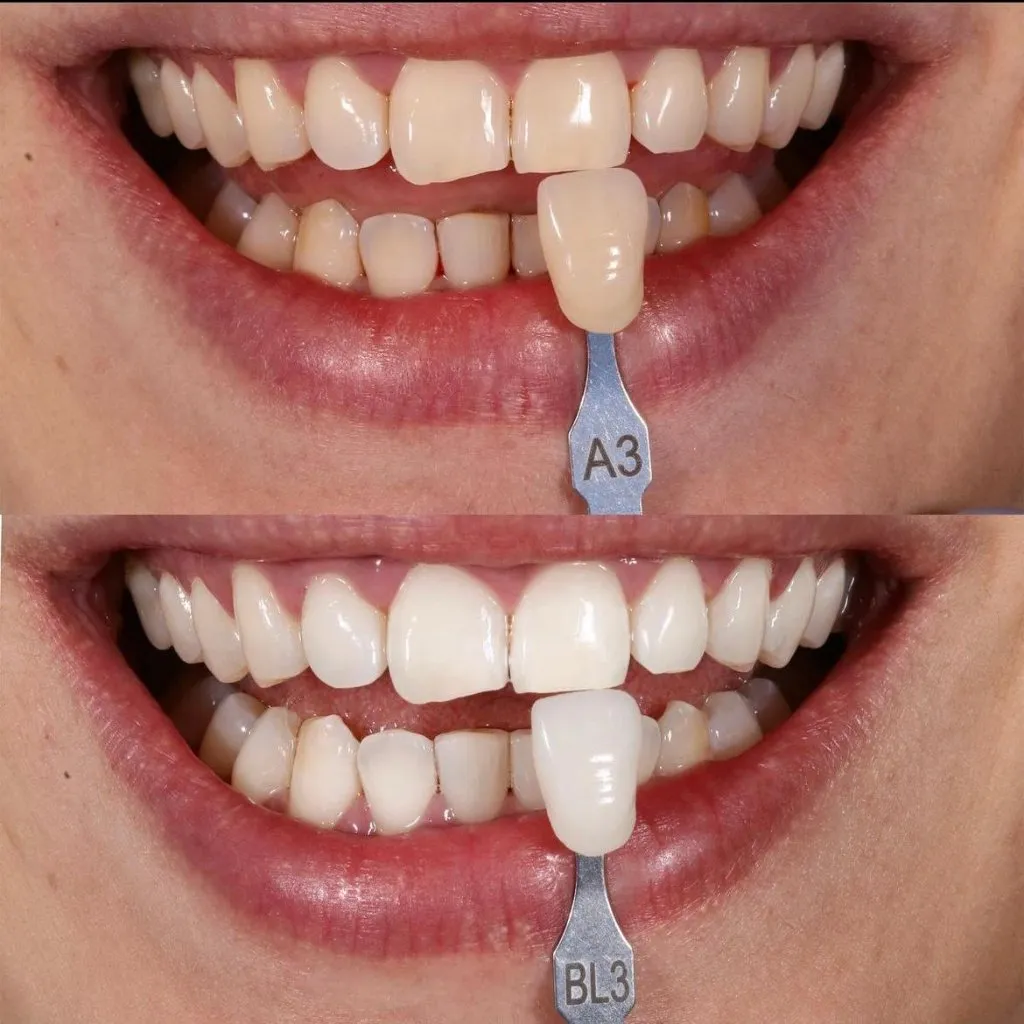
Whitening lightens natural teeth only. Crowns, veneers and tooth-coloured fillings keep the colour they were made in, so after whitening they can look darker than the teeth around them. That does not mean you cannot whiten: it means the order matters. If you are planning new crowns, veneers or bonding, whiten first and match the new work to the new shade. If you already have restorations on your front teeth, find out before whitening which of them would stand out and whether you are prepared to replace them.
What whitening does to each type of tooth
| What is in your mouth | Does whitening change it? | What it means |
|---|---|---|
| Natural teeth | Yes | The aim of the treatment |
| Porcelain, E-max or zirconia crowns and veneers | No | They can look darker afterwards |
| Tooth-coloured fillings and bonding | No; surface stain may lift slightly | Visible front fillings may need replacing |
| Implant crowns and bridges | No | Plan the shade with the rest of the smile |
| A root-filled tooth that has darkened | Often not from outside | Needs a different approach; see below |
Why do restorations not whiten?
Whitening gels release peroxide that passes into enamel and dentine and breaks down the coloured molecules inside the tooth. Porcelain, zirconia and composite do not contain those molecules; their colour is built into the material. The American Dental Association puts it plainly: only natural teeth can be whitened, not tooth-coloured restorations, and treatment can create differences between natural teeth and restorations. A systematic review of the effect of bleaching on restorative materials found changes in laboratory studies, including to surface, margins and bond strength, but no clinical reports that bleaching made existing restorations need replacing.
New crowns, veneers or bonding: whiten first
If you are planning cosmetic work and want a lighter smile, the usual sequence is whitening first, then the new restorations matched to the new colour. The ADA notes research suggesting that bleaching can reduce the bond strength between enamel and composite or ceramic for a while after treatment, which is one reason bonding and veneers are fitted after the colour has settled. In one trip the dentist plans the order: whitening early in your stay, the shade chosen once the colour has settled. Our guide to choosing a shade for veneers and crowns explains how a natural-looking colour is picked.
What if you already have crowns or fillings on your front teeth?
Then whitening is a decision about those restorations too. A small filling on a back tooth does not matter; a crown or a large filling on a front tooth will stay at its current colour. Some people whiten to match their existing crowns, which is easier if the crowns are already light. Others whiten and then replace a visible old filling or crown with one in the new shade; read replacing old crowns and bridges if yours are old anyway. The teeth whitening page notes that visible restorations may need replacement afterwards.
What about one dark tooth?
A single tooth that has darkened after a knock or a root canal usually darkens from the inside, and whitening from outside often does little for it. Options include whitening from inside the tooth, bonding or a veneer or crown; one dark front tooth explains each.
How do you plan whitening and veneers in one trip?
In-office whitening takes 60‑90 minutes; veneers or crowns take two visits over roughly 5‑7 days. The written plan sets the order and the days. See how many days you need, our whitening guide, and the dental veneers page. If your teeth are yellow and you are not sure which treatment you need at all, whitening, bonding or veneers compares them, and whitening on holiday covers sun, swimming and the first 48 hours.
When is whitening the wrong choice?
When most of your visible front teeth are already crowned or veneered, whitening changes very little. When you are under 18, pregnant or breastfeeding, the clinic does not whiten. And if you would be unhappy with a visible colour difference but do not want to replace your front restorations, it is better to know that before you start.
Send photos for a plan
Send photos of your smile on WhatsApp, and mention which teeth have crowns, veneers or fillings. The written plan, with the order of treatment, arrives within 24 hours, or use the contact page.
Frequently Asked Questions
Can crowns or veneers be whitened?
No. Whitening lightens natural teeth only. Porcelain, E-max and zirconia crowns and veneers keep the colour they were made in, so they can look darker after the natural teeth are whitened.
Do tooth-coloured fillings change colour with whitening?
No, apart from a slight lift of surface stain. A visible filling on a front tooth may stand out afterwards and may need replacing in the new shade.
Should I whiten before or after getting veneers?
Before. Whiten first, then the veneers or crowns are matched to the new shade. The dentist plans the order, and the shade is chosen once the colour has settled.
Does whitening damage existing fillings or crowns?
Laboratory studies show some effects on restorative materials, but a systematic review found no clinical reports that bleaching made existing restorations need replacing.
Can I whiten one dark tooth?
A tooth that darkened after a knock or a root canal usually darkens from inside, and whitening from outside often helps little. Whitening from inside, bonding, a veneer or a crown are the usual options.
How long does whitening last?
The result usually lasts 1‑2 years, depending on coffee, tea, red wine and smoking. In-office whitening at the clinic takes 60‑90 minutes.
How do I plan whitening and veneers in Side?
Send photos to WhatsApp +90 530 575 47 18 and mention which teeth have restorations. The written plan, with the order of treatment and the days needed, arrives within 24 hours.